Showing posts with label ANTI-CANCER. Show all posts

Monday, March 16, 2015

Can Adding Fish To A Vegetarian Diet Significantly Lower Risk Of Number Two Cancer Killer?

Study shows adding salmon to a vegetarian diet
significantly lowers risk of colorectal cancer.

Follow Foods For Long Life on Facebook and Pinterest.

Colorectal Cancer Risk and Diet
Last week there was a lot of attention given to a recent study that showed a dramatic decrease in colorectal cancer risk for people following plant-based diets, especially those that included fish. This is significant because colon cancer is the second leading cause of death in men and women combined in the United States (lung and bronchial cancer is the top killer.) 

The Study
Researchers at Loma Linda University did an analysis on 77,659 people. After 7 years, 490 of the participants in this study had colorectal cancer. Review of the participants' food frequency questionnaires revealed that those who ate a vegetarian diet had a 22% lower risk of colorectal cancer than those who were non-vegetarians and consumed meat at least once a week. 

But the results are far more dramatic when you look at the type of vegetarian diets the participants followed.

* Semi-vegetarians (ate meat less than once a week) were 8% less likely to develop colorectal cancer.
* Vegans (ate no meat, seafood, eggs or dairy) had a 16% reduced risk.
* Lacto-ovo vegetarians (ate eggs and milk products but no meat and seafood) had an 18% reduced risk.
* Pescavegetarians (vegetarians who also ate fish) were 43% less likely to develop the disease!

These are pretty startling numbers. Several things stand out.
* Eating even small amounts of meat (semi-vegetarians) appears to reduce the benefit of a vegetarian diet with respect to lowering the risk of colorectal cancer by 8 to 10 percent.
* Adding fish to a vegetarian diet seams to significantly increase protection against this dreaded disease.

Why is a Vegetarian Diet Protective?
There are countless studies that suggest that eating a diet rich in vegetables, fruits, whole grains, nuts and seeds protects against cancer, heart disease, and other diseases. With these healthful foods comes a natural source of dietary fiber, vitamins, minerals and phytonutrients linked to better health and longevity. I personally think dietary fiber is key. Although some studies have had mixed results trying to link high fiber diets to a lower risk of colon cancer, to me it is common sense that anything that helps potential toxins move through the GI tract more swiftly is going to do this.

The Benefits of Fish 
Certain forms of omega-3 fatty acid and vitamin D, that are plentiful in fish, are often linked to the prevention of cancer and a host of other diseases. Unfortunately, except for a small amount of vitamin D contained in some mushrooms, these nutrients are not found in plants.
Omega-3
Vegans and vegetarians get plenty of omega-3 from chia, hemp and flax seeds as well as other plant sources. But these are short-chain alpha-linolenic, ALA, fatty acids. The long-chain omega-3 fatty acids, EPA (eicosapentaenoic acid) and DHA (docosahexaenoic acid) are found in fish and shellfish. EPA and DHA have more potent benefits than ALA and although the body can derive these beneficial omega-3 fatty acids from ALA, it doesn't do this efficiently or sufficiently. 

Why is omega-3 important? Numerous studies have shown that omega-3, especially from fish, reduces the inflammatory process that leads to many chronic diseases such as cancer, heart disease, autoimmune diseases such as rheumatoid arthritis, asthma and more. It has also been shown to protect against depression, cognitive decline, and attention deficit and hyperactivity disorder (ADHD). Adding fish to a vegetarian diet, with its contribution of EPA and DHA omega-3 fatty acid, most certainly contributed to the decreased risk of colorectal cancer in this study. 

Vitamin D
Other studies have shown that vitamin D is effective in colorectal cancer prevention so perhaps the contribution of this nutrient from the fish consumed in this study lead to similar prevention. 

In one such study, PhD researcher Edward Gorham revealed, after examining the data from five observational studies, that by increasing the serum level of vitamin D to 34 ng/ml, the incidence of colorectal cancer could be reduced by half. He reported, "We project a two-thirds reduction in incidence with serum levels of 46 ng/ml, which corresponds to a daily intake of 2,000 IU of vitamin D. This would be best achieved with a combination of diet, supplements and 10 to 15 minutes per day in the sun." 


Spend a little time each day enjoying the sunshine but
 diet sources and supplements are also suggested.

Vitamin D Supplements
The vitamin D council recommends supplementing with vitamin D3 since that is the form produced by the skin in response to sunlight and certain studies claim higher efficacy than other forms. However, D3 is derived from lanolin and is not vegan. Vitamin D2 is the vegan form.

Some Fish Provide Both Omega-3 and Vitamin D
Salmon, trout, herring, anchovies and sardines are good low-mercury sources of EPA and DHA omega-3 fatty acids as well as vitamin D. 

What To Do?
To minimize your risk of colorectal cancer, consider the following:

* Avoid eating meat, especially red or processed meat.

* Eat a plant-centric diet packed with vegetables, fruit, whole grains, nuts, and seeds. It's always best to eat organic and non-GMO when possible.

* Eat low-mercury, high omega-3 fish, such as wild salmon, to get beneficial EPA and DHA omega-3 fatty acids into your diet. Bake or broil but NEVER deep-fry fish. 

If you are a vegan or vegetarian for ethical reasons and will not consider eating fish, then you can get what you need from vegan micro-algae oil. Deva makes a 300mg DHA and EPA supplement. These tend to be pricey and don't contain nearly as much as a piece of fish. It takes 5 of these capsules to get as much omega-3 fatty acid as one 3 ounce piece of salmon. But it's a good and necessary solution if you are opposed to eating fish.

Since omega-3 reduces inflammatory responses that lead to disease, you can take a simple C-Reactive Protein (CRP) test to evaluate the level of inflammation in your body. It's a great indicator for heart disease (much better, in my opinion, than cholesterol), cancer, and many other degenerative disorders. You can also test your level of DHA and EPA by taking a blood test to see if your body is adequately converting ALA to these more potent forms of omega-3.

* Besides eating fish, get vitamin D from sunlight and supplements. I personally take 2,000 IU per day. When I spend more time indoors in the winter, I increase it to 4,000 IU. Vegans can easily get what they need from the sun and supplements as well as fortified foods. Most non-dairy milks are fortified with vitamin D. 

But don't always count on the sun to give you what you need. People with darker skin, or those who wear sun block, who are older, and who live further from the equator are more likely to be deficient. In fact, MOST people are deficient in this critical nutrient! To understand if you are, take a 25-hydroxy vitamin D test. According to the vitamin D council, a sufficient result is between 40 to 80 ng/ml. According to the National Institutes of Health, the normal range is 30 to 74 ng/ml.

Summary
I write this blog because I believe that diet has a powerful effect on our health. This gives us a lot of control over the quality of our life, even if we have less than stellar family genes. Studies such as this should encourage us to refine our diets even further to optimize our health. 

Many of my readers are vegans for reasons of compassion and can take this information and adjust their diets with supplements and sunshine to optimize their health. 

For those of you not opposed to eating fish and who are trying to develop the healthiest diet possible, you may want to consider a well-designed pescavegan or pescavegetarian diet that can provide the fish, fiber and critical nutrients needed for excellent health.


Salmon Recipes
Salmon, one of my Top 20 Foods for Health and Longevity, is very low in mercury and packed with EPA and DHA omega-3 fatty acids. Here are three easy and delicious salmon recipes you might enjoy:
Baked Atlantic Salmon with Roasted Onions and Cherry Tomatoes on Wilted Spinach, or Mango and Black Bean Salsa with Honey Lime Baked Salmon, and Baked Honey Mustard Coho Salmon.


Baked Honey Mustard Coho

Thursday, February 17, 2011

Spicy Vegan Brussels Sprout And Potato Stew With Mexican Chipotle Sausage And Pinto Beans


A Hearty yet Low Calorie Entrée 
If you love Brussels sprouts, you'll love this hearty stew. Rich in cancer-fighting glucosinolates, this petite cabbages pair up well with new potatoes, pinto beans and carrots to provide a fiber rich stew for less than 300 calories per serving. Adding a few links of a spicy sausage like the Mexican Chipotle vegan sausage from Field Roast, gives it an amazing flavor. If you decide to leave out the sausage, the calorie count drops further to under 200 calories per bowl but you should add a chipotle pepper to the stew so you don't lose the spicy flavor.
Field Roast vegan sausage


Spicy Vegan Brussels Sprout and Potato Stew
[makes 6 servings]
2 pounds Brussels sprouts, trimmed, cleaned and cut in half
1 tablespoon extra virgin olive oil
1 medium onion, cut in half and sliced
4 medium carrots, thinly sliced
4 cloves garlic, smashed and chopped
3/4 pounds new potatoes, cut into 1 inch pieces, (2 1/2 cups)
2 bay leaves
4 cups veggie broth
1/4 teaspoon ground black pepper
sea salt to taste
One 15 ounce can pinto beans, drained
2 Field Roast Mexican chipotle vegan sausages, thinly sliced


To trim the Brussels sprouts, cut about a quarter inch off the bottom of each Brussels sprout, remove the outer leaves and rinse well. Cut each one in half. Set aside.
Heat olive oil in a large Dutch oven or soup pot and sauté onions and carrots until onions soften, about 8 minutes. 
Add garlic and cook another minute, until fragrant.
Add Brussels sprouts, potatoes, bay leaves, broth, black pepper and salt and bring to a boil. Lower the heat, cover and simmer until potatoes and Brussels sprouts are tender. Do not overcook.
Stir in the pinto beans and the sausage slices and heat thoroughly.
Serve.


Per serving (with sausage): 275.2 calories, 6.3 g fat, 0.7 g saturated fat, 0 mg cholesterol, 18.2 g protein, 43.7 g carbohydrates and 11.2 g dietary fiber.


Per serving (without sausage): 196.8 calories, 2.3 g fat, 0.3 g saturated fat, 0 mg cholesterol, 9.5 g protein, 41.3 g carbohydrates and 10.8 g dietary fiber.


Follow Foods For Long Life on FACEBOOK!

Thursday, October 28, 2010

Raw Purple Cauliflower Crudité With Tahini Dipping Sauce


Purple cauliflower from my garden.


Purple Cauliflower?
When I planted my winter garden, I picked up a tray of cauliflower starts. After planting them, I put in the little plastic marker so I'd know what I planted and noticed that it said, "purple cauliflower"! I thought I had bought the regular, run of the mill white cauliflower! You know, the kind that makes lovely white soups. I was a little annoyed that I didn't pay more attention to what I had bought but then I got excited at the thought of this unusual vegetable. But I did wonder, "what am I going to do with 14 heads of purple cauliflower?"
Yesterday I picked my first head. I broke off a piece and noticed how tender and lovely it was. What a shame it would be to cook it. I decided to just serve it raw. I cut it up in little pieces and put it on a sushi plate with dipping sauce. I may post more interesting and exotic recipes with the rest of the heads but last night we just enjoyed a really good glass of pinot while we dipped our first head of purple cauliflower in this yummy tahini dipping sauce.

Health Benefits
Purple cauliflower makes a delicious and unusual crudité. When eaten raw, it's packed with vitamin C. It's a cruciferous vegetable so it has cancer prevention properties. It does this in three ways: by detoxifying the body, as an antioxidant and as an anti-inflammatory. It gets its purple color from anthocyanins, the same antioxidant flavonoids found in red cabbage and red wine. So you get the added benefit from these beneficial phenolic phytochemicals.

Omega 6 to omega 3 ratio
I've written many times about how important it is for people not to eat too many omega 6 fatty acids without balancing them with omega 3. Otherwise, the omega 6 fatty acids will block the conversion of the ALA omega 3's to the more healthful DHA and EPA. The ratio for vegans should be anywhere from 4:1 to 1:1. The tahini in this dipping sauce has almost all omega 6's so in order to drive the ratio to 1:1, I add a tablespoon of flaxseed oil. That same dipping sauce with olive oil instead of flaxseed oil would have a ratio of almost 18:1 omega 6 to omega 3 and that is not as good for you, especially if you are vegan. This is not as critical for people who get their EPA and DHA omega 3's directly from fish.

***

Raw Purple Cauliflower Crudité with Raw Tahini Dipping Sauce
[Makes 4 appetizer servings]
For the crudité
1 head raw purple cabbage (cut up)
For the dipping sauce
2 tablespoons raw tahini
2 tablespoon fresh lime juice
1 tablespoon nama shoyu soy sauce
2 tablespoon raw agave nectar
1 garlic clove, mashed and finely minced
1 tablespoon of cold pressed, unrefined flaxseed oil

Thoroughly combine all of the ingredients for the dipping sauce. Divide up the cauliflower pieces onto 4 sushi plates and serve with small soy sauce bowls filled with 2 tablespoons of tahini dipping sauce.

Per serving: 143.6 calories, 7.3 g fat, 0.8 g saturated fat, 1.9 g ALA omega 3 and 2.0 g omega 6 fatty acids, 0 mg cholesterol, 4.5 g protein, 18.6 g carbohydrates and 4.0 g fiber.

Now on Facebook!

Wednesday, October 27, 2010

Hearty Vegan Barley Mushroom Stew, Low In Fat And Calories But Rich In Health Benefits


Medley of local mushrooms.


The Weather is Changing
Woke up to some chilly fall weather this morning. Time for barley mushroom stew. I'm reposting this from a recipe I wrote 2 years ago with some improvements.

We Don't Need to be SIck!
The number 1 cause of death in the United States is heart disease. The number 2 cause of death is cancer. This doesn’t have to be the case. Although people are quick to point out their “bad genes” and tell you that their health conditions were “passed down”, I don’t completely buy it. Yes, certain genes pass on terrible diseases, or at least your propensity to get these diseases. And, in some cases, very little can be done about it. But in most cases (some estimate over 80%), your parents’ degenerative disorders, like cardiovascular disease, diabetes and even cancer, do not have to be a fait du compli. I believe that it’s not “genes” that we pass down, but “recipes” and “lifestyle habits”. You can help break the chain by not smoking, increasing your level of activity and of course, eating a healthy diet. The American Dietetic Association claims that vegetarians have lower rates of heart disease, cancer, diabetes, obesity and other diseases.

How Barley can help Prevent Heart Disease
In 2005, the FDA approved the health claim that the soluble dietary fiber, beta-glucan, found in barley can reduce the risk of coronary heart disease. This is the same fiber that gives oats their heart healthy qualities. Studies have also shown that barley can lower total and LDL cholesterol in both men and women. High fiber foods, such as barley, have also shown to improve blood sugar levels and protect against colon cancer. This ancient grain is also a good source of manganese and selenium (a very powerful antioxidant).

Mushrooms - A True Longevity Food
Mushrooms have been used in Chinese medicine for centuries to promote longevity. There are thousands of mushroom species. (DO NOT, however, pick wild mushrooms, as many of them are fatally toxic.) This low calorie, low fat, delicious food has been shown to boost your immune system, suppress tumors, resist both bacterial and viral infections and support cardiovascular health. Mushrooms are also high in B vitamins, copper, selenium, potassium, magnesium and phosphorus. Many people have just eaten the little white, button mushrooms, but for the most health benefits, branch out and try shitake, crimini, portobello, oyster and many others. Some of these can be rather pricey, but they don’t weigh much and they are worth every penny. Look for local mushroom growers in your area.


Hearty, Low Calorie Main Course
This barley mushroom stew is a low calorie, low fat, nutritious main course which combines the magical powers of barley and mushrooms. To add color and many healthy plant chemicals, this recipe includes red and green bell peppers. Red peppers contain lycopene, a carotenoid that has gotten a lot of recent attention in its ability to protect against cancer and heart disease.
To add some "meat-like" flavor, you can toss in your favorite vegan link. My favorite is Field Roast Smoked Apple Sausage.

***

Barley, Mushroom Stew
[makes 4 large servings]
2 t olive oil
1 1/2 cups diced onions
1 1/2 cups diced carrots
1 1/2 cups diced celery
3 small cloves garlic, minced
1/2 pound of assorted mushrooms, cleaned and sliced

2/3 cup of pearl barley, rinsed
4 cups veggie broth
1 bay leaf
1/2 teaspoon sea salt
1/8 teaspoon ground black pepper
4 shakes of cayenne pepper (or to taste)
2 bell peppers, 1 red, 1 green, diced
1 Field Roast smoked apple sage vegan sausage link (optional)
3 T of fresh parsley, chopped


On medium heat, sauté the onion, carrots and celery in 2 teaspoons of olive oil for 4 minutes.
Add the garlic, stir for a minute and then the mushrooms. Cook until they soften, about 5 to 8 minutes.
Add the barley, veggie broth, bay leaf, salt, black pepper and cayenne (NOT the peppers) and bring to a boil. Lower the heat, cover and cook for 35 minutes.
Add the peppers and cook an additional 15 to 20 minutes or until the barley is tender and much of the broth is absorbed.
If you want to add a vegan link, take the link and dice it into small pieces. Sauté in a small, lightly greased non-stick pan until it is warm and crisp. Stir into the soup right before serving.
Remove the bay leaf and garnish each bowl with ½ T of parsley.

Per serving (no vegan link): 237.3 calories, 2.8 g fat, 0 g saturated fat, 0 mg cholesterol, 7.2 g protein, 46.3 g carbohydrates and 9.5 g of dietary fiber.

Per serving with one vegan link: 297.3 calories, 5.3 g fat, 0.3 g saturated fat, 0 mg cholesterol, 13.7 g protein, 49.1 g carbohydrates and 10.3 g of dietary fiber.

Now on FACEBOOK!

Monday, September 27, 2010

A Simple Arugula Salad with Balsamic Chive Vinaigrette


Arugula
My daughter loves arugula so it was no surprise to find a good portion of her fall garden packed full of it. During our visit she made us a simple and delicious arugula salad dressed with a lovely balsamic vinaigrette with chives, also from her garden. When dressing arugula, she uses a 2 to 1 ratio of extra virgin olive oil to aged balsamic. When dressing a regular salad, she prefers a 1 to 1 ratio.
Arugula is a leafy green, cruciferous vegetable that contains anti-cancer compounds called glucosinolates. These compounds have strong antioxidant properties and also stimulate the body to produce detoxifying enzymes.
Arugula is an excellent source of vitamins A, C and K as well as folate, calcium, manganese, potassium and magnesium. It is also a very good source of iron, phosphorus, and riboflavin.
There are only 5 calories in each cup of arugula so you can enjoy as much as you like. If it is too bitter to eat by itself, mix it with lettuce. But the bitterness in arugula also has beneficial properties as bitter foods can stimulate appetite and increase the flow of digestive juices.

* * *

Balsamic Chive Salad Dressing For Arugula
[makes 6 1/2 tablespoons]
1 tablespoon young chives, snipped or finely sliced
2 tablespoons aged balsamic vinegar
1/4 cup extra virgin olive oil
salt and freshly ground black pepper to taste

Mix together well and use as needed to dress an arugula salad.

Per tablespoon of dressing: 78.2 calories, 8.3 g fat, 1.2 g saturated fat, 0 mg cholesterol, 3.0 g protein, 4.0 g carbohydrates and 2 g of fiber.

Tuesday, September 07, 2010

How To Make Matcha Green Tea - The Health Benefits Of Green Tea


Sift the powdered matcha green tea into the cups.

Add 180 degree water and whisk until the Matcha is suspended.

A bamboo"Chansen" is traditionally used to whisk matcha.


Matcha Green Tea
Recently I purchased some matcha tea in order to experiment with making green tea ice cream. It had been a while since I had enjoyed this delicate beverage so I carefully studied the instructions on how to properly make it.
Unlike the typical leaf tea you are familiar with, matcha tea is a powdered green tea. Traditionally it is the tea used in the Japanese Tea Ceremony. Its sweet taste comes from the tea plants being shaded for about one month before being harvested. I love the deep green color, an indication of its many intense and healthful plant chemicals.

The History of Matcha
According to Den Shirakata, owner of Den's tea , a Buddhist monk introduced matcha to Japan in the 13th century. The monk, named Eizai, studied in China and upon his return to Japan, he brought back a new type of tea. This tea was made from raw leaves which were steamed than then milled into a fine powder.
Eizai also authored the first tea book in Japan named, "Maintaining Health by Drinking Tea". Matcha became part of Zen training for Zen Buddhism, also spread by Eizai. It also became part of the "SADO" tea ceremony.

Health Benefits of Green Tea
Green tea is rich in catechin polyphenols. The one most important is EGCG which is a powerful antioxidant. Green tea also contains the antioxidant vitamins A, C and E although it is said that EGCG has 25 to 100 times stronger antioxidant properties than vitamins C and E. Since Matcha tea contains the entire leaf it has the added benefit of providing fiber.
Many health benefits have been attributed to the frequent consumption of green tea. Here are a few of them:
* inhibition of cancer cells
* stabilizes blood sugar
* improving cholesterol profile
* helps prevent cardiovascular disease
* fight colds and flu as it has anti-bacterial and anti-viral properties
* prevents tooth decay
* acts as a relaxant due to its content of the amino acid, theanine
* like berries, polyphenols in tea may prevent and reverse age-related memory loss

Enjoying Matcha Tea
Matcha is a powdered tea which doesn't dissolve in water. The Matcha is actually suspended in the water.
The four most important things to do to optimize your enjoyment of this delicious tea are:
1. Using 180 F degree water to make the tea
2. Sifting the Matcha
3. Whisking the tea properly to create a suspension
4. Drinking it before the powdered tea settles to the bottom

How to Make Matcha Tea
What you need:
* Boiling water
* An interim container (I use a 2 to 4 cup glass pyrex)
* A small bamboo scoop or 1/2 teaspoon measure
* A small strainer to sift the tea
* One or more tea cups
* A whisk (you can use the proper bamboo whisk called a "chansen" or any small whisk)
Making Matcha
1. Get out one or more tea cups.
2. Sift one gram, or 1/2 teaspoon of Matcha into each cup.
3. Pour boiling water into an interim container (tea pot, cup or pyrex).
4. Pour 3 ounces of water from the interim container into each of the tea cups. This extra step will get the water to the proper temperature if done immediately.
5. Whisk the Matcha and the water using the bamboo "chansen" or a small whisk until the powdered tea is suspended in the water.
6. Enjoy before the Matcha settles to the bottom. If it does, give it a swirl.

You can find a good assortment of Matcha tea at Den's tea . Amazon also sells the tea as well as the tea whisk (Chansen), the small scoop and glass Matcha bowl.

Thursday, September 02, 2010

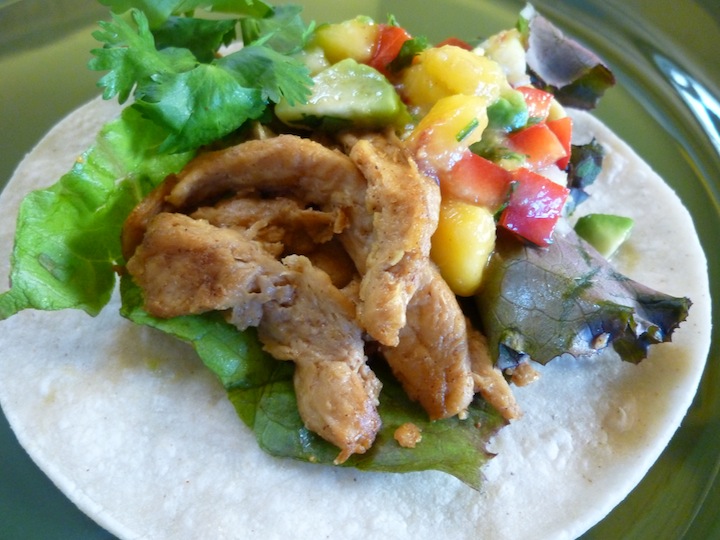
Vegan Chicken Fajitas With Fresh Peach Salsa - Butler Soy Curls," Tastes Like Chicken!"


Soak the soy curls in hot water for 10 minutes. Drain well.

Sauté the soy curls in a pan with olive oil and seasoning.


Butler Soy Curls - A Vegan Chicken Alternative
When I was a teenager, a friend of the family took us to a fancy French restaurant in Manhattan named Le Veau D'or. I believe it's still there. Soon there appeared a frog's leg on my plate. Though I was assured that it "tasted like chicken", I didn't eat it.
Many years later while on a business trip in Hong Kong, I was presented with rattlesnake soup. The person I was with assured me that it "tasted like chicken". I wondered how the poor chicken became the "gold standard" for something that tastes good.
Well I finally found something that I feel really good about eating that does "taste like chicken". It's a new vegan product from Butler Foods called, "Soy Curls". I saw them on the menu at the Blossoming Lotus restaurant in Portland but I didn't taste them until a few weeks ago at a vegan pot luck. I thought they were amazing and immediately ordered a case from Butler foods. I've been experimenting with them ever since. There is no limit to how you can use this delicious product. I suspect you'll be seeing a lot of recipes in the future from me using soy curls.

Unlike Other Vegan Fake Meat
Many vegan fake meat products are made from highly processed vegetable protein and many contain wheat gluten. I've never been a big fan of fake meat. But soy curls are made from whole soy beans and appear to be minimally processed. Every ounce of soy curls provides you with 10 grams of heart healthy, breast cancer fighting soy protein from non-GMO soybeans grown without chemical pesticides. There's a list of places to buy soy curls on the Butler website or you can buy them online from Butler foods.

***

Vegan Chicken Fajitas with Fresh Peach Salsa
[makes 8 servings]
For the Peach Salsa
1 1/2 tablespoons fresh lime juice
2 cups fresh peaches, peeled and diced
1 avocado, peeled and diced
1 cup red bell pepper, diced
1/4 cup red onion, finely chopped
1/4 cup fresh cilantro, chopped
1 jalapeno, seeds removed and finely chopped (optional)
1 clove garlic, minced
sea salt and cayenne pepper to taste
For the Fajitas
One 8 ounce package of soy curls
2 tablespoons olive oil
2 tablespoons Bragg's liquid aminos or soy sauce (I prefer Bragg's)
4 tablespoons Red Star nutritional yeast
1 tablespoon chili powder
1/2 teaspoon garlic powder
8 of your favorite tortillas

Make the peach salsa by combining all of the above salsa ingredients and gently tossing. Add salt and cayenne pepper to taste. Set aside.
Place the soy curls in a bowl and cover with hot water for 10 minutes.
After they rehydrate, drain them very well. Return them to the bowl and mix well the Bragg's liquid aminos.
In a different small bowl, combine nutritional yeast, chili powder and garlic powder. Set aside.
Heat oil and sauté the soy curls sprinkling them with the nutritional yeast mixture. Cook until golden (about 5 minutes) and remove from heat.
Assemble the fajitas by placing 1/8 of the soy curls and peach salsa on a heated tortilla. Serve immediately.

Per serving of fajita without the tortilla or salsa:149.8 calories, 8.3 g of fat, 0.5 g saturated fat, 0 mg cholesterol, 12.6 g protein, 7.3 g carbohydrates and 4.3 g of fiber.

Per serving of peach salsa: 53 calories, 2.6 g fat, 0.4 g saturated fat, 0 mg cholesterol, 0.4 g protein, 6.2 g carbohydrates and 2.1 g of fiber.

Thursday, August 05, 2010

An Update On Breast Cancer And The Consumption Of Soy Foods


The Confusion Regarding Soy Products and Breast Cancer
I've been asked my opinion about this topic many times. And because I have several dear friends who are breast cancer survivors, I am intensely interested in any new information that might shed light on the consumption of soy foods and the risk of breast cancer recurrence.
Depending on who you talk to, you may hear that soy products are beneficial in reducing the risk of breast cancer or you may hear that soy products can have the opposite effect. I've always thought that soy should be beneficial. After all, according to the World Health Organization, in the U.S., where soy consumption is relatively low, 21.2 women per 100,000 have breast cancer. But in Japan, where the consumption of soy is much higher, the incidence is only 8.6 per 100,000 females.
Concern about eating soy foods comes from the fact that they are high in phytoestrogens which are chemically similar to the hormone estrogen. Estrogen is associated with breast cancer development so by connecting the dots one would easily come to the conclusion that soy might also increase the risk of this disease.

Results From a Recent Study
More than 5,000 women in China diagnosed with breast cancer participated in the Shanghai Breast Cancer Survival Study. It was found that women who ate in excess of 15 grams of soy protein a day had about a 30% lower risk of recurrence that those women who ate less than 5 grams per day. The most significant result of the study is that the benefits of soy foods were evident in both women with estrogen receptor positive and negative breast cancer. Most doctors presently tell women who have have estrogen receptor positive breast cancer to avoid soy products completely. This study may change that directive. The benefits of soy in reducing recurrence and death were also found in both women who used tamoxifen and those who did not.

Other Things to Note
Women in Asia generally consume soy in a very lightly processed form such as miso, soy beans, tofu and soy milk. They do not generally take soy supplements or eat highly processed soy found in fake meat products. They also consume soy foods throughout their life.

How Much Soy Protein is in Food
To find out how much soy protein is in food, check the label. If the food has an FDA-approved health claim on the label, it must contain a minimum of 6.25 grams of soy protein per serving. The FDA has approved the health claim that "25 grams of soy protein may help reduce the risk of heart disease".
For information on soybean nutrition, check out the National Soybean Research Laboratory. According to NSRL, the amounts of soy protein in commonly available foods are as follows:

* 1/2 cup (86 g) of cooked, mature (yellow) soybeans provides 14.3 grams of soy protein
* 1/2 cup (90 g) of edamame (green soybeans) provides 11.1 grams
* 1/2 cup (83 g) tempeh provides 15.8 grams
* 1/4 cup (43 g) soynuts provides 17.0 grams
* 1/2 cup (126 g) firm tofu provides 19.9 grams
* 1/4 cup (25 g) defatted soy flour provides 11.8 grams
* 1 cup (245 g) soymilk provides 7.0 grams
* 2 tablespoons (34.5 g) miso provides 4.1 grams

Talk to your Doctor
Although this study indicates that traditional soy foods may be both safe and protective against breast cancer reoccurrence, you should talk to your doctor about adding these products to your diet. To reference this study, See JAMA 2009 Dec 9;302(22);2437-43. Shu XO, Aheng Y, Cai H, et al. Soy food intake and breast cancer survival.

Sunday, May 09, 2010

Strawberry Banana Green Tea Smoothie With Chia Seeds


Health Benefits of Green Tea
Green tea contains catechins, powerful antioxidants that have a role reducing free radical damage which can lead to cancer and heart disease. Because green tea receives minimal processing, its catechins are very concentrated, especially their unique catechin, epigallocatechin-3-gallate (EGCG). In the laboratory, EGCG has been shown to inhibit cancer cell growth. Some human studies have shown a link between increased green tea consumption and lower recurrence of breast cancer after surgery and a lower risk of developing stomach, esophageal, prostate, pancreatic, lung and colorectal cancers. Other human studies showed a correlation between green tea consumption and reduced risk of heart disease.

Other Ways to Consume Tea
Besides just making a cup of tea, there are other ways to receive the health benefits of tea. Try adding green tea to soups or using green tea as the liquid in your morning smoothie. There is some caffeine in green tea so be sure not to drink it or cook with it too late in the day or it may disturb your ability to sleep. However the amount of caffeine in an 8 oz. cup of tea is only around 20 mg compared to 60 to 120 mg in brewed coffee or 40 to 50 mg in black tea.

My Favorite Green Tea
By far, the best green tea is from Japan. It's sounds obvious, but green tea should actually be green! So many of the large corporate tea companies make green tea products that don't look or taste anything like real, Japanese green tea. You can buy genuine green tea online from Den's Tea company. You can buy loose tea or these very cute and convenient pyramid tea bags. My favorite is the Pyramid Tea Bag Sencha.
Here's a smoothie recipe that provides all the advantages of green tea, chia seeds and fresh fruit.

***

Strawberry Banana Green Tea Smoothie with Chia Seeds
[makes 2 servings]
2 cups strong green tea (cooled)
1 cup vanilla hemp milk or soy milk
2 1/2 tablespoons chia seeds
1 large banana
1 cup fresh strawberries
3/4 cup ice
few drops of liquid stevia or sweetener of your choice, optional

The night before, put one or two green tea bags in 2 cups of boiling water and steep for 15 minutes. Remove the tea bag and put the tea in the refrigerator to cool overnight. Put the chia seeds in the vanilla hemp milk and stir vigorously. Wait 15 minutes and stir again. Wait another 15 minutes and stir one more time and put the chia mixture in the refrigerator overnight. It will become the consistency of pudding - (in fact, it will become "chia pudding". I usually make this smoothie when I have left over Vegan Vanilla Chia Seed Pudding .)
In the morning, place the chilled green tea, chia pudding, banana, strawberries, ice and optional sweetener in a VitaMix, blend and serve immediately.

Per serving: 190 calories, 8.0 g fat, 1.5 g saturated fat, 0 mg cholesterol, 4.5 g protein, 37.8 g carbohydrates, 9.8 g fiber, 3.6 g omega 3 and 2.9 g omega 6 fatty acids.

Tuesday, March 30, 2010

Creamy Raw Vegan Zucchini Soup With Crushed Pistachios - Can Turmeric Fight Cancer And Prevent Alzheimer's?


Turmeric and its Many Health Benefits
Turmeric is the spice that gives curry its gold color and contains the phytochemical compound, curcumin. It has been used as a powerful medicine in China and India for centuries. Turmeric has strong anti-inflammatory properties with no side effects. Although it has been used for numerous ailments from toothaches to rheumatoid arthritis, there has been some exciting research linking turmeric to the prevention of Alzheimer's disease and the ability to inhibit the development of many cancers including pancreatic, colon, prostate, liver, esophageal, and others. I'm very excited by these findings and started using more and more of this lovely and healthful spice. Here's an easy and delicious raw soup recipe that includes turmeric.

***

Creamy Raw Zucchini Soup with Crushed Pistachios
[serves 4]
4 cups diced zucchini
1 1/3 cups frozen peas, thawed
1 cup diced celery
1 avocado
1 cup filtered water
1/4 cup fresh lemon juice
2 to 3 cloves chopped garlic (to taste)
1 teaspoon sea salt (or to taste)
1 teaspoon fresh thyme plus extra for garnish
1 teaspoon turmeric (or more to taste)
Several shakes black pepper (or cayenne if you prefer)
1/4 cup crushed raw pistachios

In a VitaMix or other high speed blender, process zucchini, peas, celery, avocado, water, lemon juice, garlic, salt, thyme, turmeric and pepper until smooth. Pour into 4 bowls and top each with 1 tablespoon of crushed pistachios, fresh thyme and additional fresh ground pepper, if desired.

Per serving: 163.6 calories, 9.0 g fat, 1.2 g saturated fat, 0 mg cholesterol, 7.0 g protein, 17.7 g carbohydrates and 6.6 g of fiber.

Saturday, February 27, 2010

Raw Veggie Wrap With Ginger Tahini Dipping Sauce - Includes Daikon, Avocado, Mango, Red Bell Pepper, Sprouts and More!


Try using cabbage (pictured), lettuce or collards as a wrapper.

Daikon root makes a tasty and healthful wrap ingredient.

Fill a platter with ingredients for your guests to choose.

Fill wrapper with an assortment of fruits and vegetables.

Add ginger tahini dipping sauce, roll up and eat!


Raw Veggie Wraps
Raw Veggie wraps are a staple in a raw food diet. They make a beautiful meal for guests or a convenient meal for the family. Fill them with your favorite veggies and fruits and top them with this delicious, raw tahini-ginger sauce.

Raw Wrappers
Instead of tortillas or lavash wrappers, raw recipes typically use big leaves of lettuce, collards, cabbage or other greens as a wrapper. I happen to find this very interesting looking cabbage (a cross between Chinese and Napa cabbage) so I thought I'd try it. It was a bit hard to fold so it was more like a soft taco than a wrap but it held its shape very well and was very tender. If you use collards, select the largest leaves and cut out the center stem.

Daikon
Raw daikon is commonly used in Japan to aid in the digestion of carbohydrates, fats and proteins. It's often found grated and served with sushi. Daikon is a cruciferous vegetable, like broccoli, kale and cabbage, and is associated with protecting against cancer. Cut into little circles, daikon makes a great "chip" for guacamole or raw hummus with sprouted garbanzo beans.

***

Raw Veggie Wraps with Ginger-Tahini Dipping Sauce
[makes 8 wraps or 4 servings]
For the wrap
8 large leaves of cabbage, collards or butter lettuce
2 small daikons, peeled and cut into strips
1 avocado, peeled and cut into slices
1 large mango (or 2 small), peeled and cut into slices
2 medium red bell peppers, cut into strips
3 ounces sunflower sprouts
handful of cilantro
1 green onion, thinly sliced
For the sauce
1/4 cup raw tahini
2 tablespoons Nama Shoyu soy sauce
2 tablespoons freshly squeezed lemon juice
2 tablespoons raw agave
4 teaspoons fresh ginger, grated
2 cloves garlic, grated
1/4 teaspoon cayenne (or to taste)

Arrange all veggies on a platter. To make the sauce, combine all sauce ingredients in a small bowl and mix until smooth. Serve with the veggies. To make a wrap, take a large leaf, arrange all veggies in the center, top with sauce, fold and enjoy!

Per wrap: 130.6 calories, 6.8 g fat, 0.9 g saturated fat, 0 mg cholesterol, 3.6 g protein, 16.1 g carbohydrates and 3.9 g of fiber.


Thursday, January 14, 2010

Raw Vegan Asian Coleslaw with a Ginger Tahini Vinaigrette Salad Dressing


Cruciferous Vegetables Lower Cancer Risk
Cabbage is a powerful vegetable when it comes to health benefits. Like its relatives broccoli, kale, Brussels sprouts, collards (and others), it is a cruciferous vegetable. Studies have shown that this class of vegetable reduces cancer risk more than any other vegetable. Studies have shown cabbage and other cruciferous vegetables are associated with lower risk of prostate, bladder, stomach, colorectal and lung cancer. The good news is that you can get benefits from eating only 3 to 5 servings per week. Raw cabbage is also loaded with vitamin C and K and is a very good source of folate and fiber.

Thyroid Function Could be a Problem - Raw Foodists Beware!
Eating too many raw cruciferous vegetables can be a problem if you have hypothyroidism or a low production of thyroid hormone. Cabbage and other raw cruciferous vegetables contain "goitrogens" which contain thyroid inhibitors. So if you have an under-active thyroid, you may want to limit your consumption of "raw" cabbage or you can also steam these cruciferous vegetables to avoid the issue and get the benefits. If you have this problem and want to limit your raw cabbage consumption, substitute lettuce in this recipe. The ginger tahini vinaigrette makes a wonderful salad dressing.
What is Hypothyroidism?
Some of the symptoms of hypothyroidism include fatigue, muscle aches, unexplained weight gain, pale, dry skin, intolerance to cold, constipation, depression, and brittle fingernails and hair. Some common causes of hypothyroidism include autoimmune disease (Hashimoto), over-treatment of hyperthyroidism, radiation therapy, thyroid surgery and some medications like lithium. From a nutrition point of view, I have seen underactive thyroids from iodine deficiency. Iodine is a trace mineral found in seafood, seaweed and iodized salt. Many people don't eat seafood and have stopped eating iodized salt. At the same time, chlorine and fluoride are commonly added to our drinking water. These chemicals have similar chemical structures as iodine and some theories say they may displace iodine in the thyroid which could lead to hypothyroidism. I have resumed my consumption of iodized salt "just in case".

This Recipe Balances the Omega 3 and 6 Essential Fatty Acids
Many Asian vinaigrettes have tahini (sesame paste) and sesame oil which both contain high amounts of omega 6. As healthy as omega 6 is (it's needed for cholesterol metabolism, growth and reproduction), it is essential to balance it out with omega 3 (needed for cardiovascular health and brain development, a healthy immune system, reduction of inflammation and proper functioning of ALL body tissues. It's extremely important in fetal development). For this purpose I use extra virgin olive oil instead of sesame oil and a teaspoon of cold pressed flaxseed oil in this recipe. This combination provides an optimal 4:1 omega 6 to omega 3 ratio.

***

Raw Vegan Asian Coleslaw [serves 4]
For the salad
8 cups organic Napa or other green cabbage
2 tablespoons green onions, thinly sliced
1 large carrot, peeled and shredded
1/4 cup seedless raisins
1/4 cup sliced raw almonds
For the dressing
1 teaspoon of grated garlic, about 1 clove
2 teaspoons grated fresh ginger
2 tablespoons raw tahini
2 tablespoons raw agave (or raw honey)
2 tablespoons Nama Shoyu soy sauce
3 tablespoons rice vinegar or raw, unfiltered apple cider vinegar
1 tablespoon extra virgin olive oil
1 teaspoon cold pressed flaxseed oil
pinch cayenne

Combine the salad ingredients in a large salad bowl. In a smaller bowl, blend the garlic, ginger, tahini and honey to form a thick paste. Slowly add the soy sauce, vinegar, oils and cayenne and mix thoroughly. Add to salad, toss well and serve.


Per serving: 234.6 calories, 10.9 g fat, 1.3 g saturated fat, 0 mg cholesterol, 5.3 g protein, 31.3 g carbohydrates, 6.1 g fiber, 660 mg omega 3 and 2,640 mg of omega 6 fatty acids.