Showing posts with label SEAWEED. Show all posts

Thursday, January 12, 2017

Are You Getting Enough Iodine?
Sea Vegetables Are A Great Source!

Kombu is a great source of iodine and easy to use.

Follow Foods For Long Life on Facebook and Pinterest.

Iodine Deficiency on the Rise
Studies show that nearly three quarters of adults may not be consuming enough iodine. Many people now enjoy sea salt and other fancy salts that do not have significant iodine content but even those labeled iodized table salt may not contain sufficient quantities to support optimal health. The avoidance of salt, in order to protect against high blood pressure, adds to this problem. 

Several other factors contribute to us not having adequate dietary iodine. For one, eating a lot of soy and cruciferous vegetables can inhibit the absorption of dietary iodine, especially when eating cruciferous vegetables raw. The environmental toxin, perchlorate, pervasive in ground water and food supplies, can also block the thyroids ability to absorb of iodine. 

Why we Need Iodine
Iodine is needed for the production of thyroid hormones and is required in order to have a healthy thyroid gland and achieve optimal health. The thyroid control's your metabolism, regulating many body functions such as heart rate, body temperature, and more.

When you produce too little thyroid hormone, you have a condition called hypothyroidism. Symptoms of Hypothyroidism include:
* a slow metabolism
* lower heart rate
* unexplained weight gain
* dry skin and hair
* hair loss
* constipation
* always feeling cold
* weakness
* muscle aches
* fatigue
* depression

Inadequate iodine consumption can cause cardiovascular disease, cognitive decline and certain forms of cancer. 

Pregnant women with iodine deficiency may have babies with a form of mental retardation know as cretinism.

Sea Vegetables as a Source of Iodine
Sea vegetables are an excellent source of iodine. But take care not to overdo their consumption, especially if you have hyperthyroidism (overactive thyroid), or an autoimmune thyroid disease, as dietary excess can worsen these conditions.

The RDA for iodine is:
* 150 micrograms per day for adult men and women
* 220 micrograms for pregnant women
* 290 micrograms for lactating/breastfeeding women

The amount of iodine in commonly found seaweed:
* One inch of Kombu has 1,454 mcg
* 1 tablespoon of Main Coast Kelp has 595 mcg
* 1 tablespoon of Agar Agar has 120 mcg
* 1 tablespoon of Wakame has 82 mcg
* 1 tablespoon of Main Stage Dulse has 68 mcg
* 1 sheet of Nori has 40 mcg

Ways to Consume
Cooking with Kombu: An easy way to introduce iodine-rich sea vegetables into your diet is to add a strip of kombu into a pot of beans, soup, or grains when cooking, especially when using your Instant Pot Pressure Cooker. When your dish is cooked, you can either remove the kombu or, if it's nice and soft, cut it up and stir it back into your dish.

Kombu - 2.1 oz - Strips
Kombu

Seaweed Salad: I love seaweed salad, especially when dining at Japanese restaurants. However, many restaurants buy this salad in bulk which often contains food coloring, such as yellow #4 and blue #1. So always ask if they make their own and what they put in it. When serving it at home, I like to buy mine from Vital Choice. It's pricey but you get at about three small 2-person servings in each 8 ounce tub. Of course you can make your own but I have yet to find the authentic "stringy" dried Hiyashi Wakame seaweed used to make it. 

Wakame Seaweed Salad - 8 oz tub
Vital Choice's seaweed salad has no additives, preservatives, heavy metals, radionuclides, or synthetic food coloring

Wakame: 
You can also just use regular wakame for a seaweed salad but it will have a different texture. I prefer to throw pieces of wakame in soup or beans, as I described above with kombu. It's typically found in miso soup, when you order it in a restaurant.

EDEN® WAKAME SEAWEED 2.1 OZ
Dried Wakame

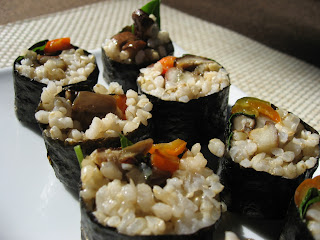
Nori: My grandsons can go through a case of Kirkland's Roasted Seaweed snacks like a swarm of locusts. Sushi rolls are another way to enjoy nori. You can easily make your own sushi at home. Check out my recipe for Brown Rice Sushi with Roasted Eggplant, Peppers and Shiitake Mushrooms.

Kirkland Signature Roasted, Seasoned Seaweed Winter Harvest (12 Packages of 17 gm Seasoned Seaweed)
Nori snacks
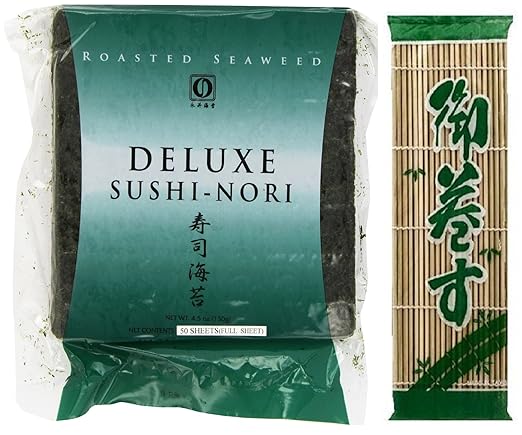
Nagai Deluxe Sushi Nori Full Sheet 50 Count + Wel Pac Sushimaki SU BAMBOO MAT 9.5"X9.5"
This Nori comes with a bamboo mat for making sushi

Brown rice sushi

Dulse Flakes: You can sprinkle dulse flakes on your food with products from Eden Organic and others.

Eden Foods Raw Organic Dulse Flakes
Dulse flakes

Agar Agar: Commonly used in vegetarian cooking as a thickening agent, it can be purchased as flakes or powder. 

Eden Foods Agar Agar Flakes, 1 oz
Agar agar flakes

Kelp: Bragg's makes a nice Kelp general purpose seasoning that combines kelp flakes with rosemary, onion, garlic, thyme, red bell pepper, carrot, tomato, black pepper, basil, EVOO, parsley, tarragon, lemon and orange peel, apple cider vinegar, celery and dill seed, oregano, savory, she, ginger, coriander, bay leaf, and turmeric. Sounds amazing, no?

Bragg Organic Herbs And Spices Seasoning - Sea Kelp - 2.7 Ounces
Bragg's Kelp Seasoning

I hope I gave you a few ways to increase your iodine consumption using delicious sea vegetables. But remember, don't overdo it!

Friday, January 20, 2012

Anasazi Beans With Kombu - How To Make Beans More Digestible And Nutritious!

Beans are the perfect substitute for meat and very important in vegetarian and vegan diets.

Follow Foods For Long Life on FACEBOOK !


The Importance of Beans
Beans are an essential food in anyone's diet but they are particularly important to those who consume little or no animal products. They are truly nutritional powerhouses and are:
* High in protein, dietary fiber and complex carbohydrates
* Low in calories, fat, sodium and are free of cholesterol
* Rich in vitamins and minerals
* A very inexpensive, nutrient dense food source


Just One Cup of Beans
For example, let's take pinto beans. They are easy to find and very inexpensive. 
One cup of cooked pinto beans is only 245 calories and 1 gram of fat yet it provides:
* 15 g or 31% of the daily value (DV) of protein. 
* 15 g or 62% DV of dietary fiber. 
* At least 20% DV of Iron, Magnesium, Phosphorus and Potassium and 39% Manganese.
* 74% DV of Folate and at least 20% DV of Thiamin and Vitamin B6
* Provides over 200 mg of omega-3 fatty acid.


Lots of Variety
There are many varieties to choose from. Here are a few to try:
Aduki Bean - commonly eaten in Asian cuisine.
Anasazi Bean - unhybridized and indigenous to North America.
Black Bean or Turtle Bean - native to Mexico.
Black-eyed peas - also known as cowpeas and used in Southern cuisine.
Pink Bean - used in Hispanic and American Indian cultures. 
Fava Bean - also known as broad bean, these have become more popular in North American cuisine. 
Garbanzo Bean or Chickpea - a very versatile bean used in many different types of cuisine. 
Great Northern, Cannellini and Navy Beans - types of white beans. 
Kidney Beans - found as red or white kidney beans.
Lentils - come in many colors and sizes and eaten all over the world. They cook faster than other beans.
Lima Bean - Also known as "butter beans", they are a favorite in South America.
Soy Bean - also eaten as tofu, tempeh and miso. Very high in protein.


Adjusting to Beans
Some people have a problem digesting beans, especially if they aren't used to eating them and they currently are on a highly processed, low fiber diet. Beans should be introduced to the diet gradually as consuming too many, too quickly can cause gas and intestinal problems. Gas is caused by indigestible sugars (oligosaccharides) contained on their outer coating. But there are things you can do when preparing the beans that will make them more digestible. 


Techniques to Improve Texture and Digestibility of Beans
1. Slow soak - Cover the beans with water and soak for 6 to 8 hours or overnight. Change the water once or twice if possible. Soaking helps eliminate the indigestible sugars that cause gas as well as the phytates that bind with important minerals making them unavailable. By rehydrating the beans, they will also cook more evenly and not split open. Soaked beans also cook much faster retaining more of their nutrient value. 
2. Boil the first 20 minutes - When you start to cook the beans, boil uncovered for the first 15 to 20 minutes, scooping off and discarding any foam. 
3. Add a strip of Kombu to the pot while cooking.
Kombu is a sea vegetable that expedites cooking, improves digestibility of the beans and reduces issues with gas. It also adds iodine, a very critical mineral that is lacking in our diets. Kombu also reduces the need for salt.


1 gram of kombu provides 2,353 micrograms of iodine!


4. Cook with herbs like cumin or fennel. Mexicans also use "epazote" or "wormseed leaf" while cooking to reduce gas in beans. 


Anasazi Beans
I love anasazis. They are also known as "New Mexico cave beans" after being discovered in a cave once inhabited by Native Americans. This beautiful and colorful unhybridized bean has been cultivated for more than 1,000 years. They are sweet and contain far less of the gas-causing sugars than other beans. I made them for lunch yesterday and they were wonderful.


Anasazi beans are sweet, have a delicate texture and cook much faster than most other beans.
1/4 cup Bob's Red mill's dry Anasazi beans (~2/3 cup) provides:
150 calories
0.5 g fat
zero cholesterol and saturated fat
27 g complex carbohydrates
9 grams dietary fiber
10 g protein


Anasazi with Kombu
Vegan, Gluten Free
[makes 2 1/2 cups cooked beans]

1 cup anasazi beans
water
4 inch strip kombu
1/2 teaspoon cumin
1/4 teaspoon salt, or to taste

Place rehydrated beans in a Dutch oven with 4 cups of water and a strip of kombu.


Sort through the beans removing clumps of dirt. Rinse well under cold water.
Place beans in a large pot and cover with 4 cups of water.
Soak for 6 to 8 hours or overnight. Change soak water once or twice if possible.
Rinse again and cover with 4 cups of water and a 4 inch strip of kombu.
Bring to a low boil and cook uncovered for 15 minutes.
Remove foam that forms on top of water.
Reduce heat, cover and simmer until beans are almost done (1 hour more or less).
Add cumin and salt to taste and cook an additional 15 minutes or until beans reach desired texture.
Remove kombu, slice into thin pieces and return to pot.
Drain or cook off excess water and serve or use in any recipe that calls for cooked beans.

For a simple and satisfying meat free meal, serve over rice with a side of your favorite greens.