Thursday, June 20, 2013

American Medical Association Declares Obesity A Disease - Is This Good Or Bad?

One third of Americans are obese.

Follow Foods For Long Life on FACEBOOK .

Obesity Declared a Disease
When I first heard that the AMA decided to classify obesity as a disease, my first reaction was, "really?" Many feel that obesity is self inflicted and can be prevented and cured by diet and exercise. But doesn't that really describe almost every disease? Heart disease, type 2 diabetes, and countless other ailments can be prevented by a healthy diet and lifestyle. I personally don't believe that diseases are caused by our "bad genes". In fact, most diseases are caused by the "unhealthy recipes" passed down from generation to generation. (I will show you how to fight "bad genes" with "delicious and healthy vegan recipes" in my new e-book, Health Begins in the Kitchen, available in July.)

My natural suspicion that most actions taken by the AMA are self serving made me immediately focus on the benefits doctors and pharmaceutical companies would now receive. But the most important thing we should consider about this "declaration" is how it will affect the one third of Americans that are obese and are suffering from the many health issues associated with it. 

The Good
Here are the things I would love to see happen as a result of this declaration:

Making obesity a disease removes some of the stigma of talking about weight. It is a lot more comfortable for the doctor and the patient to discuss a "disease" rather than someone's  weight, poor eating habits or sedentary behavior.

Doctors should now be reimbursed for the time they take to discuss nutrition and exercise with their obese patients. Given that this is not the specialty of most doctors, they should now be able to refer these patients to nutritionists and exercise coaches. This should be covered by insurance.

Some people overeat and become obese for psychological reasons. It would be great if obese patients can now seek therapy to deal with these deep-rooted issues and be given better tools to address these problems. This too should be covered by insurance.

And wouldn't it be nice if policy makers would be more encouraged to make changes that would help prevent this health issue. They did it with smoking after the U.S. Surgeon General informed us that smoking caused disease. Tobacco was more heavily taxed and marketing was restricted. As a result, the percentage of people who smoke has been cut in half since the 1960's. With obesity now a disease, perhaps the government will be more likely to subsidize fruits and vegetables, rather than corn, meat and dairy. Or prohibit the marketing of sugary foods to children. I can dream, can't I?

If all of these things happen and obesity rates drop significantly, so will the rate of type 2 diabetes, cardiovascular disease, high blood pressure, stroke, joint issues, some cancers, and a myriad of other weight-related diseases. For those of you who watch The Biggest Loser or Extreme Makeover Weight Loss Edition, you'll notice that the people on the show end up tossing most or all of their medications after losing significant weight and getting in shape. 

The Bad
Unfortunately there are some bad things that could come from this "declaration". 

Some fear that obese people might just think they were stricken with a disease and feel powerless to control it. Or worse, they may expect the doctor to prescribe a pill to cure or control their illness.

I also fear that it may promote lap band surgery, a procedure that involves placing a plastic band around the upper part of the stomach to make it smaller. This limits the amount of food a person can eat and also reduces their appetite. Eating a healthy, plant-rich diet involves eating high-fiber salads, fruits, vegetables, whole grains and foods that take lots of space in your stomach. There is no need for deprivation! Putting a band around your stomach robs you from enjoying a big, healthy meal. It's absolutely the LAST thing anyone should do. I wish Governor Christy (the new poster child for lap band surgery) came to visit me for a few weeks so that I could have shown him how to enjoy food and lose weight at the same time. People who take the surgical route avoid having to learn about nutrition. 

We Can Only Hope
The declaration making obesity a disease could possibly lead to the education of both the patient and the doctor about how a plant-rich diet can help cure obesity without deprivation or surgery. Somehow, with the AMA leading the charge, I fear that it may lead to more drugs and surgeries. We can only hope for the best.


Monday, June 17, 2013

Vegan and Gluten-Free Kidney Bean Salad With Chili-Lime Dressing- Perfect For Summer Picnics And Barbecues!

Kidney bean salad with corn, avocados and red onion.

Follow Foods For Long Life on FACEBOOK .

SUMMER TIME ENTERTAINING
Summer is the time for friends to get together and enjoy an outdoor barbecue or picnic. When asked to bring a dish to share, be aware that many people have food sensitivities and eating preferences.  With hearty kidney beans, creamy avocados, crunchy fresh corn and a tasty chili-lime dressing, no one will suspect that this delicious salad is also rich in protein, high in fiber and perfect for those who avoid meat, dairy and gluten. And it couldn't be any easier to prepare!


         *                           *                           *                        *

Kidney Bean Salad with Chili-Lime Dressing
Vegan, Gluten Free
[makes 8 servings]

For the dressing:
1/4 cup freshly squeezed lime juice
1 tablespoon cold-pressed hemp oil
1 tablespoon extra virgin olive oil
1/2 teaspoon ground cumin
1/2 teaspoon ground chili powder
1/2 teaspoon salt, or to taste
1/4 teaspoon ground black pepper, or to taste

For the salad:
2 cans kidney beans, drained and rinsed
Kernels from 2 large ears corn
1 red bell pepper, diced (about 1 cup)
1 avocado, diced
1/2 cup diced red onion

Place dressing ingredients in a large bowl and whisk until well combined.

Add all salad ingredients and gently toss until evenly coated with dressing.

Refrigerate until ready to serve.

Per serving: 196 calories, 7 g total fat, 1 g saturated fat, 386 mg omega-3 and 1,790 mg omega-6 fatty acids, 0 mg cholesterol, 8 g protein, 29 g carbohydrates, 9 g dietary fiber and 485 mg sodium.


Tuesday, June 11, 2013

Refreshingly Raw 20-Calorie Strawberry Popsicles - Gluten, Dairy And Sugar Free!

Delicious, raw vegan,strawberry popsicles - only 20 calories!

Follow Foods For Long Life on FACEBOOK .

Getting Ready for Summer Fun
My grandson is coming this summer to visit, as he does every summer. We have a folder called "10 days of fun" which we have been filling with ideas of things to do while he is here. He has recently taken an interest in cooking, so I thought one of the "fun" ideas would be to make popsicles. I will put this recipe in the folder but I'm hoping he will invent his own favorite concoction. 

My 10-year-old grandson, Xavier, loves to cook!

Ice Pop Maker
You don't need a mold but they are very inexpensive and make the process pretty fool proof. The results also a lot more professional looking.

 I bought a Norpro Ice Pop Maker for under $13 on Amazon and an extra bag of popsicle sticks for another few dollars. Some people just freeze the fruit mixture in a tall shot glass or ice cube tray and place a popsicle stick in it when it starts to freeze. But using a mold is a lot easier.

This frozen pop maker produces a nice looking popsicle! 
  
Here's a recipe, but like all recipes, it is just a suggestion.
Use any fruit or juice. Use your favorite sweetener or none at all. I love stevia because it's safe and calorie free. You can also blend fruit with non-diary milk or yogurt. The combinations are endless! 

           *                    *                     *

Sugar-Free Strawberry Popsicles
Raw Vegan, Gluten Free
[makes 6 popsicles]

1 pint strawberries
4 packets stevia
2 tablespoons freshly squeezed lemon juice
1/4 cup water

Wash strawberries, remove tops and thinly slice.
Place in a bowl and sprinkle with stevia. Let sit for 10 minutes.


Slice strawberries and add stevia.

Placed in a food processor with an S-blade. Add lemon juice and process until it reaches the consistency of tomato sauce.

Processs until almost smooth.

Pour into molds but leave about 1/4 inch at the top to allow for expansion. This recipe will make about 6 popsicles.  


Fill popsicle mold with strawberry mixture.

Place the lid over the filled molds and insert sticks.


Place lid and insert sticks.

Pop in the freezer unit frozen, about 4 or more hours, or overnight.

Place in the freezer.

To remove the frozen popsicles from the mold, briefly submerge the popsicle maker in a large, deep bowl - the depth of the popsicles. Leave in for 20 to 30 seconds, until the popsicles slide out.

Dip in a large, deep container filled with warm water.

You can eat them right away, although you might want to return them to the freezer for another hour, wrapped in wax paper, to harden up a little.
You can store these in the freezer, wrapped, for a few weeks.


Enjoy!

* Per popsicle: 20 calories, 0.2 g total fat, 0 g saturated fat, 39 mg omega-3 and 54 mg omega-6 fatty acids, 0 mg cholesterol, 5 g carbohydrates, 1 g dietary fiber and 1 mg sodium.


Thursday, June 06, 2013

One Million Steps, One Hundred Days - Take The Challenge!

Take the Challenge - Start Walking!
1,000,000 Steps
100 Days

Follow Foods For Long Life on FACEBOOK .

One Million Steps
There have been quite a few mentions of a one million step challenge on Facebook and various blogs. My husband, Doug, told me about it a few weeks ago.

I'm pretty competitive and I LOVE a challenge. So I thought I'd challenge him to walk one million steps in one hundred days and I'd do the same. Of course, this really means, "who can clock the most steps in this timeframe." By the way, he's even more competitive than I am. 


The official start date for our challenge - June 1st!

To illustrate how ridiculous it is for me to compete with Doug in reaching this milestone, let me compare our jobs and daily routines.

My husband pretty much "hand" farms our vineyard. Because the vines are planted very close together (European style), he can't get a tractor between the rows. This means he has to walk up and down the 2 linear miles of grapevines whenever he needs to do something to them. He can clock 10,000 steps before lunch!


Doug logs lots of steps farming the vineyard

I, on the other hand, am a blogger, researcher and author. I sit in a chair most of the day. How can I possibly compete with Doug on walking a million steps?


This is where you will find me most of the day.

Getting Ready with our Little Fitbits
My son got me a Fitbit for Christmas so I am all set for this challenge. So Doug had to buy one too. My suspicions were confirmed when he clocked nearly 25,000 steps the first day he wore it. Now I'm starting to worry. But the next day, he was down in the 12,000 range so I thought there was still some hope for me. 

The Fitbit Zip is light and hooks onto your pocket. It's wireless and syncs automatically to your computer so you can monitor your progress. You can find less expensive pedometers, some as low as $20.


The Fitbit Zip Wireless Tracker.
We paid about $49 each.

Upping my Game
I always try to get in my 10,000 steps per day but some days it just doesn't happen. This challenge has inspired me to up my game. Here's how I've modified my work day to get more steps in.

* Every hour on the hour, I take a 5 minute break and either jump on the elliptical (which is a few feet from my desk), do jumping jacks,  or march in place.

* I only buy enough groceries for one day and walk to the grocery store every afternoon.

* I moved my home office downstairs so that every time I need anything in the house, I have to walk up a flight of stairs.

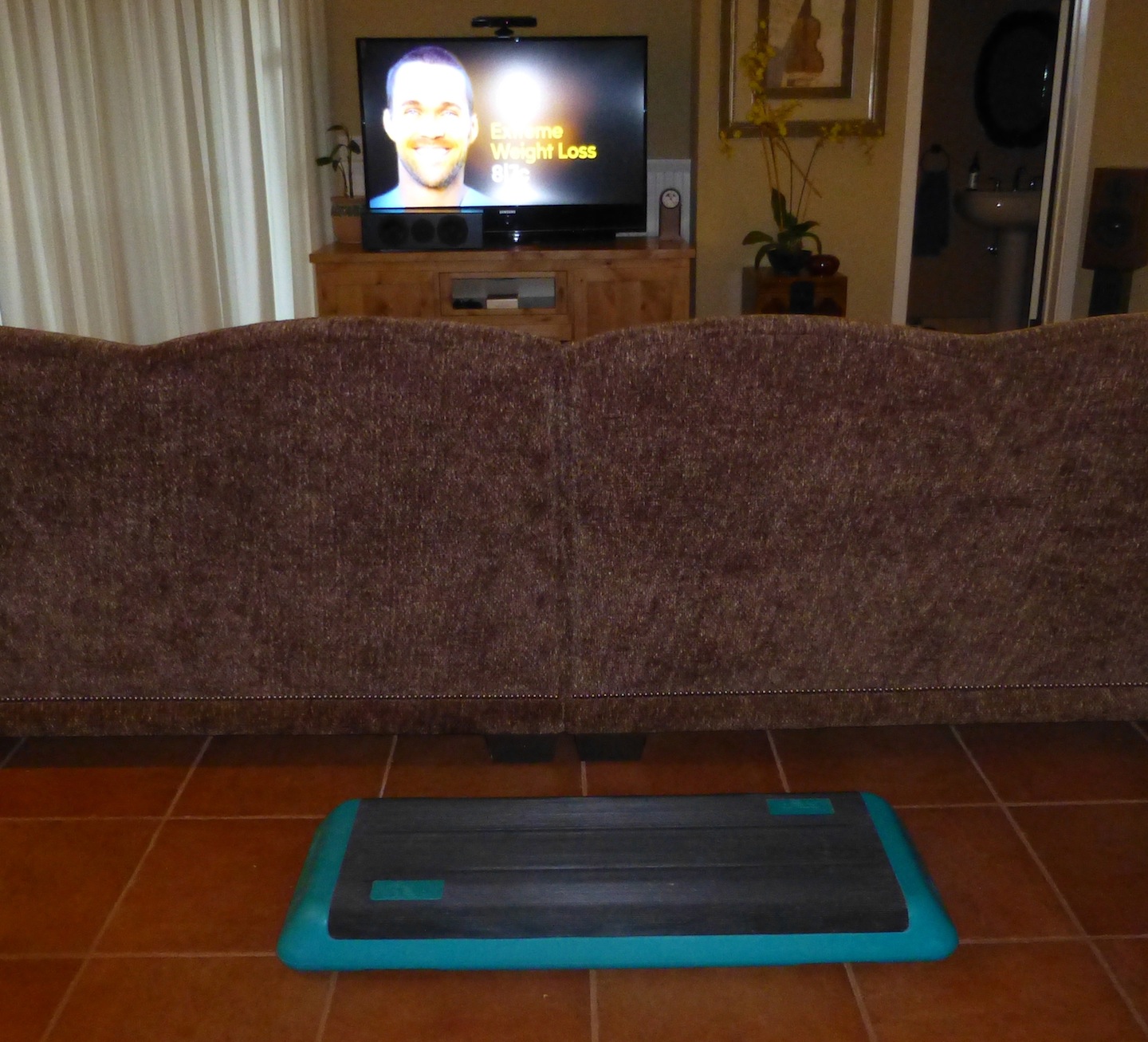
* I placed a step behind the couch so when I watch T.V., I can be doing step aerobics.


When watching TV, use a step or just march in place.

* When I have to mail a letter, I walk to the post office.

* I take out my Zumba tapes a couple of times a week and dance.

The Benefits!
There are many benefits, besides the glory of accomplishing this goal, of physical activity. According to the Centers for Disease Control and Prevention, physical activity can:
* Control your weight  (depending on your weight and current level of activity, you can lose 5 to 10 pounds by walking a million steps!)
* Reduce your risk of heart disease
* Reduce your risk of type 2 diabetes and metabolic syndrome
* Reduce your risk of some cancers, such as endometrial and lung cancer
* Strengthens your bones and muscles
* Improve your mental health and mood and reduce depression
* Help you sleep better
* increase your chances of living longer

Partner Up
It easier and more fun to take this challenge with a friend, spouse, work partner or neighbor. 
So pick a partner, pick up a pedometer, 
TAKE THE CHALLENGE AND START WALKING !

How are we doing?
The totals for the month of June are:
Joanne
328,138 steps
135 miles
48,300 calories
Doug
418,071 steps
192 miles
80,011 calories

By the end of July:
Joanne
671,586 steps
276 miles
98,850 calories
Doug
799,544 steps
367 miles
153,000 calories

We Hit Our Goal!
By the end of August (92 days)  I hit 1,004,085 steps
Doug met the 1 Million Step goal by August 15th, after 77 days!


Monday, June 03, 2013

Fresh Corn Salad With Baby Arugula And Red Onions

Fresh corn gives this raw salad a delicious crunch!

Follow Foods For Long Life on FACEBOOK .

Fresh Corn
Corn is abundant at the market right now. You can get lots of conventionally grown corn for a very low price and since it's part of the Environmental Working Group's Clean 15, it's safe from a pesticide perspective. However, if you are concerned about eating GMO foods, you may want to consider paying a bit extra for organic. 

I love corn, either raw off the cob or in a salad like this. Today I was inspired by a dish I saw in the deli case at Whole Foods.  It's a simple mixture of fresh corn with baby arugula and red onion with a lemon and oil dressing. When I compared the nutritional value of salad greens last September, arugula was high on the list so I always love using baby arugula in my salads. And, of course, I love its spicy flavor.

And remember my tip on cutting corn. Snap it in half, lay it down on its side, and cut the corn off horizontally instead of vertically. This will keep it from flying all over your kitchen!

       *                   *                     *                     *

Fresh Corn Salad with Baby Arugula and Red Onion
Raw Vegan, Gluten Free
[makes 4 servings]

For the salad
2 ears of corn
2 to 3 large handfuls of baby arugula (about 3 ounces)
1/2 cup thinly sliced red onion

For the dressing
1 tablespoon freshly squeezed lemon juice
1 tablespoon extra virgin olive oil or cold-pressed hemp oil (I prefer a mixture of both)
1/4 teaspoon salt (or to taste)

Clean corn and remove the kernels. Place in a large salad bowl with arugula and onions.

Make the dressing: Whisk oil, lemon juice and salt together until well combined.

Add dressing to the salad and toss until well coated.

Serve immediately.

Per serving: 103 calories, 4 g total fat, 0.5 g saturated fat, 311 mg omega-3 and 1,581 g omega-6 fatty acids, 0 mg cholesterol, 3 g protein, 16 g carbohydrates, 2.5 g dietary fiber and 162 mg sodium.

Wednesday, May 29, 2013

Vegan Panko-Crusted Tofu With Dijon Mustard

The Dijon mustard gives this panko breading intense flavors!

Follow Foods For Long Life on FACEBOOK .

Soy is a Healthy Food
I have always come squarely down on the side that says soy is a healthy food. Obviously you shouldn't eat soy if you are allergic to it, but eating moderate amounts of whole soy foods such as edamame or tofu is good for most people. It's an excellent source of vegetarian "complete" protein. Soy has been shown to relieve menopausal symptoms such as hot flashes and is linked with lower risks of breast and endometrial cancer. The FDA claims that eating 25 grams of soy protein per day may help reduce the risk of heart disease. Eating lots of fake meats with soy isolates or taking it as a supplement is not recommended. 

But despite the positive studies, eating soy remains a controversial subject. This topic comes up at every health conference and this year's 2013 Health and Nutrition conference was no exception. Dr. Weil discussed it the first day. He feels that there is a lot of misinformation about soy, most of which comes from the meat and dairy industries. The controversy arises from the fact that soy contains isoflavones that have estrogenic activity and some claim that they might accelerate some breast cancer cells or be bad for developing young boys. Studies have shown, and Dr. Weil agrees, that soy blocks access to estrogen receptors and is even safe for women with estrogen receptor positive breast cancer. And no, it does not feminize boys.

Today's recipe
I enjoy tofu once or twice a week. Here's a incredibly easy and flavorful way to prepare it.
The Dijon mustard in this recipe not only serves to hold the breading onto the tofu, but it adds an intensely wonderful flavor to the dish. Other than heating the tofu and browning the breading, there is not much to cook so the entire recipe goes together very quickly.
I serve it with Thai Cabbage, Daikon and Carrot Salad.

             *                    *                      *                     *
Panko-Crusted Tofu
Vegan
Requires a shallow roasting pan
[makes 3 (2-piece) servings]

2 tablespoons extra virgin olive oil plus some to grease the pan
1 pressed garlic clove
1 packed teaspoon grated lemon zest
2/3 cup Panko bread crumbs
1/4 teaspoon salt or to taste
1/4 teaspoon black pepper
2 tablespoons chopped fresh cilantro or parsley
1 (14 to 16 ounce) block extra-firm organic tofu
1 tablespoon Dijon mustard

Preheat the oven to 375 degrees F. Grease a shallow roasting pan with olive oil.

In a small bowl, combine garlic, lemon zest, bread crumbs, salt, pepper, and cilantro (or parsley). Drizzle in 2 tablespoons of olive oil until the bread crumbs are well coated. Set aside.

Make the breading.

Cut the block of tofu into 6 slices. Lay them down in the greased roasting pan and spread each evenly with 1/2 teaspoon of Dijon mustard. 

Coat the tofu with Dijon mustard.

Sprinkle the Panko mixture over the tofu. It should stick to the mustard.

The breading should adhere nicely to the mustard.

Bake in the oven until the tofu is hot and the bread crumbs are slightly toasted and brown.

Remove from the oven and serve immediately.

Serve with Thai Cabbage, Daikon and Carrot Salad.

Per serving (2 pieces of tofu): 272 calories, 18 g fat, 2.7 g saturated fat, 421 mg omega-3 and 3,996 mg omega-6 fatty acids*, 17 g protein, 15 g carbohydrates, 2.2 g dietary fiber and 356 mg sodium.

* Nutritional information for omega-3 and omega-6 excludes any contribution from the Panko bread crumbs since that information is not available from the manufacturer.

Thursday, May 23, 2013

Thai Cabbage, Daikon And Carrot Salad Topped With Roasted Peanuts - Vegan And Gluten Free

Thai cabbage salad with daikon and carrots.

Follow Foods For Long Life on FACEBOOK .

Fresh and Crunchy
I love the crunch of the fresh vegetables and roasted peanuts in this salad. They blend so beautifully with the tangy dressing flavored with fresh garlic and ginger, soy sauce, vinegar, and freshly squeezed lime juice. Hemp oil provides the omega-3 rich base for the dressing and crushed red pepper flakes give it a little kick!

For a heartier, main course salad, stir in cooked rice noodles. 

          *                *               *                 *

Thai Cabbage, Daikon and Carrot Salad
Vegan (Mostly Raw), Gluten Free
[makes 8 servings]

For the salad
8 cups thinly sliced raw cabbage (1 small head)
3 large carrots, peeled and grated
2 cups peeled and grated daikon
4 green onions, sliced
1/2 cup chopped fresh cilantro plus some for garnish
4 ounces thin rice noodles, (optional)
1/2 to 1 cup dry-roasted, salted peanuts, crushed
salt to taste

For the dressing
1/4 cup freshly squeezed lime juice
2 tablespoons gluten-free soy sauce
1 packed teaspoon freshly grated ginger
2 cloves pressed garlic
1 packet stevia
1/2 teaspoon crushed red pepper flakes
1 tablespoon white vinegar
2 tablespoons cold-pressed hemp oil 
2 teaspoons unrefined sesame oil

Place the cabbage, carrots, daikon, green onions and cilantro in a large bowl. Set aside.


Crush peanuts by placing in a ziplock bag and smashing them with a mallet. Set aside


Crushed peanuts


 Combine all the dressing ingredients in a small bowl or cup. Pour over the cabbage mixture and mix well. Salt to taste but remember that you will be getting additional salt from the peanuts.


I prefer to press rather than mince garlic in this dressing but if you don't have a garlic press, smash and then mince the garlic.


Cook rice noodles (if you are using) according to manufacturers directions. Drain, rinse and stir into cabbage mixture.


Thin rice noodles make a nice addition.

Top the salad with crushed peanuts and additional fresh cilantro and serve. 


Thai salad with optional rice noodles


Wednesday, May 15, 2013

The Microbes Within: How They Shape Our Lives And Influence Our Health, Blogging From The 2013 Nutrition And Health Conference In Seattle, Washington With Justin Sonnenburg


The microbes within greatly influence our health.

Follow Foods For Long Life on FACEBOOK.

Great Conference
I’m flying home now as the 2013 Health and Nutrition Conference in Seattle has ended. After attending over 20 amazing talks over the past 3 days, my mind is flooded with things I want to share with you. I already blogged about Dr. Weil’s Anti-Inflammatory Diet and Dr. Naiman’s insight into sleep, dreams and nutrition. But before I return to my normal life of recipe development and preparing to launch my ebook, I have to write about the most mind-blowing presentation of the entire conference given by Justin Sonnenburg from Stanford University’s School of Medicine. It’s not terribly appetizing so I would not suggest reading this during dinner, but this information has far reaching implications and can truly change how you think about yourself, your diet and your health.

We're Just a Bag of Germs
Dr. Sonnenburg talked about the role of intestinal microbiota with respect to health and disease.  Sounds pretty dry, right? But it’s anything but. It turns out that we are literally a walking carrier of microbes. There are an enormous number of these little guys living on our skin, in our mouths and mostly in our gut. Their cells outnumber our own cells by 10 to 1. They have 100 times the number of genes than we do so from a genetic standpoint, we are 99% microbial. Now it may not be obvious when you look in the mirror, but in fact we are just a bag of germs! 

Now don’t get completely freaked out. You’ve been hosting these microbiota your entire life and they influence many of our life functions in a BIG way! They can affect our metabolism, our immune function, how we harvest energy and nutrients from our food, how we metabolize drugs - they can even contribute to irritable bowel or obesity (OK, you are definitely partners in that one!). The microbiota profile of the Western world, influenced by our highly processed food and agricultural practices, may be the reason for the increased cases of certain food sensitivities, autoimmune diseases, asthma, type 2 diabetes and cardiovascular disease. 

Our Microbiota
Let’s talk a bit more about the microbiota. Most of them live in our intestines. There are 500 to 1,000 bacterial species: 90% of whom, in the Western culture, are Bacteroidetes and Firmicutes. Other cultures have different species and varying amounts of diversity. Now if you were to look at a cross section of the intestines, you would see villi that are covered with mucous (I told you not to read this before dinner). The mucous is covered with carbs which feed our microbiota. What we eat determines what they are and how happy they are. Since they affect so many facets of human biology, we want these guys to be as happy as possible. Besides, if you don’t eat polysaccharide-rich, high fiber foods, the microbiota will start to eat your mucosal lining

How They Get Here
So how do these microbiota end up in our bodies and what determines which types are most prevalent? Full colonization of your gut happens over the first 3 years of life. It begins at birth when the baby is exposed to the mother’s vaginal and intestinal microbes. When babies are born by Caesarean, however, they do not acquire these critical microbes. In fact, their microbiota profile more closely resembles that of the parents’ skin which may prevent their immune systems from developing properly. With one third of all births in the U.S. being delivered surgically, this could explain the high incidence of food sensitivities, allergies, asthma and autoimmune problems.

Mother’s milk then allows the microbiota to flourish. It contains human milk oligosaccharides (HMO’s). These HMO’s are indigestible by the baby but these prebiotics help seed the bifido bacteria in the child’s intestinal tract. They also attract other microbes needed as the baby weans to solid foods. Baby formulas that do not contain prebiotics, (and the early ones certainly did not), will not support the growth of these important microbes as effectively as good old mother’s milk. Luckily, breastfeeding rates are increasing.

Effect of Diet
Even if a person has developed beautiful and healthy microbiota, it’s important to feed and nurture them. Unfortunately the Western diet, agricultural practices and common medical protocols have a very detrimental affect on them.

Gut microbiota live on polysaccharides. They thrive on high-fiber foods so a plant-rich diet of vegetables, fruits, whole grains, nuts and seeds would make them happy. A diet rich in highly-processed foods would not. Diet is a major driver and as we went from hunters to an agricultural community to one that consumed highly process foods, our microbiota have changed dramatically. The goods news is that microbiota can respond and change if you change your diet. 

Danger to the Microbes
Antibiotics can cause the microbiota population to plummet. They can recolonize but it becomes more difficult with repeated use. Antibiotics disrupt the efficiency of the intestinal ecosystem and allow pathogens to be introduced and take hold. This can lead to inflammation and a host of medical issues. Besides the antibiotics given to us by our doctors, we are exposed to them via our food supply. In severe cases of microbial devastation or antibiotic resistance, fecal transplants may be done. This procedure implants fecal material from a healthy host donor into a recipient thus recolonizing the recipient with microbiota. This has been used to successfully treat C. difficile infections. This procedure can have many other applications.

Dr. Sonnenburg, after examining the pictures of colons post colonoscopy, noted that the preparatory procedure pretty much wipes the intestines clean. He was in no way suggesting that people avoid this potentially life-saving procedure but it made me think that perhaps doctors should be much more proactive in advising their patients to re-colonize afterwards with probiotics and prebiotics. 


Your health care practitioner might recommend a  high quality probiotic after a colonoscopy or course of antibiotics.
I met the people from Bio-K at the conference. This probiotic can be found in the refrigerated section of whole foods.


The Implications
The implications of this work is far reaching. These microbiota play a tremendous role in our health. Their genetic content is far more adaptable and resilient than ours. Our microbiota's collective genes, or microbiome, like that of our human genome, will become a significant factor on how we will be treated for disease in the future. (Already there are companies, like uBiome, who will map your personal microbiome) We will someday use this data to predict and treat disease.  Perhaps the combination of our human genome with our microbiome mapping with allow a specific diet to be designed for us for optimal health. What amazing therapeutic potential! The possibilities are endless and I have thought of practically nothing else since hearing this lecture. 

Can We Take Action Now?
What can we do now?
There are more questions than answers at this point but there are some things we can do. 
* Make friends with your microbes. In fact I’ve given mine a name: The Mobies. It just popped into my mind and stuck. 
* When you eat and shop from now on, ask yourself, “would The Mobies (or whatever yours are named) like this?” This might be a great way to get your kids to eat veggies. They love bugs so the thought of feeding their own personally named internal bugs might be fun for them!
* Eat a plant-rich, fiber-rich diet. See my posting on High Fiber Foods.
* Avoid highly-processed food and foods with additives.
* To provide friends for your microbes, eat more fermented foods like raw sauerkraut, fresh barrel pickles, yogurt (they have some good non-dairy ones now) and kimchee. 
* Use antibiotics sparingly. 
* If you are pregnant, opt for a natural birth if possible and breast-feed your baby for as long as you can.
* After getting a colonoscopy, ask the advice of a naturopath or herbalist on the best way to recolonize your gut.
* Get a little dirty.


Eat plenty of fermented foods like raw sauerkraut or fermented vegetable salads found in the refrigerated section of your health food store.


Get Dirty
Let me explain my last comment about getting a little dirty. Our society has become germaphobes. To quote one of the brilliant speakers at the conference, Dr. Tieraona Low Dog, “we have to stop treating our environment like it’s out to get us”. In light of Dr. Sonnenburg’s talk, this makes a lot of sense. We use antibiotics at the drop of a hat, we use hand sanitizers, we use chlorine washes for our lettuce, we processes the life out of our foods, we boil our babies’ pacifiers. It’s a miracle that we have any microbial life in our bodies at all! 

More Reading
Michael Pollan weighed in on this subject yesterday with an excellent article in the New York Times, "Some of My Best Friends Are Germs". 

This is a fascinating and far reaching topic and you will be reading a lot more about it in the future. All the recipes in this blog are microbe friendly - just ask The Mobies!

Tuesday, May 14, 2013

Can You Overcome Insomnia? Blogging From The 2013 Nutrition And Health Conference In Seattle, Washington With Professor Rubin Naiman

Dr. Rubin Naiman, Director Circadian Health Association and Clinical Assistant Professor of Medicine, University of Arizona

Follow Foods For Long Life on FACEBOOK 

I’m here at the 2013 Nutrition and Health Conference in Seattle.
I’d like to share a topic near and dear to our hearts – sleep. This presentation discussed “The Role of Nutrition in Sleep and Dreams” by Rubin Naiman.

Seventy million people have insomnia – I being one of them so I was hoping that I’d learn about a magic nutrient or some clever tip to help me and others get a better night sleep. Here’s what I learned from Dr. Naiman:

There is a very complex interaction between eating and sleeping. Our food and nutrition can affect our sleep and dreams. Also, not getting enough sleep can impact poor nutrition. Sleep loss is associated with increased illness and inflammation. Cardiovascular disease, obesity, diabetes, autoimmune and mood disorders and other illnesses are all associated with sleep loss. Dr. Naiman commented that depression and insomnia are so closely linked that some think they are the same thing.

What I took away from this interesting talk is that most insomnia results from our being “over-consumers”. We over consume food, information, light and energy. Sleep is the dissipation of energy and time for letting go. Because we take on more than we can let go, many of us cannot rest or sleep. Speaking of not being able to “let go”, Dr. Naiman tells of an interesting correlation between constipation and insomnia. Over 50% of people with constipation have insomnia!

Another important “take away” from this talk, one that I could totally relate to, is that the reason we have a hard time sleeping is because we don’t “rest” before we try to sleep. Rest is the essential precursor to sleep. In fact, when we get sleepy, many of us respond to it as a need for more fuel, not rest. We are literally “rest-less”. Rest is the bridge from being awake to sleep. Do you rest before you sleep? Or do you watch TV, work on your computer, or finally make time to get on the treadmill?
Dr. Naiman feels that we  are “less sleepy” and have insomnia are because we are hyper aroused. So how do we slow down enough to get a good night sleep.

There is no magic nutrient (in fact he mentioned that very few cases of insomnia are because of a nutritional deficiency). Sleeping pills and antidepressants actually disrupt critical REM sleep and also disrupt our memory. So when you pop that ambien, you didn’t necessarily sleep well, you just can’t remember that you tossed and turned all night!

One of the reasons we don’t “rest” or enjoy going to bed at night is because we do not value sleep. In fact, many of us view it negatively – almost a waste of time. We look at sleep as not being awake or not being conscious. Sleep is valued only as it helps us in our waking life (it improves our immunity, our memory, etc.) but it is an end in and of itself. Dr. Naiman encourages is to learn to fall back in love with sleep! Remove the things on your nightstand, like your cell phone, your laptop, your book club novel and other items that might beckon you to the waking world.

Melatonin is the hormone our body produces that allows us to sleep. We produce it as a response to darkness. It causes the dilation of distal blood vessels. As the level of melatonin increases, our core body temperature is lowered. But exposure to light can greatly interfere with the production of melatonin and our ability to sleep. Suppression of melatonin has been linked to an increased risk of cancer. In fact, people working on the night shift have a higher risk of cancer.

To help sleep, it is necessary to reduce “light pollution”. Look around your bedroom? Do you have a brightly lit alarm clock, an outside light that shines in your window, or a night light?  These can all effect your production of melatonin and should be removed from your bedroom. 

REM, or dream sleep, is critically important. REM is the time that we digest and assimilate information and emotion. This is really the most important part of sleeping. Most issues related to sleep loss is really from “dream” loss. Alcohol interferes with REM sleep. So do certain medications like anti-depressants. As I mentioned before, no sleeping pill truly creates sleep and they usually damage our sleep in the long run. Chronic sleep loss leads to increased mortality. 

Some myths about sleep that were debunked by Dr. Naiman.
* Turkey in not a sedative. In fact eating anything at night disrupts sleep. 
* Nightcaps are not good. They may help put you to sleep but they don’t allow you to sleep well. 
* Chamomile helps put you to sleep but it’s a diuretic too. In fact he thinks Sleepy Time tea (that contains chamomile) should be called “pee pee time” tea.

Although he briefly touched upon sleep and dream promoting nutrients and supplements like GABA, L-threanin, glycine, 5HTP, tryptophan and melatonin, he reaffirmed the need to address hyperarousal. It is better to “let go” in order to sleep. We cannot override all this inflammation in our lives, our mind, etc. by taking some “pill” or nutrient to sleep. Melatonin supplements (which he himself takes and he was most positive about) is “just an appetizer”. It should just remind you of a natural desire to enjoy sleep. It will gently seduce you into sleep.

So bottom line, we need to regard sleep as fondly and as enthusiastically as we do our waking life. We need to retrain ourselves to want to sleep and give ourselves that “rest” period before we go to sleep to act our bridge to sweet slumber

I will end by sharing how Dr. Naiman’s Jewish mother assessed one’s health by asking these three key questions:
Did you eat?
Did you poop?
Did you sleep?
Could anything affect one’s good health more than these things? Wise woman!