Wednesday, November 28, 2012

Veggie And Soba (Buckwheat) Noodle Soup With Shiitake Mushrooms - Vegan And Gluten Free

Did you know that buckwheat noodles are gluten free?

Follow Foods For Long Life on FACEBOOK .

Buckwheat is Not Wheat!
Although "wheat" is in the name, buckwheat is not related to wheat.  Buckwheat Fagopyrum esculentum is not part of the cereal grain family but is from a broad leaf plant in the Polygonaceae family. Soba noodles, made from 100% buckwheat, are suitable for those on a gluten-free diet as long as they haven't been cross contaminated during processing.

I love the chewy texture of these noodles. I prefer them over Udon noodles and always have a package of them in the pantry. Soba noodles are low in fat and high in protein and contain all the essential amino acids. They also contain thiamin, folate niacin, manganese, magnesium, phosphorus and iron.


a 2 oz serving of buckwheat soba provides:
200 calories
1 g total fat
zero saturated fat and cholesterol
6 g protein
3 g dietary fiber
43 g carbohydrates

Time for Soup
It's getting cold and although one third of my diet still consists of raw fruits and vegetables, most of my diet, in the cold months, is cooked. I almost always have a pot of hot soup on the stove.
Here's a recipe that can stand alone with just the veggies, shiitake mushrooms and soba noodles but you can also add slices of tofu or the protein of your choice to make it even more hardy. 

You can make this meal using just 2 pots: a 3-quart saucepan to make the broth and a 5-quart soup pot.

Veggie and Soba Noodle Soup
Vegan, Gluten Free
[makes 4 servings]

For the broth
Stems from 1/4 pound shiitake mushrooms used in soup
8 cups water
2 cloves garlic, smashed
2 tablespoons gluten free, low sodium soy sauce
1 carrot, cut in large slices
1 or 2 stalks celery, cut in large slices
2 large slices of onion (top and bottom with skin)
1 teaspoon grated fresh ginger 

For the soup
4 cups small broccoli florets
8 ounce package of buckwheat soba noodles
1 tablespoon sesame oil
3/4 cups thinly sliced onions
1 small red bell pepper, cleaned, quartered and sliced
1/4 pound shiitake mushrooms, stems reserved for broth, caps cut in half
1 1/2 cups peeled and sliced carrots
Strained broth from above
1/2 teaspoon salt, or to taste
4 or more slices raw jalapeño
1/4 cup fresh cilantro

Make the broth. Remove the stems from the shiitake mushrooms and place them and all of the broth ingredients in a 3-quart saucepan and bring to a boil. Reduce heat, cover and simmer for 30 minutes. Set aside. 


It's easy to make your own broth. This broth makes use of the mushroom stems and the top and bottom of the onion.

While the broth simmers, prepare the vegetables and noodles. 
Place a steamer basket in a 5-quart soup pot filled with 2 inches of water. Place the broccoli in the steamer  basket and cook, covered, on high heat until fork tender. Remove the broccoli from the pot immediately so that it doesn't overcook. Set aside. 


Cut the broccoli into very small florets.
Steam briefly until fork tender and remove from heat.

Remove the steamer basket from the pot and fill the soup pot with fresh water. Boil water and cook the soba noodles according to the directions on the package. Drain the noodles in a colander and rinse them well as soba noodles can be quite starchy. Set them aside. Wipe out the soup pot with a towel to dry.

Heat the sesame oil in the soup pot and cook the onions on medium heat until they begin to soften, about 4 minutes.
Add the peppers, shiitake mushrooms and carrots and cook for another 4 minutes.


Cook the onions, peppers, mushrooms and carrots.

Strain the broth and pour it into the soup pot along with the slices of jalapeño. Simmer until the carrots are tender, about 10 minutes. Add salt if desired.

Add the cooked broccoli and soba noodles to the soup pot and heat for several minutes until warm.

Divide into 4 soup bowls, top with fresh cilantro and serve.


Per serving: 316 calories, 5 g total fat, 0.6 g saturated fat, 51 mg omega-3 and 1.6 g omega-6 fatty acids, 11 g protein, 60 g carbohydrates, 8.3 g dietary fiber and 717 mg of sodium (with the additional 1/2 teaspoon of salt - 427 mg sodium without it).

Monday, November 19, 2012

Vegan And Gluten Free Spaghetti And Not Meat Sauce - Made From Lentils And Spaghetti Squash Or Pasta

Lentils form the base for this meaty tomato sauce.
Spaghetti squash is a good gluten free alternative to pasta.

Follow Foods For Long Life on FACEBOOK .

Meat Sauce Alternative
When you simmer cooked lentils in a rich, seasoned tomato sauce they not only provide a meaty texture but they also deliver protein, vitamins, minerals and fiber. 
Let's compare a cup of lentils to a 3 ounce serving of ground beef.


One cup of cooked lentils has the same number of calories as a 3 ounce serving of ground beef but has only 5% of the total fat and essentially no saturated fat or cholesterol.

They are pretty comparable in protein but lentils deliver more than half of your daily fiber requirement while ground beef provides zip. And don't fear lentils' carbs. They are the complex kind that keep your blood sugar stable and slowly provide glucose to your cells.

Lentils are packed with folate, a B vitamin critical for heart health, the production of new cells and especially important for pregnant women. While 1 cup of lentils provides 90% of your daily requirement of folate, ground meat only provides 3%. And while the non-heme iron found in lentils is not absorbed as well as the heme-iron in the ground beef, well - there's 3 times as much of it so not to worry!

Ground beef has the one advantage of providing vitamin B12 which lentils do not. 

Spaghetti
Spaghetti squash is a wonderful alternative to pasta when you are trying to avoid some carbs and calories. It's also naturally gluten free. It's magical the way the cooked flesh turns into spaghetti strands. But I love this lentil "meat" sauce on pasta too - either whole wheat or, if you are avoiding gluten, served on any gluten free alternative like Tinkyada brown rice spaghetti pasta.

Spaghetti and Not Meat Sauce
Vegan, Gluten Free (on spaghetti squash or gluten free pasta)
[makes 4 servings]

3 pound spaghetti squash*
1 tablespoon extra virgin olive oil
1 cup chopped onion
1 small green bell pepper, chopped 
1/4 teaspoon red chili flakes (or to taste)
3 cloves garlic, minced
3/4 teaspoon dried basil
1/4 teaspoon dried oregano
1 can drained lentils
1/4 teaspoon salt, or to taste
2 cups prepared tomato sauce

* or 8 ounces whole grain or gluten free spaghetti cooked according to manufacturers directions

Prepare the spaghetti squash. Cut in half, scoop out the seeds and place in a large pot with one or two inches of water. Cover and steam until a fork barely penetrates the flesh, about 15 to 18 minutes. Don't overcook or it will turn to mush. Remove the spaghetti squash from the pot immediately. 


Cover and steam until cooked.

Using a fork, gently pull the squash away from the sides uncovering little spaghetti-like strands. Continue to do this until all the squash is removed. Place the spaghetti strands on a platter, cover to keep warm and set aside.


Form strands with a fork

Heat the oil in a large saucepan and cook the onions and peppers at medium heat until soft, about 5 minutes.
Add the chili flakes and garlic and cook until the garlic is fragrant, 1 or 2 minutes. 


Cook onions, pepper, garlic and chili flakes

Add the basil, oregano, lentils and salt and stir to combine.


Stir in lentils and seasoning

Add the tomato sauce and simmer until the flavors blend and the sauce thickens, about 10 minutes or more. If you are using this topping on regular pasta, this would be a good time to cook the pasta.


Simmer until the flavors blend and the sauce thickens

Serve on top of spaghetti squash (pictured above) or stir together with whole wheat or gluten free pasta.

Not Meat sauce on top of whole wheat pasta

Per serving (on spaghetti squash): 293 calories, 6 g fat, 1 g saturated fat, 201 mg omega-3 and 635 mg omega-6 fatty acids, 12 g protein, 52 g carbohydrates, 14.9 g dietary fiber and 1050 mg sodium*.

Per serving (on whole grain pasta): 390 calories, 5 g fat, 0.7 g saturated fat, 93 mg omega-3 and 862 mg omega-6 fatty acids, 19 g protein, 74 g carbohydrates, 15.2 dietary fiber and 1002 g sodium"

* sodium can be reduced by using "no salt added" canned lentils or cooking your own lentils.


Monday, November 12, 2012

Wild Rice And Aduki Bean Stuffed Acorn Squash Topped With Low Sugar Orange-Cranberry Sauce, A Great Vegan And Gluten Free Entrée For The Holidays!

Stuffed acorn squash makes an attractive holiday entrée.

Follow Foods For Long Life on FACEBOOK .

Satisfying your Thanksgiving Guests 
Entertaining is far more complicated than it used to be. Besides people avoiding meat because of ethical or health reasons, far more people are passing on wheat, dairy, nuts, soy, etc. because of food allergies. If you are having a large holiday dinner for Thanksgiving, Hanukkah or Christmas, I can almost guarantee you that one of your guests will have some kind of eating restriction or preference. 
Always ask your guests ahead of time if they have food preferences or allergies so that it doesn't come as a big surprise when they arrive at your house and say, "oh by the way, I don't eat .....". It's best to know beforehand so that you can prepare something special or even ask them to bring a dish to share. 
Here's a recipe that avoids meat and most allergens and is elegant enough for your holiday menu.

Aduki Beans
The aduki (also called azuki or adzuki) is the same bean used in red bean ice cream, commonly served in Japanese restaurants. It's a small and delicate red bean that is easier to digest than other beans with strengthening and balancing qualities. They are traditionally served at festive celebrations and are said to bring good fortune. 
I like buying them from Eden since they are organic and packed in BSP (bisphenol) free lined cans.

1/2 cup serving of Aduki beans provides:
110 calories
7 g protein
19 g carbohydrates
5 g fiber
Only 10 mg sodium
High in Iron, phosphorus, magnesium & folate
Aduki beans are small, delicate red beans.

Here's a low sugar cranberry sauce flavored with orange juice and orange zest that is a great topping for this stuffed acorn squash recipe. But it will complement any Thanksgiving meal. Make it earlier in the day so it has time to cool and thicken. Or, make it the day before and refrigerate after it cools at room temperature.

Low sugar orange-cranberry sauce
Vegan, gluten free
[makes 8 (1/4-cup) servings]

12 oz package of fresh cranberries, washed
1 cup orange juice
1 teaspoon grated orange zest
1/3 cup Sucanat or other organic cane sugar
Liquid stevia to taste for added sweetness

Heat the orange juice, zest and sugar in a small saucepan stirring until the sugar dissolves. 

Add the cranberries and bring to a boil. Reduce to medium heat and cook until all the cranberries pop and the sauce thickens (8 to 10 minutes).

Remove from the heat and add stevia a few drops at a time until it reaches the desired sweetness.  Don't add too much or it can become bitter. I usually add about 8 drops.

Let the cranberry sauce cool at room temperature. It will thicken as it cools. Store in the refrigerator.


Per serving: 66 calories, 0 g fat, 0 g cholesterol, 0 g protein, 16 g carbohydrates and 1.5 g dietary fiber and 1 mg sodium.


                                    *                *                *


Wild Rice and Aduki Bean Stuffed Acorn Squash
Vegan, gluten and lactose free
[makes 4 servings]

2 cups cooked brown and wild rice mixture
2 acorn squash, vertically cut in half, seeds removed
2 teaspoon extra virgin olive oil
1 cup chopped onions
1 can no salt added aduki beans, drained and rinsed
2 tablespoons gluten free, low sodium soy sauce
2 tablespoons agave nectar
1/4 teaspoon ground black pepper
1/4 cup low sugar cranberry sauce (see recipe above)

Preheat oven to 375 degrees F.


Cook a mixture of wild and brown rice, according to manufacturers directions, enough to yield 2 cups of cooked rice. Meanwhile, cook acorn squash.


Cut acorn squash in half and place on a cookie sheet or shallow roasting pan. Cover with foil and bake until a fork easily pierces the flesh, about 1 hour.


Cut acorn squash in half vertically
Cover with foil

While the squash is baking, heat the oil in a large sauté pan and cook the onions on medium heat until soft and slightly brown, about 5 to 8 minutes.


Add the beans, soy sauce, agave nectar and black pepper and cook for several minutes. Turn off the heat and set aside.


When the squash halves are cooked, remove them from the oven. Scoop out about half of the squash leaving the shell and about 1/2 inch of squash. Chop the removed squash into small pieces.

Add chopped squash to the pan of beans. 


Mixture of beans, onions, squash and seasoning

Stir in the wild rice mixture. 


Stir in the cooked wild and brown rice

Stuff the squash with the bean and rice mixture and cover with foil. Place in the oven and bake until warm, about 15 to 20 minutes.


Cover with foil and bake until heated

Serve with a tablespoon or more of low sugar cranberry sauce. 
Enjoy!

Serve with cranberry sauce

Per serving: 369 calories, 3 g fat, 0.5 g saturated fat, 12 g protein, 76 g carbohydrates, 10.3 g fiber and 374 g sodium.


Thursday, November 08, 2012

Lactose Intolerant? Going Vegan? You'll Need A Substitute For Milk. Here's How To Select The Best Non-Dairy Milk Alternative!

What's the best milk for your morning breakfast cereal?

Follow Foods For Long LIfe on FACEBOOK .

You Might Be Lactose Intolerant
Do you get bloated or nauseous after eating dairy products or do you get gas pains or cramps in your abdomen? If so, you may lack lactase, an enzyme that is needed to properly digest lactose, a sugar found in milk and dairy products. An astounding 65% of adults worldwide lose the ability to produce this enzyme after weaning. The problem varies greatly with ethnicity. About 20% of North American whites have this issue while three out of four African Americans and about 50% of Latinos are lactose intolerant. Given that the average American consumes over 600 pounds of dairy per year, there may be quite a few people walking around out there feeling lousy! I personally cannot eat dairy without getting severe stomach cramps. 
Vegans and those who are lactose intolerant continually search for delicious and nutritious dairy substitutes. And now it's easier than ever.

In Search of the Perfect Milk Substitute
Years ago, all non-dairy milk products came in little boxes that sat on the shelf, unrefrigerated. Those products are still available and are quite convenient when you want to store them in your pantry or pop them into your lunch box. But today there are many "fresh" non-dairy milk substitutes that are found in the refrigerated section of your supermarket and they are quite superior in taste.  Every week for the past month or so I bought a different brand. I have now tasted them all and analyzed them for their nutritional content. You may be quite surprised at what I found.

Almond Milk
I tried 2 brands of unsweetened almond milk, Blue Diamond Almond Breeze and Silk Pure Almond. What sets almond milk apart from the others is their very low calorie count, Silk Pure Almond being the lowest with only 30 calories a cup. Nutritionally they were both very highly fortified with calcium at 450 mg per cup and also contained 50% of the daily requirement of vitamin E. They were the only milk substitute that has zero grams of sugar.  Cow milk contains 12 to 13 grams of sugar per cup. Both almond milk brands contained more sodium than the other types of non-dairy milk, 150 mg to 180 mg per cup.
I found almond milk to be absolutely delicious.


Creamy and delicious
Very low in calories
More calcium than cow's milk
High in vitamin E
Highest in sodium
Make from Non-GMO almonds
Gluten free

You can also make your own raw almond milk very easily if you have a high speed blender. 

Soy Milk
I've tried both Silk and Earth Balance soy milk and they are both creamy and delicious. They are also a significant source of protein, providing 7 grams per cup, while the other non-dairy milks have 1g or less. This compares very favorably with cow's milk which provides 8 grams per cup and has the advantage of not having saturated fat or cholesterol. Some avoid soy products because they fear that they increase the risk of breast cancer recurrence but recent data shows that soy might, in fact, reduce the risk
Warning: Soy milk can give you some gas - after all, it's bean juice! Introduce it into your diet gradually.


Creamy and delicious
Very high in protein
Contains the same amount of calcium as cow's milk
Silk contains 320 mg of ALA Omega-3
Organic soy milk is made from non-GMO soybeans
Gluten free
I also make my own soy milk with a SoyaPower Plus.

Original Rice Dream

Vegans have been enjoying Rice Dream for years and now it's offered in the fresh, refrigerated version. It's thinner than some of the other milks but it is delicious. What surprises me the most about this product is that it's very high in calories (120 per cup) and contains a high amount of "natural" sugars (10 g per cup) - as no sweeteners are added. To compare, Silk Pure Almond contains 1/4th of the calories and zero grams of sugar.
So if you are watching your weight, this might not be your best option.


Thinner consistency but delicious
Higher in calories and natural sugars
Contains the same amount of calcium as cow's milk
Gluten free

Coconut Milk
So Delicious makes some wonderful ice creams, coconut creamers and other products so I was anxious to try their dairy free coconut milk. It's hard to believe this thick and creamy milk has only 45 calories. I actually found the milk to be too thick for my cereal although it's great in a smoothie. It also is high in saturated fat (4 grams per cup). There are some who think that saturated fats from coconuts are not only safe but provide health benefits. I'm not yet convinced of that and while I feel it is probably fine to enjoy this coconut milk beverage frequently, I probably wouldn't use it as my only source of non-dairy milk. That aside, I didn't actually enjoy it nearly as much as almond, soy or rice milk.


Low in calories
High in saturated fat
Very thick and creamy (almost too thick)
Contains 1/3rd the amount of calcium as cow's milk
Made from non-GMO coconuts
Gluten free


To Summarize
There are many wonderful dairy free, gluten free alternatives to cow's milk for those of you who are lactose intolerant, vegan or on a low cholesterol diet.
Calories
The lowest calorie products are almond milk and coconut milk. Silk PureAlmond Unsweetened almond milk has the lowest amount with only 30 calories per cup. The highest calories are from Rice Dream Enriched Refrigerated Original. Soy milk contains about the same as skim dairy milk. 
Fat
All of the non-dairy products contain a modest amount of total fat ranging from 2.5 grams to 4.5 grams per cup. All, except So Delicious Coconut milk, contain insignificant amounts of saturated fat. So Delicious Coconut milk contains 4 grams of saturated fat per cup. To compare, whole dairy milk contains 8 grams of total fat and 5 grams of saturated fat. Skim milk contains neither.
Calcium
There seems to be a race among our food providers to see who can load us down with the most calcium. I worry about that because I fear that people are taking too many calcium supplements .  If your doctor has you taking 1,000 mg of calcium supplements a day and then you drink 2 cups of Almond Breeze, you just got another 900 mg of calcium. And that's not counting the calcium you are getting from tofu, greens, fortified orange juice, etc. So be aware of what you are consuming from all sources. 
Also, you should note that for the optimal absorption of calcium, you need to consume magnesium at about a 2:1 or 1:1 ratio of calcium to magnesium. Fortified foods, such as these milk products, add lots of calcium but don't add much magnesium. 
Sugar
Dairy milk has lots of sugar (12 to 13 grams per cup) - that's why people are lactose intolerant - they can't digest the lactose sugar. Except for the Original Rice Dream, all the non-dairy milk alternatives are very low in sugar with 1 gram or less per cup. Rice dream contains a whopping 10 grams per cup. 
Protein
If you need a good source of protein, soy milk provides 7 grams per cup, nearly as much as dairy milk. The others tested do not provide a significant amount of protein.
Sodium
All dairy and non-dairy milks have about 80 to 120 plus mg of sodium per cup except for So Delicious Coconut Milk Beverage which only has 15 mg. 

Of course at the end of the day you have to love the taste of the product and that is something you have to determine for yourself. (I guarantee you that all of these will beat the taste of non-fat, skim milk!). You also will have to pick one that satisfies your dietary needs. I hope this paper helps you in the search for YOUR perfect non-dairy milk alternative!

Thursday, November 01, 2012

Pomegranate, Pear And Orange Salad - Raw Vegan And Gluten Free

An autumn fruit salad of pomegranate seeds, pear and orange.

Follow Foods For Long Life on FACEBOOK .

A Delightful Combination
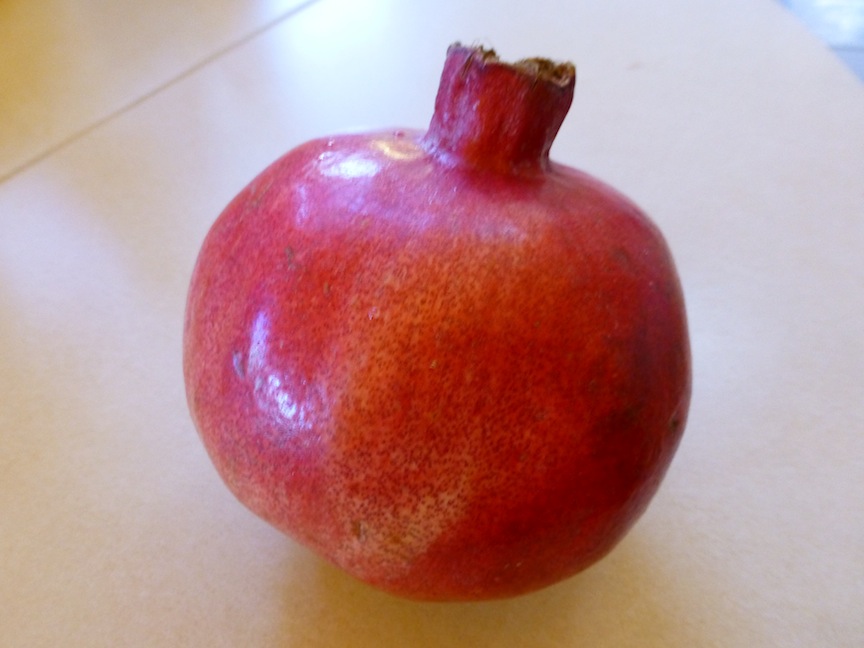
Sometimes I just toss a few things I have in the house together and something wonderful happens. This is one of those times. I picked up a big pomegranate at the market (because how can I possibly resist this beautiful fruit) not knowing what I was going to do with it. I already had an entire bag of ripening pears at home together with a couple of fresh oranges. I diced a pear and an orange up very fine so their size didn't overshadow the little pomegranate seeds and just tossed them together with a little squirt of orange juice and POW - what a fresh, crunchy, delicious combination this made! And it only took a few minutes and 3 ingredients. 

Just in Time for Thanksgiving
This simple salad makes a great side dish for Thanksgiving or for a holiday brunch. It goes together quickly which is a "must" during the holidays. You can make the orange and pomegranate seeds ahead of time but don't add the pear until the last minute as it doesn't keep well.

Pomegranates are rich in vitamin C, K and folate and very high in fiber.

Raw Cleanse
This high fiber, nutrient and phytochemical-rich salad is perfect for a raw food cleanse. It's advisable to do a few "One Day Raw Food Cleanses" before you enter into the holiday season. Just a single, 100 calorie serving of this salad provides about 1/3rd of your daily requirement of vitamin C (just in time for flu season) and nearly 1/4th of your fiber needs.

Pomegranate, Pear and Orange Salad
Raw Vegan, Gluten Free
[makes 4 servings]

1 pomegranate
1 large orange
1 large pear

To prepare the pomegranate, cut off the top, score the rind in 4 quadrants and break the pomegranate apart over a bowl filled with water. Submerge the broken fruit and separate the seeds from the pith with your fingers. The seeds will sink to the bottom and the pith and rind will float to the top. Skim off the pith and rind and drain the seeds. See my post on How to Clean a Pomegranate. Place the seeds in a bowl.

1 large pomegranate yields about 1 1/2 cups of seeds 

To prepare the orange, cut off the top about 1/2 inch down so there's enough fresh pulp remaining in the top to squeeze into the salad.  Squeeze the juice from the top into the bowl of pomegranate seeds (you only need a teaspoon or two). Peel the rest of the orange and dice into small pieces. Place the orange pieces into the bowl.

Cut the pear into quarters, remove the seeds and dice into small pieces. Toss immediately with the orange and pomegranate seeds.

Serve immediately as a fruit salad or scoop onto a bed of greens.

Per serving: 107 calories, 1 g fat, 0.1 g saturated fat, 2 g protein, 26 g carbohydrates, 5.4 g dietary fiber and 27 mg sodium.


Friday, October 26, 2012

Pick And Dehydrate Jalapeños Before Winter

Dehydrate your jalapeños and use for cooking this winter.

Follow Foods For Long Life on FACEBOOK .

Time to Pull Up the Summer Plants
I was sad to pull up my zucchini last week and now I'm getting ready to pick the last of my jalapeños. Since there are just so many jalapeños you can pop in your mouth, you may want to save them for cooking this winter. It just takes a few slices of dried jalapeños to spice up that chili or to make a spicy, Italian "fra diavolo" tomato sauce. So before it gets too cold, I picked a bunch of my precious peppers and dehydrated them.

My jalapeño plant

Take Some Precautions
When you slice your jalapeños, they will give off fumes that can be quite caustic.  As a precaution, I wear a mask. You should also be very careful not to touch the cut pepper slices or seeds. You will undoubtedly forget that you did until you go to rub your eyes - ouch!

I wear a mask when cutting jalapeños.
You can also tie a 
handkerchief or bandana across your face.

How to Dehydrate your Jalapeños
First, wash and dry your peppers.

Put on your mask (or at least tie a bandana across your face).
Holding the stem, being very careful not to touch the pepper, cut the jalapeños into thin, 1/8th inch slices. They can be a bit thicker but will take longer to dehydrate.

Hold on to the stem so that you don't touch the pepper.
You can also wear rubber gloves.

Pour the sliced peppers onto a non-stick dehydrator sheet.
Spread out, using a fork, so they have room and will dry evenly.

Spread out so they dry evenly.

Dehydrate at 115 degrees F to maintain more of their vitamins and phytochemicals. It will take about 6 to 8 hours (or longer depending on how thick they were cut) until they are nice and dry. 

Dried jalapeño slices

Once they are dehydrated, place them in a jar and store. I like to keep them as slices but you can certainly grind them into a powder that is similar to cayenne.

Jar of sliced jalapeños

Store in a cool place. Throw a few slices in any dish that needs a little zip. They will rehydrate as they cook. 

Capsaicin
Capsaicin is the compound that makes jalapeños hot. It is also the compound that has many health benefits such as relieving congestion, fighting inflammation, helping you burn fat by stepping up your metabolism and more. To read more about jalapeños, check out Jalapeño Madness. 


Monday, October 22, 2012

Roasted Root Vegetables With Rosemary - Vegan And Gluten Free

Roasted parsnip, sweet potato, Yukon gold potato & carrots.
6 grams of fiber per serving!

Follow Foods For Long Life on FACEBOOK .

The Best Part of Autumn
Nothing screams "autumn" more than root vegetables. And there's nothing quite like the aroma of them roasting in the oven with rosemary. It makes you feel a little better about the summer ending and the cooler weather ahead. Here's a simple recipe that's perfect for Thanksgiving dinner or just a casual home-cooked meal. 

Roasted Root Vegetables with Rosemary
Vegan, Gluten Free
[makes 4 servings]

1 to 2 tablespoons extra virgin olive oil plus some to grease pan
1 cup peeled and diced parsnip (1 large parsnip)
1 cup peeled and diced Yukon gold potato (1 medium potato)
1 cup peeled and diced sweet potato (1 medium sweet potato)
1 cup peeled and diced carrot ( 1 or 2 carrots)
2 cups chopped yellow onion (1 large)
2 teaspoons chopped fresh rosemary
3/8 teaspoon black pepper, or to taste
1/2 teaspoon salt, or to taste
3/8 teaspoon granulated garlic, or to taste

Select your favorite root vegetables.

Your cooking time will depend on how small you dice your vegetables. A half inch dice is a nice size.

Preheat the oven to 400 degrees F and lightly grease a large, shallow roasting pan with olive oil.

Place all of the ingredients in the roasting pan and toss them until the vegetables are well coated with oil and the seasoning is evenly distributed. If you use a non-stick roasting pan, you can use 1 tablespoon of oil. Otherwise, you may want to use a bit more. (You can mix the ingredients in a bowl before pouring them onto the roasting pan if you wish but I prefer to use fewer dishes).

Once coated, spread the vegetables out in the roasting pan so they are one layer deep.


Spread out so the vegetables cook evenly.

Place the pan into the preheated oven and cook 35 to 45 minutes, turning the vegetables with a spatula once or twice during the cooking time.

Remove from the oven and serve.

Per serving (with 1 tablespoon oil): 156 calories, 3.9 g fat, 0.6 g saturated fat, 0 mg cholesterol, 2.8 g protein, 30 g carbohydrates, 6 g dietary fiber and 338 mg sodium.

Per serving (with 2 tablespoons oil): 185 calories, 7.4 g fat, 1.1 g saturated fat, 2.8 g protein, 30 g carbohydrates, 6 g dietary fiber and 338 mg sodium.

Wednesday, October 17, 2012

Portobello Restaurant - An Amazing Vegan Trattoria In South East Portland, Oregon

Portobello - Italian vegan restaurant in Portland, OR.
1125 SE Division Street       (503) 754-5993

Follow Foods For Long Life on FACEBOOK .

Portland Restaurants
As I'm sure I've mentioned before, Portland, Oregon has some of the best vegetarian restaurants I've ever enjoyed anywhere! This weekend's visit to Portobello, a vegan Italian restaurant in south east Portland, only confirmed this. And my high opinion of this restaurant is shared by many others. Portobello has a 94% rating on Urban Spoon and a 4.5 star rating on Yelp, TripAdvisor and Open Table. Besides the tables in the front of the restaurant, they have a little private dining room in the back that accommodates around 10 to 12 people.

The Menu
You can enjoy a very casual dinner with burgers or pizza or a much more formal, multi-course dinner of appetizers, salads, main course dishes and desserts at fairly reasonable prices. They also have a full bar.
The restaurant also offers a chef's 5 course tasting menu for $40 with wine pairings for an additional $25. With 9 of us, we decided to order from the menu so that we could try more dishes. 
Many of the dishes contain mushrooms - after all the name of the restaurant is "Portobello" so if you are not a mushroom lover, you will have fewer menu choices. Many also use nuts to make vegan cheeses so if you have nut allergies, you will also have to avoid those dishes.
There are many gluten free options on the menu that are clearly marked as such.

Appetizers
The appetizers were amazing and you could certainly be happy just going there for drinks and some small plates. Here are some of the ones we enjoyed.

Sweety-Peps (gluten free)
Peppers stuffed with cashew cheese 
Beet Tartare - (gluten free)
Beets, carrot aioli, and capers with cashew cheese & baguette.
Mushroom Fries
White trumpet mushrooms fries with tomato-basil sauce.
House Pickled Vegetables (gluten free)
Fennel, carrots & beets

They also offer a cheese plate with a sampling of four artisan vegan cheeses.

Main Courses
The main courses varied from simple burgers or pizza to hearty entrees. 

They offered several burgers:
Housemade beet burger on a rosemary bun and
Portobello burger on a gluten free bun with tomato-basil sauce, braised greens and cashew cheese.
Portobello Pepper Steak (gluten free)
with fall vegetable ragout, spinach, balsamic steak sauce & fried onions.

Molasses-Mustard Glazed Seitan
with sweet potato mash, corn on the cob & braised kale.
Pan Crisped Potato Gnocchi
with baby broccoli, tomato-basil sauce, garlic & basil.
Open Faced Mushroom Ravioli
sauteed shitake, hon shimeji & cremini mushrooms with spinach & walnut-parsley pesto

They also offered 4 different pizzas (Cheesey Pie, Last Chance Heirloom Tomato Pie, Spicy Arrabiata and Mushroom Pesto Pie), several salads (Side Arugula, Caesar Novus, Beet, Fennel & Hazelnut Salad and Butternut Confit with Brussels, Grilled Grapes and Walnuts). and some side dishes (Pommes Frites, Braised Kale, Sweet Potato Mash and others). Many of these dishes are seasonal so this menu is just a snap shot of their offerings.

Desserts
After stuffing ourselves with these amazing offerings, we managed to try a few desserts.

Autumnal Sundae (gluten free)
salted caramel ice cream topped with hot fudge, coconut whipped cream & chocolate meringue.
Tiramisu "Ole Faithful"
rum and coffee soaked cake, vegan mascarpone, chocolate.

Other desserts include a Chocolate Ginger Berry Bombe, Financier with Chai Ice Cream and a selection of vegan and gluten free ice cream and sorbet. 
They also offer a nice selection of dessert wines, digestifs and liqueurs and, of course, coffee and tea.

A big thanks to my daughter-in-law, Karina, for knowing what foods I love and for finding this wonderful restaurant. It was a delicious and memorable dining experience and I will definitely return! If you enjoy vegan cuisine, this restaurant should be high on your list when visiting Portland. 

You can also read my review of the Blossoming Lotus, another wonderful vegan restaurant in Portland.