Showing posts with label BOOK REVIEW. Show all posts

Thursday, May 08, 2014

Terrific Summer Beach Read!
You'll Love The Vegan Character In It Named Kale

Cover Art by Christy Hawkins
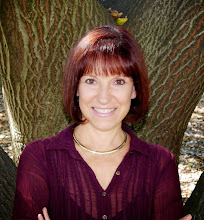
a vegan for 21 years!

Melanie Bishop
I met the author of this book, Melanie Bishop, a few years back when she checked into our vacation rental in Sebastopol to do some writing. Most of the time people visit our studio to go biking or wine tasting so we were excited to think of Melanie up in our apartment getting inspired by our vineyard and our little kookie town of Sebastopol. I was also very happy to have a writer here because I was in the middle of writing my own book, Health Begins in the Kitchen. So I felt an immediate connection to Melanie. 

Melanie Bishop is recently retired from Prescott College in Arizona where she worked on the creative writing faculty and was the founding editor and fiction/nonfiction editor of Alligator Juniper. Melanie divides her time between Prescott, AZ and Carmel, CA where she teaches community classes, hosts writing retreats, and freelances as a writing coach/editor. She is at work on Book Two of the Tate McCoy Series, and writes book reviews for Carmel Magazine.

Melanie and I kept in touch and followed each others' progress. And although this book wasn't the one she wrote in our studio, I was delighted when My So-Called Ruined Life was published. I bought one of the very first copies and thoroughly enjoyed it.

This young adult novel (yes, I still love reading young adult novels!) is about sixteen-year-old Tate McCoy. Her mother is murdered and her father is the prime suspect. Despite the whispers of the townspeople, Tate refuses to believe her life is ruined. She engages in all sorts of self-rescue, the summer before her 17th birthday--finding solace in the great outdoors, swim lessons, her wonderful best friend, Kale, and a crush on her swim instructor. Teens will be inspired by Tate's resilience, and readers of all ages will appreciate her quest to find her buoyancy, her personal balance amidst the backdrop of tragedy.

I particularly love her vegan best friend named "Kale" and how Tate makes an attempt to become vegan herself. The cover, also designed by long-time vegan Christy Hawkins, shows the subtle presence of her best friend on the cover as actual kale leaves! How clever. 

         *                         *                         *

My Interview with Melanie:
Why did you create a vegan character in the book?
There are a few reasons for this. As a college professor for 22 years, I knew many many young adults who were vegetarian or vegan or gluten-free, or dealing with other dietary restrictions. Classes at Prescott College often traveled so I would be with my students for a month at a time, living in close quarters. Diet and food shopping and meal preparation was always big on these field courses--meeting everyone's needs and making good food! I think attempting to be vegan/vegetarian is something young people can relate to. But also, the inspiration for my protagonist came from a combination of about four young women I know. Some were former students of mine, and some were relatives. One of my nieces, who provided parts of my inspiration for Tate McCoy, is vegan, and has a husband and two children now and the whole family is vegan. They live in Portland, Oregon, which is about the best place you could ever live if you are vegan. They even have vegan donuts at a place called Voodoo Donuts. I've had them. They are Yum. 

Why did you select a vegan artist to design the cover?
This one is easy! That same niece I mentioned above was an art major at Portland State, right around the time my book was accepted by Torrey House Press for publication. She had an assignment in her art class to illustrate something and I needed a beautiful book cover, so she read the book, we talked about themes, and symbols, and metaphors, and then she did this painting that became the cover. (The actual painting is bigger, and encompasses more; it was cropped for the dimensions of the book.) She was a natural choice for me when I needed something artistic. She comes to me for writing/editing help, and I will always go to her for visual arts help.

Having gone to school in Austin and staying there to work for another 13 years, I really loved that the book takes place there. Why did you select Austin as the setting of your story?
In order to write about a place believably, the setting of the book had to be a place I knew well, a place I'd lived myself. I lived in Austin, TX from 1980 to 1984, and waitressed at the restaurant where the character Kale works in the book--Mother's Cafe. It's an amazing vegetarian Mexican place and I worked there for four great years. Lovely people own it and manage it and the food is just superb. If you're in Austin, check it out. At the corner of 43rd and Duval. Once I decided on Austin, certain details of that city became key parts of the book. I knew Barton Springs would play a big role, and that's when buoyancy became a huge theme in the book. All of that was born at Barton Springs, in my imagination--my memory of time spent there.

Learn more about Melanie at www.melaniebishopwriter.wordpress.com. 

         *                            *                       *

Looking for a Summer Beach Read?
So if you are looking for a good read, pick up a copy of this book (available on Amazon). 
Publishers Weekly called My So-Called Ruined Life  "...an introspective page turner".  For more reviews, an interview, and a one minute trailer for the book, go to 
http://torreyhouse.com/press-room/my-so-called-ruined-life-by-melanie-bishop/http://torreyhouse.com/press-room/my-so-called-ruined-life-by-melanie-bishop/

Thursday, August 19, 2010

Are You A Health Food Junkie? A Review of Dr. Bratman's Book, "Health Food Junkies: Orthorexia Nervosa: Overcoming The Obsession With Healthful Eating


Are we Health Conscious or Health Food Junkies?
I came upon the book, "Health Food Junkies" by Dr. Steven Bratman that discusses people's obsession with healthy eating. My first reaction to a book like this was disbelief. After all, two thirds of adults in the U.S. are either overweight or obese and diseases like cancer, diabetes and cardiovascular disease are sky rocketing. Is obsession with eating healthy food a rampant problem that needs to be addressed? Dr. Bratman seems to think so. He even came up with the name, "orthorexia nervosa" for this made up disease. Since I devote this blog and much of my life to this topic, I went ahead and read the book to see what he had to say. I must admit the book was thought provoking and made me aware that some people truly do cross the line from "eating for optimal health" to "obsession". I dispute, however, where that line is. I'm sure Dr. Bratman would consider me and many of my followers to have this dreaded condition. Later we'll take his questionnaire to see just how far gone he thinks we are.

What is Orthorexia Nervosa?
According to Dr. Bratman, orthorexia nervosa is a fixation on eating healthy food. A person with this condition spends most of his or her time planning, thinking about and preparing meals fixated on the quality of the food. All other joys in life are abandoned to pursue the perfect diet. This behavior often leads to unhappiness, social isolation and sometimes, ironically, poor health.

How Dr. Bratman Overcame this Disease
This book was, perhaps, a cathartic work for the author as he described his own battle with being fixated on eating healthy food. In his past, Dr. Bratman tried many different diet regimens like raw food, macrobiotics, and others. In each, he followed their principles to the max until his life was totally controlled by food. His obsession is well described when he tells the story of having to leave the company of good friends in order to eat an avocado at it's perfect moment of ripening.
His struggle came to an end after a series of life altering events.
First his guru abandoned his desire to become a fruitarian because of a revelation which he shared with him. "Rather than eat my sprouts alone, (by the way, fruitarians eat fruit, not sprouts), it would be better for me to share a pizza with some friends".
The second event occurred when he graciously accepted and ate a piece of processed cheese offered to him by an old man he was visiting as a volunteer. Instead of making Dr. Bratman ill, as he expected, it surprisingly cured his head cold.
But what really turned him around was his dining experience with a Benedictine monk. Instead of the monk sharing his self discipline, he persuaded him to pig out on Chinese food and ice cream.
It was at this point I was wishing that the library had a copy of this book so that I would not have had to spend $16 to read this story.

Are You A Health Food Junkie? Take the Test
I'm sure the author wrote this book in order to shed light on an obsession that he himself struggled with for so many years. Trying to quantify the point at which a person goes from having a passion for healthy living to having an eating disorder, Dr. Bratman developed this questionnaire.
According to Dr. Bratman, if you check yes to 2 or 3 of these questions, you have at least a touch of orthorexia nervosa. You are real in trouble if you score 4 or more. I'm sure many of my followers, myself included, are ready to be carted away to health food rehab.
Take the test! I'll take it with you!

1. Do you spend more than three hours a day thinking about health food? (For 4 hours, give yourself 2 points). He includes time spent shopping for food, cooking, reading information on health and discussing it with friends.
Besides trying to be healthy, I'm Italian. I bet most Italians spend 3 hours thinking about preparing their next meal and what wonderful, fresh ingredients they will use. Then add the time they spend in the kitchen with their family cooking while enjoying a glass of wine, it's pretty easy to rack up 3 or more hours. I guess I'm already in trouble as I immediately racked up 2 points.
2. Do you plan tomorrow's food today? Dr. Bratman thinks that getting pleasure from thinking about a healthy menu in the future is terribly wrong.
OK, chalk up another point for me. Of course I plan meals! How does he think I worked for 30+ years while putting healthy food on my family's table. I guess I would have scored better if I picked up Happy Meals from McDonald's on the way home.
3. Do you care more about the virtue of what you eat than the pleasure you receive from eating it? To the orthorexic, hunger itself is secondary. The "meaning" of food is what makes them desire it.
I don't eat JUST to satisfy my hunger. I try to plan delicious meals that are also nutritious. What's wrong with trying to achieve both pleasure and virtue? I'll take a half point on this one.
4. Have you found that as the quality of your diet has increased, the quality of your life has correspondingly diminished?
No. As the quality of my diet has improved throughout the years, I feel more energetic and am better able to handle the stresses of life.
5. Do you keep getting stricter with yourself?
No points here. I actually have gotten more relaxed in my eating throughout the years and allow myself to occasionally indulge. This has totally surprised my daughter who has often told people that I had the will power of a monk. But in the past, I have been guilty of this. I also see this a lot with raw foodists who feel that becoming 100% raw is nirvana and will avoid a dish even if it only has a few drops of vanilla extract or a teaspoon of balsamic vinegar. I think this is going too far.
6. Do you sacrifice experiences you once enjoyed to eat the food you believe is right? One of the examples he uses here is a person who avoided marriage with someone they loved because he ate the wrong food.
I'll take a point here. Yes, I sacrifice experiences like downing a bucket of KFC or eating cheese cake.
It's also funny that he used the example of not marrying someone who ate poorly as if that should be of no concern. Eating habits are important and when you think of how many meals you share with your spouse, this is a very key issue, especially if you are really into health. It's hard to watch someone you love slowly kill themselves with poor food choices and other bad habits.
7. Do you feel increased sense of self-esteem when you are eating healthy food? Do you look down on others who don't?
Chalk up another point for me here. This is a little embarrassing to admit but yes, I feel really good about my myself when I prepare a delicious and nourishing meal for my family. And yes, I get disgusted when I see an morbidly obese person who probably has or will soon have type 2 diabetes and heart disease eating huge quantities of really unhealthful food.
8. Do you feel guilt or self-loathing when you stray from your diet?
I'll only take a half point here since I do feel a bit guilty if I eat bad food but I would hardly call it "self-loathing". I'm getting better at allowing myself to occasionally indulge without the guilt.
9. Does your diet socially isolate you?
No, not now. But there have been many times in my life when my diet was so strict, my family and friends were afraid to invite me over to dinner. But being more relaxed and polite doesn't mean you have to abandon your diet, especially if it means a lot to you. If you are a strict vegan or vegetarian, there's nothing wrong with telling your host in advance or bringing over a veggie burger and a meat-free side dish when going to a BBQ. Dr. Bratman, however, would think this is a clear sign of orthorexia.
10. When you are eating the way you are supposed to, do you feel a peaceful sense of total control? Dr. Bratman feels that many orthorexics feel that since they cannot control what life brings them, they can control what they eat. This is their mechanism to deal with life which can be "complicated, unpredictable and scary".
No points here for me. I just enjoy controlling what goes into my body. To the extent that nourishment allows me to better deal with life is just a bonus, not a means of "total control".

So, how did you do? Are you going to join me in health food junkie rehab? I scored 6 points which would clearly classify me as orthorexic. I think Dr. Bratman has quite a bit of work to do on his criteria. Better yet, he should throw it in the trash and stop trying to make up diseases. There are plenty of real ones that need attention.

Dr. Bratman Bashes Raw Food Diets
The part of the book I take the most issue with is where he describes different healing diets and declares them "a path to orthorexia". He is especially critical of Raw Food Vegan Diets.
He makes raw food vegans sound like cultists longing to purify themselves and "float free", unable to deal with the "weightiness of human life". He portrays raw foodists as those spending their lives nibbling bland raw fruits of vegetables and taking frequent enemas and colonics.
Perhaps twenty five years ago, when Dr. Bratman experimented with this diet, raw foodists exclusively munched on greens and carrots but you only have to look at some of the Raw Food Recipes on this and other blogs to know there is no deprivation involved in a raw food diet. Anyone who has attended a raw food pot luck or gone to a raw food restaurant would agree that you certainly would not come away feeling light enough to float away!

Dr. Bratman has similar out of touch descriptions of other popular eating regimens including macrobiotics and food elimination diets for allergies. He actually puts them in the same category as a beer and pizza diet! His point here being that any diet has a chance of curing someone if they believe in it. However, by lumping a ridiculous beer and pizza diet with diets based on whole grains and fresh fruits and vegetables, he has totally ignored the diets' nutritional benefits.

Summary
I'm sure you are as anxious for me to finish this review as I was to finish this book.
The book is an easy read and contains some interesting and sometimes amusing stories. How you react to this book and how much you may benefit from reading it will depend on your personal relationship with food.
If you are on what Dr. Bratman considers an extreme diet but feel that it has improved your health while allowing you to enjoy a balanced life of good food and good friends, you will think that the author is out of touch. You may also feel, as I did, that Dr. Bratman is perhaps more influenced by his own inability to avoid food obsession.
As a nutritionist, the book gave me a window into extreme food obsession. If this is a topic that affects you or your loved ones, it's worth reading but do so with a grain of Celtic sea salt.