Showing posts with label MICROBIOTA. Show all posts

Tuesday, February 21, 2017

A Review Of Cashew, Almond And Coconut Yogurts

There are many non-dairy yogurts to choose from.

Follow Foods For Long Life on Pinterest and Facebook.

In Search of Dairy-Free Yogurt
Quite a few people have given up or reduced their consumption of dairy. Many are either lactose intolerant or allergic to milk proteins, some are vegans who avoid all animal products, and others may be trying to reduce their cholesterol intake. Whatever the reason may be, the downside is giving up this probiotic-rich food. But luckily today there are many non-dairy options.

Two years ago I posted a recipe on how to make Thick, Creamy Vegan Yogurt with an Instant Pot or Yogurt Maker with 5 Minutes Prep Time. This is one of my most popular posts with over 20,000 views! So I know that lots of you enjoy yogurt and understand its importance in our diet. 

My most popular post - making soy yogurt.

But this particular recipe, that includes no thickeners or added sugar, is soy based and some of you do not consume soy. I don't like making yogurt with other non-dairy milks because they usually come out more like Jello as they require added gums and thickeners. Recently, however, I've tried several ready-made, non-dairy yogurts that are soy free that are absolutely delicious. And although they contain some thickeners, they are super creamy. Here are a few that I recommend.

                          *                                  *                                  *

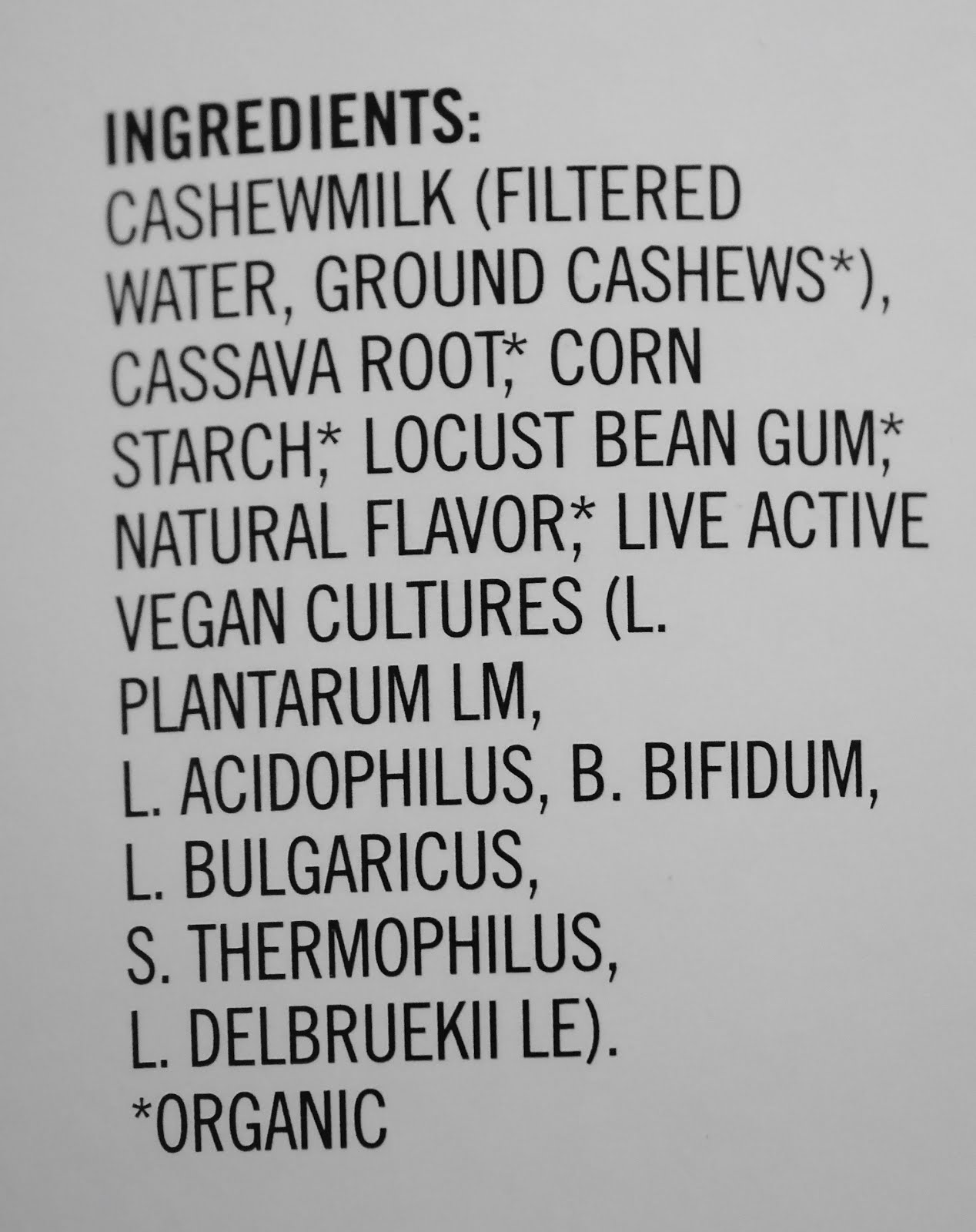
ORGANIC FORAGER CASHEW YOGURT
This cashew-based yogurt (they call it Cashewgurt) is absolutely divine. 

Forager ProjectCreamy Dairy-free Cashewgurt

Cashew Yogurt Nutrition
One cup provides:
170 calories
11 g total fat
2 g saturated fat
0 mg cholesterol
5 g protein
14 g carbohydrates
2 g sugar
1 g dietary fiber
15 mg sodium
2% calcium
19% iron

Pros
It's organic
Very creamy mouthfeel
Flavorless, so you can add to salad dressing, soups, and other recipes
Low in sugar and sodium
Good source of iron
Dairy, soy, and gluten free - vegan
Has 6 live cultures

Cons
High is calories and fat
Not very tart like some yogurts
Contains "natural flavor" - whatever that means

                          *                                  *                                  *

KITE HILL ARTISAN ALMOND MILK YOGURT
I love all of Kite Hill's products and this one is no exception.

Kite Hill

 Almond Yogurt Nutrition
(The container serving size is only 5.3 ounces so I've converted it to a cup for consistency.)

One cup provides:
211 calories
6 g total fat
3 g saturated fat
0 mg cholesterol
9 g protein
1.5 g carbohydrates
0 g sugar
0 g dietary fiber
0 mg sodium
0 % calcium
0% iron


Pros
Very creamy mouthfeel
Flavorless, so you can add to salad dressing, soups, and other recipes
Contains zero sugar and sodium
Dairy, soy, and gluten free - vegan
No artificial colorings or preservatives
Good source of protein

Cons
High is calories
Not very tart like some yogurts 
Not organic although the almonds are non-GMO
Only 4 live cultures

                          *                                  *                                  *

SO DELICIOUS COCONUT MILK YOGURT ALTERNATIVE
You will enjoy this silky yogurt if you enjoy the flavor of coconut.

So Delicious Coconut Milk yogurt alternative.

Coconut Yogurt Nutrition
(The container serving size is only 5.3 ounces so I've converted it to a cup for consistency.)

One cup provides:
106 calories
7.5  g total fat
6.8 g saturated fat
0 mg cholesterol
0 g protein
10.6 g carbohydrates
0 g sugar
3 g dietary fiber
45 mg sodium
30% calcium
45% vitamin D
53% vitamin B12
0% iron


Pros
Very creamy 
Dairy and gluten free - vegan
Low in calories
Has 3 g of fiber per cup
Fortified with calcium, vitamin D and B12
Has 8 live cultures
Low in sugar
Contains organic coconut milk

Cons
Plain flavor is not flavorless - tastes like coconut
High in saturated fat from the coconut
Not very tart
Contains zero protein

                       *                                  *                                  *

SUMMARY
These three plain, unsweetened, non-dairy yogurts are all exceptionally tasting, unlike many I've tried in the past. The only disappointment is that none of them had the tartness that I enjoy in a yogurt. When I make my own soy yogurt, I can control the tartness by leaving it to process a bit longer. Also, they all contain some kind of gum and/or starch to thicken them. Once again, home made soy yogurt only contains soy beans, water, and live culture. But I still highly recommend each of these, especially if you are trying to avoid soy and you want to purchase, rather than make, yogurt. 


Tuesday, July 21, 2015

What To Do With Garden Cucumbers And Veggies
Make Probiotic-Rich Fermented Pickles

Living, probiotic-rich pickles.

Follow Foods For Long Life on Facebook and Pinterest.
Preview my eBook, Health Begins in the Kitchen!

My New Crock
I received a beautiful fermentation crock from Ogusky Ceramics for my birthday (thanks Matthew, Alina and Sammy!) and I couldn't wait to try it. I know I mention this ever chance I get but consuming lots of probiotic-rich fermented foods is one of the most important things you can do for your health. One of the many ways to do that is to make your own pickles. I don't mean the kind that you find on the store shelves pickled in vinegar. Those pickles do not have any probiotic value. I mean the kind that are made from the simple process of fermenting your veggies in brine and spices. You won't believe how easy it is!

And you don't need a fancy crock like this to ferment foods. You can use a big glass jar like I did when I shared the Curtido Kraut recipe in June. But I must say, I've been really enjoying this crock.


Fermentation crocks handcrafted by
Boston potter Jeremy Ogusky

Cucumbers plus....
Today I'm pickling cucumbers with some padron peppers (for some zing) since I have tons of them in my garden. But you can pickle any vegetable using this technique. You also don't have to use "picking cucumbers" and can use any cucumber you want. Just pick them early and don't let them get too fat and full of seeds. The dull skin varieties with thin skins are probably a better choice than those with shiny thick skins. Never use cucumbers that have been waxed.


          *                         *                             *

Spicy Fermented Cucumbers
Raw Vegan, Dairy and Gluten Free

Requires a glass or ceramic containment vessel

Ingredients
Brine (2 tablespoons of pickling salt to 4 cups water)
10 peppercorns
2 bay leaves
2 garlic cloves, skin removed
Other pickling spices and herbs (optional)
2 fresh grape leaves or other tannin source
Enough cucumbers for your vessel
Handful padron peppers, several jalapeƱos cut in half, or small amount of crushed red pepper to taste (optional)

Directions
Make the brine by adding 2 tablespoons of pickling salt to a quart of spring, distilled, or filtered water. (Chlorinated water can inhibit fermentation). Stir until completely dissolved and set aside.

I learned the hard way that all salt is not equal when it comes to pickling. You can use other types of salt but make sure that they do not have anti-caking agents or your brine will end up cloudy. I also avoid iodized and sea salt. If you use kosher salt, you also may have to change the amount of salt you use per quart of water. 

A note about Kosher salt. Morton's uses anti-caking agents so avoid using that brand. Diamond Crystal is good but it's less dense than pickling salt so you have to use more of it. Some people weigh the various salts, but when I try to decide how much to use, I compare their sodium content. For example:


Table salt has 2,325 mg of sodium per teaspoon.
Pickling salt has 2,360 mg per teaspoon (about equal).
Diamond Crystal Kosher salt only has 1,120 mg per teaspoon.

So if you were using Diamond Crystal Kosher salt instead of pickling salt, you would need 4 tablespoons per quart of water versus 2 tablespoons of pickling salt.

Pickling salt is also very fine and it dissolves much more easily than Diamond Crystal kosher salt so from now on I'm just going to use pickling salt.

Once you've made the brine, place your spices in the bottom of the crock. Ironically my husband and I are not big pickle fans so we avoid the usual pickling spices like mustard, coriander, and dill. But we love the subtle taste of garlic, pepper, and bay leaves and the zing of spicy peppers so that's enough for us. So select the pickle spices that you enjoy.


Cover the spices with a fresh grape leave or another source of tannin like oak leaves. You can even add a teaspoon of loose tea to a half-gallon jar. See the Cultures for Health website for other tips to keep you pickles crunchy. Since we have a vineyard, we have plenty of fresh grape leaves so that's what we use.


Slice the cucumbers in half inch slices and cut the tops off of the padron peppers. If using jalapeƱos, slice them in half lengthwise. Now place your cut up veggies on top of the leaves. Leave 2 to 4 inches of headroom.


Pour enough brine to cover your veggies by at least 1 or 2 inches.


Place something over the veggies to keep them submerged in the brine during fermentation. My crock came with a top but you can use a small plate. If you are fermenting in a quart jar, you can weigh down the veggies with a smaller jar filled with water and capped (like I did in the Curtido Kraut recipe.)


Cover the fermentation crock with a small dish towel or dinner napkin and set in a quiet corner of your kitchen. Peek in once a day to see if it's bubbling. If mold forms, just scoop it out. It's best if the temperature is between 65 and 85 degrees. 


Let fermentation progress for one or two weeks. The best way to see if the pickles are done is to taste them. 

When completed, place the pickles and the juice in a Fido jar or a capped mason jar and store in the refrigerator. If you live in a cool climate, you can store them in a cool root cellar. They should stay crisp for several months. 

Enjoy!


Tuesday, June 23, 2015

Zucchini Miso Soup With Mushrooms And Kale
Less Than 150 Calories
Miso - A Good Source Of Microbes

You can add microbe-rich miso to any brothy soup.

Follow Foods For Long Life on Facebook and Pinterest.
Preview my eBook, Health Begins in the Kitchen.

Today is our Anniversary 
Twenty six years ago today my wonderful husband and I went on our first date and 25 years ago today we were married! I am the luckiest woman in the world to find a man who has provided love and kindness to me and the children, gave me endless encouragement in my many ambitious endeavors, and shared my obsession for living a healthy lifestyle. We worked well together as engineers in Silicon Valley and now we work just as well together as organic farmers, bloggers, and wine makers. 

Today is our 25th Wedding Anniversary

So yesterday when I felt like my allergies were getting the best of me and were possibly turning into a cold, it was time to make a pot of soup despite the warm temperature outside. We have big plans for our anniversary dinner and I want to feel my best. 

Goals for this Soup
This soup will hopefully accomplish three important goals.
#1 - Help me feel better for my anniversary.
#2 - Give me a source of more microbes from the fermented, unpasteurized miso.
#3 - Help me use up the zucchini in my garden!


Romanesco zucchini are taking over my yard!

Powerful and Delicious Ingredients
Whenever I feel like a cold is coming on, I rely on garlic, onions, ginger, mushrooms and fermented foods to build up my immune system. This soup has it all. But to get the most out of these ingredients remember two things:
#1 - Let the garlic sit for 10 minutes after mincing it to enhance its health-promoting properties.
#2 - Don't boil the miso or it will kill the live beneficial bacteria. Once it's added to the soup, warm it gently over a low flame.

                     *                               *                              *

Zucchini Miso Soup with Mushrooms and Kale
Vegan, Dairy Free, Gluten Free
[makes 4 first-course servings or 2 meal-size servings]

Ingredients
2 or 3 cloves garlic
1 tablespoon extra virgin olive oil
1 medium onion, diced
1 tablespoon minced fresh ginger
8 ounces brown clamshell or other mushrooms
1 1/2 pounds small to medium-size zucchini, halved and thinly sliced
4 cups low sodium veggie broth
1 packed cup thinly sliced kale
2 tablespoons (or more) unpasteurized white miso 
Black pepper to taste


For my veggie broth, I like to use a large low sodium vegetable bouillon cube with 4 cups of boiling water. 

Directions
Finely mince the garlic and set aside while you are preparing the remaining ingredients. Let the garlic rest for at least 10 minutes so that it develops its health-promoting properties.

Heat the olive oil in a 5-quart Dutch oven. Cook the onion for 5 minutes on medium-low heat, stirring frequently. Add the garlic and ginger, stirring until fragrant, about one minute. 

Separate the clamshell mushrooms. If you are using shiitake mushrooms, remove their stems and slice. Add the mushrooms to the pot. Cook, stirring frequently, until they release their liquid, about 3 minutes.

Add the zucchini and cook, stirring frequently, until it cooks down a bit and gets a little starchy, about 3 to 5 minutes.


Add the broth and bring to a boil. Lower heat to simmer, cover, and cook until the soup thickens and the zucchini begins to soften. 

Throw in the kale and cook another 5 or so minutes until all the veggies are cooked. I like the zucchini soft in a soup like this but you may prefer them to be a bit firmer.  

Remove a cup of broth from the pot and place in a small bowl. Stir in the miso paste until all the lumps are gone. 


Stir the miso broth mixture back into the pot. Simmer for a few minutes but DO NOT BOIL as excessive heat will kill the beneficial microbes. 

Add freshly ground black pepper to taste and serve immediately.

This soup is less than 150 calories per serving

Nutrition
Per serving (4): 148 calories, 5 g total fat, 1 g saturated fat, 105 mg omega-3 and 661 mg omega-6 fatty acids, 0 mg cholesterol, 8 g protein, 21 carbohydrates, 5 g dietary fiber, and 394 mg sodium. 


Tuesday, June 09, 2015

Compare These Vegan Dark Chocolate Bars
Endangered Species & Jcoco

I compared these two 72% dark chocolate bars with cocoa nibs.

Follow Foods For Long Life on Facebook and Pinterest.
Check out my eBook, Health Begins in the Kitchen.

Where Health and Flavor Intersect
We all have heard by now that chocolate is good for us. Good news like that travels fast! But many chocolate products are packed with sugar, fat and dairy. So Doug and I tend to buy the darkest chocolate we can find that still tastes good. For us, the point where bliss crosses optimal health is 72% dark. We find anything higher than that distasteful. For good measure, we also get chocolate that contains cacao nibs, which are bits of the cacao bean itself. The nibs give the chocolate a lovely crunch that takes chocolate goodness, as well as healthfulness, to the next level. 

Our Microbes are at it again
Many of chocolates health benefits come from its anti-inflammatory properties. Scientists are now discovering that inflammation is the root of all evil and can cause cancer, heart disease, Alzheimer's, and many other degenerative disorders. As you know, I've been obsessed with microbes lately, and it turns out that our gut microbes break down and ferment the large polyphenols in chocolate and turn them into smaller, more absorbable molecules that have anti-inflammatory properties. So our bugs love chocolate too and turn it into a superfood for us.

Selecting our Favorite Chocolate Bar
Today I'm comparing two 72% dark chocolate bars (both vegan, gluten free and non-GMO.) One is by Endangered Species and the other is Noble Dark by Jcoco. We have been taste testing them both for months (it's tough work but these are the sacrifices we have to make for you) and we have done blind taste tests with our friends. Our original assumption was that Noble Dark by Jcoco, at $7.95 per 3 ounce bar, had to be superior to Endangered Species 72% dark chocolate with cacao nibs which is around $3.00 per 3 ounce bar - less than half the price.

The Noble Dark is thinner, chalky looking, and has a tiny bit more crunch (perhaps a few more nibs.) The Endangered Species is thicker and has a nice sheen and texture. Almost everyone who tasted both bars preferred Endangered Species. So you don't always get what you pay for. But I will say, the Jcoco Noble Dark packaging is adorable and a few bars would make a beautiful gift.

Both companies are very generous. Jcoco provides a serving of fresh and healthy food to someone in need every time you purchase their product. They support Northwest Harvest, the food bank for New York City, the San Francisco-Marin food bank, and the greater Boston food bank. 

The Endangered Species company donates 10% of their net profits from the sale of their chocolate to the African Wildlife Foundation and the Xerces Society for invertebrate conservation. 


Beautiful packaging, lots of nibs. Each sale provides fresh meals to local food banks.
Great price, thick and rich tasting, lovely sheen.
Some profits support endangered species.

Where to Buy
These are just two brands that we enjoy. But most 72% dark chocolates are pretty yummy and good for you too so I'm sure you'll find other brands that fit the bill. You can buy Jcoco Noble Dark on their website.  Endangered Species is found in many grocery stores and also on Amazon in packs of 12


Tuesday, May 26, 2015

5 Changes I Made Immediately After Attending The 2015 Annual Nutrition And Health Conference

Dr. Christine Gallagher and I at the 2015 Annual Nutritional and Health Conference in Phoenix, Arizona

Follow Foods For Long Life on Pinterest and Facebook.
Preview my eBook, Health Begins in the Kitchen

Health and Nutrition Conference 
Dr. Christine Gallagher and I became good friends while getting our doctorates; her in Natural Health and me in Holistic Nutrition. Although she lives and practices in Grand Junction, Colorado and I live in Sebastopol, California, we make it a point to attend a conference together as often as we can. This year we headed to Phoenix to attend the 2015 Nutrition and Health Conference hosted by the Arizona Center for Integrative Medicine. 

As always, I came away inspired to share the latest nutrition research with my readers but I also came home with a list of things I wanted to immediately change in my life. In the weeks to come, I will write more about the details of the conference and post a few recipes from the classes I took there, but today I am going to share 5 important changes I made in my own life upon returning from the conference.

#1 - Make and Eat More Fermented Foods
There are trillions of microbes living in our bodies and they have a profound effect on our health and well being. To continue to introduce and replenish these important little bugs into our system, we should eat fermented foods every day. Examples of these are yogurt, kefir, miso, the sauerkraut and pickles you find in the refrigerated section of the grocery store, kimchi, and kombucha tea. Prior to the conference, I took the same probiotic supplement every day but I will now reduce my supplementation and get my microbes from a variety of fermented foods which should provide more microbial diversity. 

What to do now:
* I eat home-made soy yogurt every morning with fruit or blended into a smoothie.
* I buy raw sauerkraut and serve it with lunch and/or dinner. 
* I just made my first batch of sauerkraut from a recipe I learned at the conference. (I'll be sharing that soon).
* I've been enjoying kombucha tea that I bought at my local market.
* I loaded up on all the ingredients to make miso soup which I plan to perfect!


Load up on fermented foods

#2 - Feed your Bugs
The trillions of microbes that are colonized in your gut need to eat. Don't forget, 90% of the cells and 99% of the genetic material in your body are made up of these little guys so you have to feed them. They feast on microbiota accessible carbohydrates (MACs) or foods with high amounts of dietary fiber. Although I already have a pretty high fiber diet, I am paying more attention to every meal. You should aim for 25 to 35 g of dietary fiber a day or 14 grams for every 1,000 calories consumed.

Oh, and by the way, if you don't feed them, they will eat the mucosal lining of your intestines which cannot lead to anything good. So feed them or they will eat you!

What to Do Now:
* I am journaling my dietary fiber to make sure I'm getting about 30 g per day.
* I am making sure to eat lots of high fiber foods like whole grains, beans, fruits and veggie and to avoid all unprocessed carbohydrates like white rice, pasta or bread.

Note: If you are not used to eating this much fiber, introduce it slowly into your diet or you will explode!


Bugs LOVE beans and my pantry is full of them!

#3 - Get Moving
Sitting is the new "smoking" and can kill you. It is critical to do some form of exercise for 30 minutes a day. You don't have to run a marathon but even a 30 minute brisk walk can do the world of good. After my recent foot surgery, I was immobile for 6 weeks. In just that short period of time, I gained some weight and my energy level and mental clarity declined. 

What to Do Now
* I'm wearing my Fitbit and working myself back up to 10,000 steps a day.
* I use my recumbent bike or elliptical when watching TV.
* As soon as I my foot is completely recovered, I will get back to my Zumba classes.


You can buy fancier ones to wear on your wrist,
but I like this small fitbit that clips on my pocket.

#4 - Reduce Exposure to Environmental Toxins 
Dr. Victoria Maizes gave a presentation on "Eating Green and Clean". She pointed out that there are over 85,000 industrial chemicals on the market yet only 200 of them have been tested for safety with respect to human health. These chemicals are on our food, in our personal care products, in the lining of our food cans, in plastic containers, in our cleaning products, and in our drinking water. Many of the chemicals we are exposed to every day can cause unexpected health problems

What to Do Now
* I'm in the process of going through my medicine cabinet and discarding makeup, shampoo, lotion, sunscreen and any personal care products with questionable ingredients. Check out the EWG's Skin Deep website to see if your personal care products are safe.
* I'm attempting to get rid of all plastic in my kitchen (boy, is that hard).
* I'm not buying any cans with BPA linings. Check out Tree Hugger to see a list of BPA-free cans.  I avoid buying a lot of canned food by making my own beans from scratch.
* I'm trying to grow most of my food this summer but when I shop, I try to only buy organic food, especially if it is on EWG's "Dirty Dozen" List
* I am looking at my cleaning products and checking EWG's Guide to Healthy Cleaning.
* I'm checking all food products and vitamin supplements for food additives, like carrageenan.
* I'm trying to avoid my non-stick pans when possible even though I love them.

This is a big list and the hardest endeavor of all but I'll take it one step at a time.

#5 - Consume Turmeric with Black Pepper
Omega-3 fatty acids are very important in our diet as they reduce inflammation and the many degenerative diseases that are associated with inflammation. Vegetarians only get ALA from sources like hemp, chia, and flax seeds and other plant sources. EPA and DHA, the more important form of omega-3, are found in algae and animal sources like fish and grass fed meats. Vegans and vegetarians are often deficient in EPA and DHA - this deficiency can lead to a host of cognitive problems and other health issues.

The body can convert ALA to EPA and DHA but it's not very efficient and not much of it gets absorbed in the body. The good news for vegans and vegetarians is this:

* Eating sources of ALA together with Turmeric (curcumin being the main active compound) improves the conversion of rate of ALA to DHA, increases the absorption of DHA in the liver, and increases the levels of DHA in the brain.

* Consuming black pepper (piperine being the main active compound) with turmeric increases the bioavailability of turmeric by 2,000%. 

What to Do Now

* Although I am a pesca-vegan and get some of my DHA and EPA omega-3 from local salmon, I will also plan meals that include turmeric, black pepper, and sources of ALA omega-3. For example: Make a tasty curry (with both turmeric and black pepper) followed by a refreshing chia seed pudding. 
* I presently take Meriva SR from Thorne for my allergies. It is a time-released curcumin product. I noticed that there are a number of curcumin supplements on the market today that include black pepper extracts. This may be a better choice, especially for vegans trying to enhance the conversion of ALA omega-3 fatty acids to EPA and DHA.


I have a lot more to share with you about the conference but these 5 areas inspired me the most. More to come............


Wednesday, May 15, 2013

The Microbes Within: How They Shape Our Lives And Influence Our Health, Blogging From The 2013 Nutrition And Health Conference In Seattle, Washington With Justin Sonnenburg


The microbes within greatly influence our health.

Follow Foods For Long Life on FACEBOOK.

Great Conference
I’m flying home now as the 2013 Health and Nutrition Conference in Seattle has ended. After attending over 20 amazing talks over the past 3 days, my mind is flooded with things I want to share with you. I already blogged about Dr. Weil’s Anti-Inflammatory Diet and Dr. Naiman’s insight into sleep, dreams and nutrition. But before I return to my normal life of recipe development and preparing to launch my ebook, I have to write about the most mind-blowing presentation of the entire conference given by Justin Sonnenburg from Stanford University’s School of Medicine. It’s not terribly appetizing so I would not suggest reading this during dinner, but this information has far reaching implications and can truly change how you think about yourself, your diet and your health.

We're Just a Bag of Germs
Dr. Sonnenburg talked about the role of intestinal microbiota with respect to health and disease.  Sounds pretty dry, right? But it’s anything but. It turns out that we are literally a walking carrier of microbes. There are an enormous number of these little guys living on our skin, in our mouths and mostly in our gut. Their cells outnumber our own cells by 10 to 1. They have 100 times the number of genes than we do so from a genetic standpoint, we are 99% microbial. Now it may not be obvious when you look in the mirror, but in fact we are just a bag of germs! 

Now don’t get completely freaked out. You’ve been hosting these microbiota your entire life and they influence many of our life functions in a BIG way! They can affect our metabolism, our immune function, how we harvest energy and nutrients from our food, how we metabolize drugs - they can even contribute to irritable bowel or obesity (OK, you are definitely partners in that one!). The microbiota profile of the Western world, influenced by our highly processed food and agricultural practices, may be the reason for the increased cases of certain food sensitivities, autoimmune diseases, asthma, type 2 diabetes and cardiovascular disease. 

Our Microbiota
Let’s talk a bit more about the microbiota. Most of them live in our intestines. There are 500 to 1,000 bacterial species: 90% of whom, in the Western culture, are Bacteroidetes and Firmicutes. Other cultures have different species and varying amounts of diversity. Now if you were to look at a cross section of the intestines, you would see villi that are covered with mucous (I told you not to read this before dinner). The mucous is covered with carbs which feed our microbiota. What we eat determines what they are and how happy they are. Since they affect so many facets of human biology, we want these guys to be as happy as possible. Besides, if you don’t eat polysaccharide-rich, high fiber foods, the microbiota will start to eat your mucosal lining

How They Get Here
So how do these microbiota end up in our bodies and what determines which types are most prevalent? Full colonization of your gut happens over the first 3 years of life. It begins at birth when the baby is exposed to the mother’s vaginal and intestinal microbes. When babies are born by Caesarean, however, they do not acquire these critical microbes. In fact, their microbiota profile more closely resembles that of the parents’ skin which may prevent their immune systems from developing properly. With one third of all births in the U.S. being delivered surgically, this could explain the high incidence of food sensitivities, allergies, asthma and autoimmune problems.

Mother’s milk then allows the microbiota to flourish. It contains human milk oligosaccharides (HMO’s). These HMO’s are indigestible by the baby but these prebiotics help seed the bifido bacteria in the child’s intestinal tract. They also attract other microbes needed as the baby weans to solid foods. Baby formulas that do not contain prebiotics, (and the early ones certainly did not), will not support the growth of these important microbes as effectively as good old mother’s milk. Luckily, breastfeeding rates are increasing.

Effect of Diet
Even if a person has developed beautiful and healthy microbiota, it’s important to feed and nurture them. Unfortunately the Western diet, agricultural practices and common medical protocols have a very detrimental affect on them.

Gut microbiota live on polysaccharides. They thrive on high-fiber foods so a plant-rich diet of vegetables, fruits, whole grains, nuts and seeds would make them happy. A diet rich in highly-processed foods would not. Diet is a major driver and as we went from hunters to an agricultural community to one that consumed highly process foods, our microbiota have changed dramatically. The goods news is that microbiota can respond and change if you change your diet. 

Danger to the Microbes
Antibiotics can cause the microbiota population to plummet. They can recolonize but it becomes more difficult with repeated use. Antibiotics disrupt the efficiency of the intestinal ecosystem and allow pathogens to be introduced and take hold. This can lead to inflammation and a host of medical issues. Besides the antibiotics given to us by our doctors, we are exposed to them via our food supply. In severe cases of microbial devastation or antibiotic resistance, fecal transplants may be done. This procedure implants fecal material from a healthy host donor into a recipient thus recolonizing the recipient with microbiota. This has been used to successfully treat C. difficile infections. This procedure can have many other applications.

Dr. Sonnenburg, after examining the pictures of colons post colonoscopy, noted that the preparatory procedure pretty much wipes the intestines clean. He was in no way suggesting that people avoid this potentially life-saving procedure but it made me think that perhaps doctors should be much more proactive in advising their patients to re-colonize afterwards with probiotics and prebiotics. 


Your health care practitioner might recommend a  high quality probiotic after a colonoscopy or course of antibiotics.
I met the people from Bio-K at the conference. This probiotic can be found in the refrigerated section of whole foods.


The Implications
The implications of this work is far reaching. These microbiota play a tremendous role in our health. Their genetic content is far more adaptable and resilient than ours. Our microbiota's collective genes, or microbiome, like that of our human genome, will become a significant factor on how we will be treated for disease in the future. (Already there are companies, like uBiome, who will map your personal microbiome) We will someday use this data to predict and treat disease.  Perhaps the combination of our human genome with our microbiome mapping with allow a specific diet to be designed for us for optimal health. What amazing therapeutic potential! The possibilities are endless and I have thought of practically nothing else since hearing this lecture. 

Can We Take Action Now?
What can we do now?
There are more questions than answers at this point but there are some things we can do. 
* Make friends with your microbes. In fact I’ve given mine a name: The Mobies. It just popped into my mind and stuck. 
* When you eat and shop from now on, ask yourself, “would The Mobies (or whatever yours are named) like this?” This might be a great way to get your kids to eat veggies. They love bugs so the thought of feeding their own personally named internal bugs might be fun for them!
* Eat a plant-rich, fiber-rich diet. See my posting on High Fiber Foods.
* Avoid highly-processed food and foods with additives.
* To provide friends for your microbes, eat more fermented foods like raw sauerkraut, fresh barrel pickles, yogurt (they have some good non-dairy ones now) and kimchee. 
* Use antibiotics sparingly. 
* If you are pregnant, opt for a natural birth if possible and breast-feed your baby for as long as you can.
* After getting a colonoscopy, ask the advice of a naturopath or herbalist on the best way to recolonize your gut.
* Get a little dirty.


Eat plenty of fermented foods like raw sauerkraut or fermented vegetable salads found in the refrigerated section of your health food store.


Get Dirty
Let me explain my last comment about getting a little dirty. Our society has become germaphobes. To quote one of the brilliant speakers at the conference, Dr. Tieraona Low Dog, “we have to stop treating our environment like it’s out to get us”. In light of Dr. Sonnenburg’s talk, this makes a lot of sense. We use antibiotics at the drop of a hat, we use hand sanitizers, we use chlorine washes for our lettuce, we processes the life out of our foods, we boil our babies’ pacifiers. It’s a miracle that we have any microbial life in our bodies at all! 

More Reading
Michael Pollan weighed in on this subject yesterday with an excellent article in the New York Times, "Some of My Best Friends Are Germs"

This is a fascinating and far reaching topic and you will be reading a lot more about it in the future. All the recipes in this blog are microbe friendly - just ask The Mobies!