Showing posts with label KALE. Show all posts

Friday, July 17, 2020

Instant Pot Kale Gomae With Tahini


A room temperature summer salad
Follow Foods For Long Life on Facebook, Pinterest, and IG

ALL YEAR ROUND SALAD

One of the things I miss the most during this pandemic, besides seeing my children, grandchildren and friends, is eating out in restaurants. Sure, I have enough food in my veggie garden to feed the entire town, but it's nice to occasionally go out and have someone else do the cooking and cleaning up. For now, the most I will dare to do is takeout, but it's just not the same.

Recently, I was missing going to our favorite Japanese restaurant and eating their spinach gomae salad. Since I'm growing kale in two of my garden boxes this summer (see below), and not spinach, I thought I'd try making this salad at home using kale. Although most of the recipes I have found make the dressing by grinding sesame seeds, I took the easy way by starting with raw tahini.


KALE GOMAE
Vegan, Dairy and Gluten Free
[makes 6 servings]

INGREDIENTS
2 bunches kale
1/4 cup water
3 tablespoons tahini
1 tablespoon gluten free tamari soy sauce
1 tablespoon rice vinegar
1 teaspoon fresh lemon juice
1 teaspoon sherry or miron
1/2 teaspoon sugar
1 tablespoon water if needed
1/2 teaspoon sesame seeds

DIRECTIONS
Prepare the kale: Wash the kale and remove the center stems. Roll up and cut in 1/2" slices. Place the sliced kale in an Instant Pot with 1/4 cup of water. Cook on high pressure for 4 minutes. When done, immediately release the pressure and drain the kale. If you do not have an Instant Pot, steam the kale on the stove top until tender.

Place the drained kale in a bowl and let cool to room temperature or place in the refrigerator if you prefer the salad slightly chilled.

Make the dressing: Place the tahini in a small bowl. Stir in the soy sauce, vinegar, lemon juice, miron and sugar. If the dressing is too thick, add a bit of water but that may not be necessary.

Toss the kale with the desired amount of dressing. Sprinkle sesame seeds on top and serve.


Friday, June 19, 2020

Zucchini And Corn Fritters With Fresh Basil
Vegetarian, Dairy And Gluten Free

A yummy recipe to use up your garden zucchini!

Follow Foods For Long Life on Facebook, Pinterest, and IG

Grow Your Own Food
We've had a veggie garden for decades but it's never been as important as now. With the pandemic, we try to avoid the grocery store as much as possible so we grew extra food this season.

Happily, the garden is flourishing! We are growing four types of tomatoes, two types of beans, corn, zucchini, cucumbers, several types of carrots, shishito, padrone, jalapeƱo and bell peppers, red and green lettuce, radishes, eggplant, kale and more. 

It's only been a few weeks since our first zucchini, and I'm already scrambling for ways to use it all. And I have several beds of corn too. This recipe uses both so I will be making it a lot. The corn gives these fritters a nice chewy texture and together with the shredded zucchini and fresh basil, presents a beautiful and colorful dish that can be served for breakfast, lunch or dinner. And if you make smaller fritters, you can serve them as appetizers.

Serve with a dollop of non-dairy sour cream or top with guacamole and a handful of sunflower sprouts. Feel free to replace the basil with other seasonings, such as cilantro and cumin. 

This zucchini is called Pantheon, from Johnny's seeds. It's like classic Costata Romanesco but doesn't have those prickly hairs.
I have several beds of sweet corn, also from Johnny's.
This one is almost ready and I just planted another bed.
 
                          *                            *                             *                          


Zucchini and Corn Fritters with Fresh Basil
Vegetarian, Gluten and Dairy Free

[Makes 10 fritters]

Ingredients
3 cups grated zucchini, on a large grate
½ teaspoon salt plus some for sprinkling
1 egg, slightly beaten
1 cup corn kernels (fresh or frozen and defrosted)
2 packed tablespoon fresh basil, thinly sliced
1/3 cup small diced onion or sliced scallions
Big pinch cayenne pepper (or black pepper to taste)
½ cup gluten free Bob’s Red Mill 1:1 baking flour
½ teaspoon baking powder
1 to 2 tablespoons avocado or olive oil

Directions
Place the shredded zucchini in a colander and sprinkle with salt. Set aside for 15 minutes while it sweats. Afterward, squeeze out the moisture as best you can. 

Place the beaten egg in a large bowl with the zucchini, corn, basil, onion, pepper, and ½ teaspoon of salt. Mix well.

Stir in the flour and baking powder until well combined. 

Heat a medium or large skillet with a thin layer of oil over medium heat and spoon the zucchini corn mixture into the skillet (about ¼ cup for each fritter.) Press down with a spatula to flatten. It will take two or more batches depending on the size of your skillet. 

Cook the fritters until they start to brown underneath, about 3 minutes. Turn over and cook another few minutes until brown. 

Serve immediately. If you have leftovers, it’s best to reheat them on a nonstick skillet so they remain crispy.


Served topped with guacamole
and sunflower sprouts

Tuesday, July 26, 2016

Instant Pot Kale And New Potatoes
Low in Calories And Low in Fat

Potatoes and kale make an easy side dish in your Instant Pot

Follow Foods For Long Life on Facebook and Pinterest.
Download my eBook, Health Begins in the Kitchen!

Potatoes and Kale
I am starting to harvest my potatoes - see my post, How to Grow your Own Potatoes.
Since I still have lots of lovely kale in the garden, I thought I'd make a recipe using kale and my tender new potatoes.

Sliced Magic Molly and Pinto Gold new potatoes.
Studies show a link between the consumption of purple potatoes and the reduction of diastolic and systolic blood pressure.

Here's a quick recipe using my Instant Pot Electric Pressure Cooker.               

                                 *                                *                                    *


Instant Pot Kale and New Potatoes
Vegan, Gluten and Dairy Free
[makes 6 to 8 servings]

Requirements
Instant Pot Electric Pressure Cooker

Ingredients
1/2 pound new potatoes, scrubbed and thinly sliced
1/2 pound de-ribbed, thinly sliced kale
Salt and pepper to taste
1 teaspoon extra virgin olive oil
1/2 cup water

Directions
Place a third of the sliced kale in the Instant Pot. Place 1/2 of the sliced potatoes over the kale, spread out in a single layer. Sprinkle with a bit of salt and pepper.

Place another third of kale and the rest of the potatoes in the pot. Sprinkle with a bit of salt and pepper.

Layer the kale and potatoes

Place the remaining third of the kale in the pot and drizzle with olive oil. (Oil increases the ability to absorb the carotenoids.)

Pour the water over the kale and potatoes.

Hit the MANUAL button and set for 3 minutes. When it is done, release the pressure immediately and carefully remove the cover. Test to see if the potatoes are cooked. If not, just let the cover rest on the pot for another minute.

Serve while warm.

Nutrition
Per serving (6): 54 calories, 1 g total fat, 0 g saturated fat, 0 mg cholesterol, 84 mg omega-3 and 137 mg omega-6 fatty acids, 2 g protein, 11 g carbohydrates, 1.6 g dietary fiber, and 18 mg sodium.

Per serving (8): 41 calories, 1 g total fat, 0 g saturated fat, 0 mg cholesterol, 63 mg omega-3 and 103 mg omega-6 fatty acids, 2 g protein, 8 g carbohydrates, 1 g dietary fiber, and 14 mg sodium.


Tuesday, April 12, 2016

Green Chia Seed Blast
Raw Vegan Smoothie Packed With Healthy Fats

This rich and delicious smoothie blends
green veggies and fruits with healthy fats.

Follow Foods For Long Life on Facebook and Pinterest.

Green Smoothie
This is one of the tastiest green smoothies I've ever made. It was inspired by the Green Machine that I had at VegeNation in Las Vegas last month. I started with their main ingredients of kale, parsley, cucumber, avocado and grapes, and added some healthy fats to provide omega-3 and omega-6, monosaturated fats, as well as medium chain triglycerides.

Do Not Fear Fat!
Fats are critical to your diet. For one, they help you absorb fat-soluble vitamins. A recent study showed that "the presence of fat in a meal with which a vitamin D-3 supplement is taken significantly enhances absorption of the supplement." That study showed an average increase of 32% absorption. Other fat-soluble vitamins, such as A, K and E, also benefit from the presence of fat in the diet.

Fat also improves carotenoid absorption and improves the conversion of beta-carotene into vitamin A. 

I added chia seeds, avocado, and coconut butter to this recipe. Chia seeds are a wonderful source of omega-3 essential fatty acids. Avocado contains healthy monosaturated fats, such as oleic acid. Coconut butter contains medium-chain triglycerides that are readily used as energy. Besides their health benefits, these foods provide a nice, thick texture for the smoothie and the coconut butter adds another level of deliciousness.

One serving of Green Chia Seed Blast smoothie provides approximately 1 entire gram of both omega-3 and omega-6 essential fatty acids in a 1:1 ratio.

         *                          *                       *

Green Chia Seed Blast
Raw Vegan, Dairy Free, Gluten Free
[makes 4 servings]

Requires a high-speed blender, such as a Vitamix or Blendtec.

Freeze the grapes the night before.
Allow 30 minutes to hydrate the chia seeds.

Ingredients
2 tablespoons chia seeds
1 cup room temperature water
1 cup loosely packed parsley
1 cup tightly packed kale, ribs removed
1 tablespoon raw coconut butter
1 cup cold water
1 large avocado, peeled, pit removed
1 large English cucumber, peeled and sliced
3 cups frozen grapes

Directions
Place the chia seeds in 1 cup of room temperature water. Stir vigorously and set aside until the chia seeds are completely hydrated, stirring occasionally - about 30 minutes.

Wait until the chia seeds are completely hydrated.

Place the parsley, kale, coconut butter, hydrated chia seeds, and cold water into the blender. Process until the greens are well chopped.

Add the avocado, cucumber, and frozen grapes to the blender and process until smooth. Serve immediately.

Nutrition
Per serving: 205 calories, 10 g total fat, 3 g saturated fat, 960 mg omega-3 and 996 mg omega-6 fatty acids, 0 mg cholesterol, 4 g protein, 31 g carbohydrates, 7 g dietary fiber, and 24 mg sodium.


Wednesday, February 17, 2016

Raw Kale Salad With Satsuma Oranges And Pumpkin Seeds

Even in winter, we should consume some amount of raw food.

Follow Foods For Long Life on Facebook and Pinterest.

Raw Food in the Winter
In the winter we crave hot soup, warm muffins, and cooked meals in general. I admit I have been favoring steel cut oatmeal over cold smoothies in the morning and soups over salads lately. But it's very important to include some raw foods in your diet no matter what season we are in. In my book, Health Begins in the Kitchen: Delicious and Easy Vegan Recipes and Seasonal Food Plan, I discuss how those amounts vary with each season. And what better way to add a little raw food in your winter diet than to eat a lovely raw kale salad with seasonal fruit such as satsuma oranges.

My Seasonal Food Plan discusses how the amount of
raw food consumed should vary throughout the year.

 *                           *                          *                             *

Kale Salad with Satsuma Oranges
Raw Vegan, Gluten Free, Dairy Free
[makes 4 servings]

Ingredients
4 teaspoons freshly squeezed lemon juice
1 tablespoon cold-pressed hemp oil or extra virgin olive oil
4 cups thinly sliced kale (ribs removed and washed)
1/4 teaspoon salt, or to taste
2 small satsuma oranges, peeled and separated
1/2 avocado, peeled and thinly sliced (optional)
2 tablespoons raw pumpkin seed kernels

Directions
Place the lemon juice and oil in a medium-sized bowl and stir to combine. Add the kale and stir until completely coated. Let marinate for 20 minutes to allow the kale to become tender. You can even massage the oil into the kale, if you enjoy playing with your food like I do, to quicken the process.

Salt to taste. Add the satsuma orange segments and the avocado, if using (see why you should put avocado on almost everything!). Toss to combine. 

Top with pumpkin seed kernels and serve.

Nutrition
Made with hemp oil and avocado: 142 calories, 9 g total fat, 1 g saturated fat, 656 mg omega-3 and 3,485 mg omega-6 fatty acids, 4 g protein, 15 g carbohydrates, 3 g dietary fiber, and 177 mg sodium.

Made with extra virgin olive oil and avocado: 141 calories, 9 g total fat, 1 g saturated fat, 182 mg omega-3 and 1,1814 mg omega-6 fatty acids, 4 g protein, 15 g carbohydrates, 3 g dietary fiber, and 177 mg sodium.

Made with extra virgin olive oil without avocado: 113 calories, 6 g total fat, 1 g saturated fat, 163 mg omega-3 and 1,527 mg omega-6 fatty acids, 4 g protein, 13 g carbohydrates, 2 g dietary fiber, and 176 mg sodium.

Friday, January 01, 2016

Instant Pot Black-Eyed Or Yellow-Eyed Peas With Corn And Greens

Easy One-Pot New Year's Day Recipe for Good Luck.

Follow Foods For Long Life on Facebook and Pinterest

Happy New Year
It wouldn't be New Year's without a lucky black-eyed pea recipe. This year's recipe is as simple as it gets and is made in an Instant Pot Electric Pressure Cooker. 

I have a confession to make. This year I'm taking a big risk and making yellow-eyed peas from Rancho Gordo but of course you can make this with traditional black-eyed peas.


        *                           *                        *                     *

Black-Eyed (or Yellow-Eyed) Peas with Corn and Greens
Vegan, Gluten and Dairy Free
[makes 6 servings]

Requires an Instant Pot Electric Pressure Cooker
Allow soaking time - either overnight or 2 hours in hot water.

Ingredients
1 cup black or yellow-eyed peas
2 1/2 cups rich broth (or hot water and a Rapunzel vegan bouillon cube)
1 cup diced onions
1 cup diced celery
1 cup frozen corn
1/2 teaspoon black pepper
3 cloves minced or pressed garlic
4 cups packed sliced kale or other greens
1 teaspoon extra virgin olive oil
Salt to taste

Directions
Examine the peas for rocks or dirt and then rinse well. You can either soak them overnight or place them in the Instant Pot covered with water (2 inches over the peas) and bring to a boil using the saute button. Let the peas boil for a few minutes, then cover and let sit in the hot water for 2 hours.

After they are soaked properly, rinse with fresh water. Place the peas back in the Instant Pot with the broth or a Rapunzel bouillon cube dissolved in hot water. 

Add the onions, celery, corn, black pepper and garlic and stir. Place the greens on top and drizzle the oil over the entire mixture.

Secure the pressure cooker top making sure that the quick release switch is in the closed position. Push the manual button and set for 3 minutes at high pressure.

When it's done, hit the off button on the lower right and let the pressure come down naturally. When complete, open the cover and tilt so that the steam comes out the back and away from your face.

Add salt to taste and adjust the seasoning. If you used the bouillon cube, it will already have some salt so taste the broth first.

Serve over rice, quinoa, or pasta or just enjoy as is as a brothy stew.

Happy New Year and may 2016 bring you lots of luck, joy, and good health!
Joanne


Saturday, August 15, 2015

Kale And Herb Vegan Pesto
Freezing Garden Pesto For Winter
Another Great Weekend Project!

Make pesto with kale and your favorite herbs, freeze for winter.

Follow Foods For Long Life on Pinterest and Facebook.

It's Time to Harvest Kale and Herbs
Last weekend we made and canned Tomato Salsa with Blistered Padron Peppers. Here's another great weekend project to preserve your summer harvest.

To look at it, my garden kale is absolutely gorgeous but it's also that time of the season that the aphids start to attack the bottom of the leaves. They seem to be bathing in the organic insecticidal soap that we spray that's supposed to deter them but at some point I just have to accept that it's time to harvest it all and get ready for the fall crop. 

Late summer kale in northern California

My herbs are beginning to flower and bolt so they need to be harvested as well. Here's a great way to save your kale and herbs while, at the same time, having a versatile go-to seasoning for quick winter meals .


             *                            *                            *                             *

Kale and Herb Pesto
Vegan, Gluten Free, Dairy Free
makes more than 1 cup

Ingredients
2 cups packed de-stemmed and sliced kale
1 cup packed herbs such as basil, cilantro, or parsley
1/3 cup English walnuts
3 cloves garlic, chopped
3/4 teaspoon salt or to taste
1/3 cup extra virgin olive oil
2 tablespoons nutritional yeast
3 tablespoons lemon juice
1 tablespoon lemon zest 

Directions
Place all ingredients in a food processor with an S blade and process until smooth but do not over process.

Use 2 cups of kale to 1 cup of herbs

Place all ingredients in the food processor

Process until smooth but where you can
still see tiny pieces of kale leafs and herbs

The pesto is now ready to use or freeze.

To freeze, place round tablespoons of the pesto on a cookie sheet and place in the freezer until the pesto hardens.

For easier removal, place pesto on a silicon sheet or parchment.

Once frozen, place the individual frozen pesto balls into a freezer bag and pop in the freezer for later use. Don't forget to mark it with the date and contents.


Defrost and use to flavor sauces, soups, beans, veggies, pasta, rice, and just about anything. 

For more tips on how to make pesto and many other healthy plant-based recipes, download my eBook, Health Begins in the Kitchen available on Amazon or iTunes


Tuesday, June 23, 2015

Zucchini Miso Soup With Mushrooms And Kale
Less Than 150 Calories
Miso - A Good Source Of Microbes

You can add microbe-rich miso to any brothy soup.

Follow Foods For Long Life on Facebook and Pinterest.
Preview my eBook, Health Begins in the Kitchen.

Today is our Anniversary 
Twenty six years ago today my wonderful husband and I went on our first date and 25 years ago today we were married! I am the luckiest woman in the world to find a man who has provided love and kindness to me and the children, gave me endless encouragement in my many ambitious endeavors, and shared my obsession for living a healthy lifestyle. We worked well together as engineers in Silicon Valley and now we work just as well together as organic farmers, bloggers, and wine makers. 

Today is our 25th Wedding Anniversary

So yesterday when I felt like my allergies were getting the best of me and were possibly turning into a cold, it was time to make a pot of soup despite the warm temperature outside. We have big plans for our anniversary dinner and I want to feel my best. 

Goals for this Soup
This soup will hopefully accomplish three important goals.
#1 - Help me feel better for my anniversary.
#2 - Give me a source of more microbes from the fermented, unpasteurized miso.
#3 - Help me use up the zucchini in my garden!


Romanesco zucchini are taking over my yard!

Powerful and Delicious Ingredients
Whenever I feel like a cold is coming on, I rely on garlic, onions, ginger, mushrooms and fermented foods to build up my immune system. This soup has it all. But to get the most out of these ingredients remember two things:
#1 - Let the garlic sit for 10 minutes after mincing it to enhance its health-promoting properties.
#2 - Don't boil the miso or it will kill the live beneficial bacteria. Once it's added to the soup, warm it gently over a low flame.

                     *                               *                              *

Zucchini Miso Soup with Mushrooms and Kale
Vegan, Dairy Free, Gluten Free
[makes 4 first-course servings or 2 meal-size servings]

Ingredients
2 or 3 cloves garlic
1 tablespoon extra virgin olive oil
1 medium onion, diced
1 tablespoon minced fresh ginger
8 ounces brown clamshell or other mushrooms
1 1/2 pounds small to medium-size zucchini, halved and thinly sliced
4 cups low sodium veggie broth
1 packed cup thinly sliced kale
2 tablespoons (or more) unpasteurized white miso 
Black pepper to taste


For my veggie broth, I like to use a large low sodium vegetable bouillon cube with 4 cups of boiling water. 

Directions
Finely mince the garlic and set aside while you are preparing the remaining ingredients. Let the garlic rest for at least 10 minutes so that it develops its health-promoting properties.

Heat the olive oil in a 5-quart Dutch oven. Cook the onion for 5 minutes on medium-low heat, stirring frequently. Add the garlic and ginger, stirring until fragrant, about one minute. 

Separate the clamshell mushrooms. If you are using shiitake mushrooms, remove their stems and slice. Add the mushrooms to the pot. Cook, stirring frequently, until they release their liquid, about 3 minutes.

Add the zucchini and cook, stirring frequently, until it cooks down a bit and gets a little starchy, about 3 to 5 minutes.


Add the broth and bring to a boil. Lower heat to simmer, cover, and cook until the soup thickens and the zucchini begins to soften. 

Throw in the kale and cook another 5 or so minutes until all the veggies are cooked. I like the zucchini soft in a soup like this but you may prefer them to be a bit firmer.  

Remove a cup of broth from the pot and place in a small bowl. Stir in the miso paste until all the lumps are gone. 


Stir the miso broth mixture back into the pot. Simmer for a few minutes but DO NOT BOIL as excessive heat will kill the beneficial microbes. 

Add freshly ground black pepper to taste and serve immediately.

This soup is less than 150 calories per serving

Nutrition
Per serving (4): 148 calories, 5 g total fat, 1 g saturated fat, 105 mg omega-3 and 661 mg omega-6 fatty acids, 0 mg cholesterol, 8 g protein, 21 carbohydrates, 5 g dietary fiber, and 394 mg sodium. 


Sunday, May 03, 2015

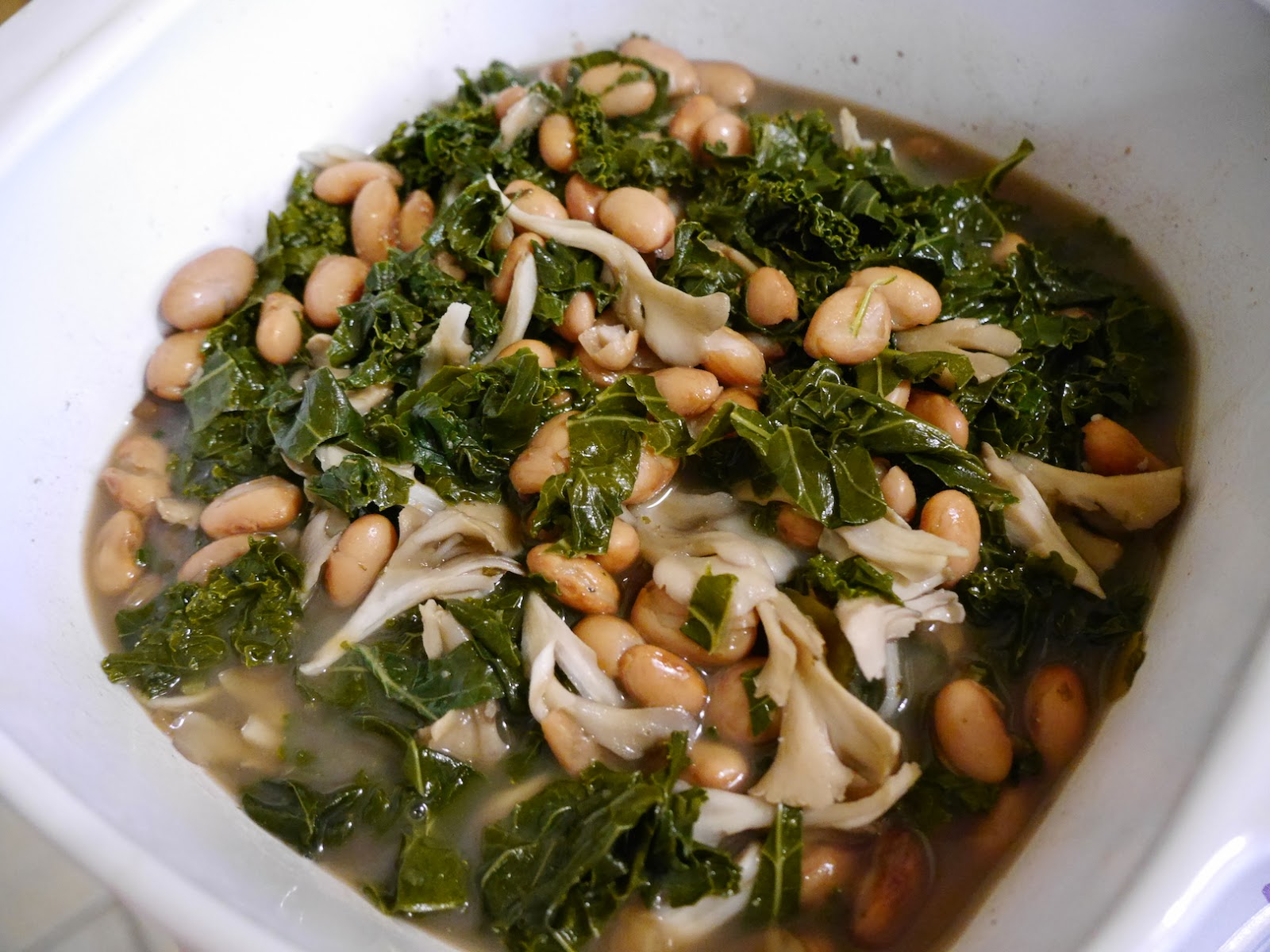
Cranberry (Borlotti) Beans, Kale, And Mushrooms
Made In An Instant Pot Electric Pressure Cooker
Easy Vegan And Gluten-Free Meal

Cranberry beans are a great source of protein and fiber.

Follow Foods For Long Life on Facebook and Pinterest.
Preview my eBook, Health Begins in the Kitchen.

Beans and Greens
"Beans and greens" is one of my absolute favorite and versatile meals. We always have tons of kale in the garden and a pantry-full of various dried beans. Spinach, chard, escarole, collards, mustard and turnip greens are also excellent "greens" to make with this dish (cooking times will vary depending on the selection of beans and greens). I usually make a big pot for dinner and serve left-overs for lunch. Beans and greens can be eaten over a cooked grain, pasta or as is. And now with my Instant Pot Electric Pressure Cooker, it's easier than ever to make this healthy and delicious dish.

The Mind Diet, a diet used in a study to reduce the risk of Alzheimer's, recommends eating six or more servings of greens and three servings of beans per week. 

Cranberry (Borlotti) Beans
This year I became addicted to Rancho Gordo beans. My son sent me a huge assortment of them for Christmas and I've been working my way through them in various recipes. The Cranberry Bean has become one of my favorites. Their creamy texture and short cooking time make them perfect for many dishes such as "beans and greens" or my other personal favorite, "pasta e fagioli", or as they say back in Brooklyn, "pasta fazool."

Cranberry beans are an excellent source of vegetarian protein, providing 16.5 grams of "complete" protein per cup, meaning they contain every essential amino acid. They also provide a whopping 17.7 grams of dietary fiber. One cup also provides 92% of the daily requirement of folate, an especially critical nutrient during pregnancy.


        *                   *                   *                      *

Cranberry Beans, Kale, and Mushrooms
Vegan, Dairy Free, Gluten Free
[makes 6 servings]
Requires an Instant Pot Electric Pressure Cooker

Ingredients
1 1/2 cups dry cranberry beans
4 inch piece kombu (optional)
4 slices of onion
Salt and pepper to taste
8 cups destemmed, thinly sliced kale
4 ounces fresh maitake or shiitake mushrooms
1/2 teaspoon garlic powder
1 teaspoon extra virgin olive oil

Directions
Sort through the beans, removing rocks and debris. Rinse well.

Place in the Instant Pot and cover with 2 or more inches of cold water. Let sit over night.

You have two choices after this:
* Rancho Gordo suggests cooking the beans in their soaking water. This provides for a slightly richer broth. Or:
* You can rinse the beans before cooking them. Soaking and rinsing the beans helps eliminate the indigestible sugars that cause gas and reduces the phytates that bind with important minerals making them unavailable. You still get a rich, delicious broth.

Whether you cook the beans in their soaking water or rinse them after soaking, make sure there is at least an inch or two of water covering the beans. I like to make my beans saucy.

Add the sliced onions over the beans and snip the piece of kombu into thin slices and add to the pot. You may also leave the kombu whole and remove it before eating. Some people reuse it.


Kombu is a sea vegetable.
It improves digestibility of beans and reduces issue with gas.
Kombu is a source of iodine, missing in many diets.
Look for it at your health food store or Whole Foods.
Beans, water, kombu and onions in the Instant Pot.
Ready to start cooking!

Make sure the top vent of the Instant Pot is closed. Secure the lid, hit the manual button and set to cook at high pressure for 8 minutes.


After the pot cooks at high pressure for 8 minutes, hit the off button and let the pressure come down naturally. Carefully remove the lid, tilting it so that the steam escapes in the back. Test the beans to see if they are done. Salt and pepper to taste and place the cooked beans and broth in a large pot or casserole dish. Set aside. No need to wash the instant pot. You'll be using it again.


Cranberry beans after cooking.

I selected maitake mushrooms for this dish today but I've also made it with others. Shiitake mushrooms are particularly good to use. If you are using maitake, break them apart into small pieces. If you are using shiitakes, remove the stem and thinly slice.


Maitake mushroom.

Place the kale, mushrooms, garlic powder, olive oil, salt and pepper into the Instant Pot. Add 3/4 cups of the bean broth to the kale mixture. Stir to combine.

Secure the lid and hit the manual button. Set to cook at high pressure for 3 to 4 minutes. When complete, hit the off button and do a quick release of the pressure. Open the lid carefully. Mix the kale and the beans together. 


Serve over rice, quinoa, millet, or other whole grain. Or, mix together with cooked pasta.

Nutrition
Per serving: 228 calories, 2 g total fat, 0 g saturated fat, 0 mg cholesterol, 285 mg omega-3 and 355 mg omega-6 fatty acids, 15 g protein, 41 g carbohydrates, and 15 g dietary fiber.


Tuesday, January 06, 2015

Top 20 Foods For Health And Longevity
Start 2015 Off Right With These Foods In Your Diet

Follow Foods For Long Life on Facebook and Pinterest.

Why Diets Don't Always Make You Healthy
I'm trying to lose a few holiday pounds right now and I'd guess most of you are too. But as we focus on the scale we often lose site of our health. And shouldn't good health really be the goal? So instead of following a fad diet that may not be good for in the long run, let's fill our plates with the most fiber-rich, nutrient-dense and delicious foods we can and then we won't have room for or crave the bad stuff! I guarantee you will lose weight and won't be the least bit hungry.

After six years and more than 500 Foods For Long Life posts, I thought it was time to list the foods that I think are most important for health and long life. So here it is, my top 20 foods with some popular recipes that use them. I could have just as easily written about 50 of them but my husband discouraged me from doing that. I'll have to save that list for my next book. 

Top 20 "Foods For Long Life"

#1 - Beans
Whether or not you are a vegetarian or vegan, beans should be your main source of protein. I try to eat at least a half cup to one cup of cooked beans per dayBeans provide protein without the saturated fat and cholesterol that you get with meat. They are also a great source of fiber, iron, calcium, magnesium, B vitamins and antioxidants. The mixture of protein and dietary fiber supports the regulation and balance of blood sugar.
For example:
1 cup of cooked lentils provides 18 grams of protein, 16 g of dietary fiber and 90% of the daily requirement of folate.
1 cup of cooked black beans have 15 grams of protein, 15 g of dietary fiber and 64% of the daily requirement of folate as well as 120 mg of magnesium.
1 cup of cooked soybeans provides 175 mg of calcium and half your daily requirement of iron.
1/2 cup of dried small red beans have more antioxidant capacity that 1 cup of wild blueberries.

Soaking beans and discarding their soak water removes some of the phytates and tannis that can lower the availability of certain nutrients. It also reduces substances that cause flatulence. Mix it up and try different types of beans. My favorite places online to shop for a wide variety of beans are Purcell Mountain Farms and Rancho Gordo.


Black beans
Marrow beans

#2 Kale and other Leafy Greens
Kale is my favorite green (it's also a cruciferous vegetable). It grows easily in the garden throughout the year in a temperate climate like we have here in Northern California. It's so nutrient-dense that it's like a leaf-shaped vitamin pill. I serve my family at least one cup of raw or 1/2 to 1 cup of cooked greens every day. Always select organic greens as they are on EWG's "Dirty Dozen" list

My favorite way to prepare kale is to eat it raw in a salad by first marinating it in a little extra virgin olive oil, freshly squeezed lemon juice and a pinch of salt. Or, steam it in a pressure cooker for 2 minutes followed by a quick release of pressure, or sautĆ© it in a pan with a little olive oil, water and garlic. It's also a great addition to your morning smoothie!


Shredded kale and quinoa salad

Or, start your morning with my personal favorite breakfast: a Kale Bowl with Quinoa and Avocado


Kale bowl

Other wonderful leafy greens include collards, chard, turnip greens, spinach and mustard greens. 

#3 Wild Blueberries and other Berries
Wild blueberries are antioxidant powerhouses. They support heart health and can help improve memory and other cognitive functions. They also have a low glycemic index so they don't spike your sugar level like some other fruits do. In fact their high fiber content and low glycemic index can help regulate blood sugar levels in people with type-2 diabetes. 
Regular (not wild) blueberries, raspberries, blackberries, strawberries also have high antioxidant properties so add them to your shopping cart too. I always try to buy organic berries when available. I try to have berries at least 4 times a week. When they are in season, I eat them everyday, especially when my raspberry bushes are producing. 

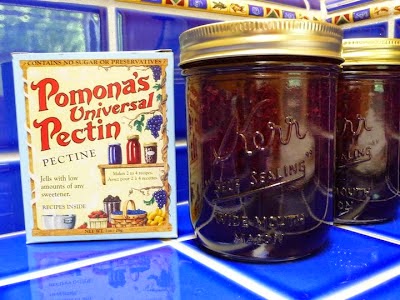
I put berries in my smoothies, fruit salads, chia pudding, green salads and home-made ice cream. When I have extra, I make low-sugar jam with Pomona Universal Pectin. Select organic berries, especially strawberries as they are on EWG's "Dirty Dozen" list. 


Blueberry smoothie


#4 Tomatoes 
I'm Italian so tomatoes are going to be high on this list no matter what. But luckily they are a very good source of vitamin C, vitamin A, vitamin E, vitamin K, copper, potassium, manganese, and B vitamins. They are best known for their antioxidant benefits as well as the long list of phytonutrients that they contain, the most touted being the carotenoid "lycopene." Tomato consumption has been associated with  lowering the risk of prostate cancer. It has also been linked to reducing the risk of heart disease and improving bone health in postmenopausal women. Tomato lycopene is most effective in reducing heart disease, and other risk factors, when combined with olive oil, which makes me even happier. 

Of course we make a lot of tomato sauce with our garden tomatoes and when we have a big harvest, we can diced tomatoes and tomato sauce for the winter. But we also use them in salsa, salads, soups, sandwiches, stews, and more. In the summer we eat tomatoes every day. In the winter we avoid the ones in the supermarket since they taste like plastic but we enjoy the ones we canned a few times a week. Select organic, especially when buying cherry tomatoes as they are on EWG's "Dirty Dozen" list.


Stuffed tomatoes

#5 Omega-3 Power Seeds: Chia, Hemp and Flax
These power seeds are extremely important to the diet, especially if you do not eat fish. They are an excellent source of ALA omega-3 which is critical for heart health, brain development, reducing inflammation and joint pain, managing depression, preventing dry eyes, lowering cholesterol, controlling high blood pressure, protecting your bones and more. 
Flaxseeds contain the most omega-3 of the power seeds but hemp contains the most protein and chia has the most fiber and calcium. So we eat at least one of these seeds every day.

For more critical information on omega-3 and what these power seeds can and cannot do for vegans, read my January, 2011 blogpost.

When we bake, we substitute flax eggs for eggs by mixing 1 tablespoon of ground flax seeds with 3 tablespoons of water.  We sprinkle hemp seeds on almost everything including our oatmeal, raw fruit or green salads and use cold-pressed hemp oil in our salad dressings. We make chia seed pudding for dessert or use chia seeds to thicken smoothies or salad dressings. We certainly eat at least one of these seeds every day


Chia pudding 

Flaxseeds are the foundation for raw crackers. If you have a dehydrator, try these Raw Omega-3 Rich crackers.

Raw crackers

#6 Salmon and other Low Mercury, High Omega-3 Seafood
If you read my January, 2011 blogpost, you will see that it may be difficult for you to get enough EPA and DHA from just consuming the ALA omega-3 from power seeds. Not everyone can efficiently convert ALA to the critical EPA and DHA omega-3. Vegans who do not eat fish should consider taking a supplement that extracts these forms of omega-3 from algae. For those of you who eat seafood, you should select those that have the highest amount of DHA and EPA omega-3 and the lowest amount of mercury. Anchovies, herring, Pacific oysters, and salmon are all low in mercury and contain the highest concentration of DHA and EPA omega-3. Consider eating 2 to 3 servings per week.

Since we live 20 minutes from Bodega bay, we are able to get wild, line-caught salmon. 

Salmon is low in mercury and rich in DHA & EPA omega-3

#7 Lemons and Limes
Although lemons and limes taste acidic, they are actually alkalinizing in the body. They also rich in vitamin C and contain phytonutrients that have antioxidant and antibiotic effects. They have even been shown to protect against cholera!

But aside from their many medicinal uses, from relieving asthma and fighting colds to reducing the risk of gout, I encourage using these wonderful fruits in cooking for their ability to enhance the flavor of a dish without having to use excessive salt. 

I use the juice and/or the grated peels of lemons and limes in salad dressings, salsa, smoothies, hot or iced tea, as a marinade for kale, to bring out the flavor in soups, to flavor pesto without parmesan, in hot water as a cleansing beverage, as a flavoring for cooked greens and other veggies, and so much more. I use fresh lemons or limes every day

Squeeze half a lemon into a cup of warm water in the morning for a nice cleansing effect. 
If you have a lemon or lime tree, here's a good way to store the juice and zest.


#8 Garlic
Part of the Allium family (a cousin to onions which should also be part of your daily diet), garlic contains powerful sulfur-containing compounds that give it its reputation for promoting health. Garlic is known to promote heart health by having strong anti-inflammatory properties. These properties also may help with other illnesses caused by inflammation. Garlic also has the ability to control infections from bacterial, viruses, fungi and yeast and has properties that can lower the risk of many cancers. 

Crushing and chopping garlic allows the conversion of alliin into allicin, the compound that provides you with its health benefits. Let the crushed or chopped garlic rest for 5 to 10 minutes before cooking it or adding it to lemon juice or any ingredient that is acidic, or it will quickly reduce the allicin content. In any recipe that uses garlic, I chop or crush it first before doing anything else so that it can rest and develop its superpowers! Use it everyday if possible. 

I use garlic to flavor salad dressings, I sautĆ© it and add it to just about everything I cook. It is the main flavor in pesto and hummus. 

Try making this Chimichurri Sauce.


#9 Broccoli and other Cruciferous Vegetables
I have met many children who will not look at a vegetable but for some reason they love broccoli. One child told me that it was because they look like little trees. 

Broccoli's most important characteristic is its ability to help prevent cancer. It does so because of three characteristics. It's a powerful antioxidant. It has anti-inflammatory properties and the ability to promote and regulate detoxification at the cellular level. Most research has shown a link between broccoli and decreased risk of prostate, breast, colon, bladder and ovarian cancer but it may very well lower the risk of many other types of cancer also. A half-cup serving a day or a two-cup serving twice a week would provide these benefits. 

Broccoli is also low in calories and high in fiber - a great combination when trying to lose weight. Because of its anti-inflammatory properties, it is may also help prevent heart disease. It's high concentration of lutein and zeaxanthin make it an important food for eye health. 

And don't forget to eat the broccoli leaves. In fact, in our garden, we live off of the delicious leaves long after we've removed the head of broccoli. 


Broccoli leaves

The healthiest way to cook broccoli is to briefly steam at low temperature, about 5 minutes. I cook it for only a minute in my Instant Pot Pressure Cooker and then release the pressure immediately. Then I toss it with a mixture of extra virgin olive oil, cold-pressed hemp oil, lemon juice, pressed garlic and salt. 

Some of my other favorite and health-promoting cruciferous vegetables include arugula, bok choy, Brussels sprouts, cabbage, cauliflower, collard greens, and kale. 

#10 Quinoa 
Years ago you probably had never seen quinoa in the stores or served in a restaurant but it has now become quite popular. Although it is served as a whole grain, it is actually a seed. Perhaps its most important quality, especially important to vegans and vegetarians, is that it provides all 9 essential amino acids and is considered a complete protein. It's also gluten-free, making very popular with those avoiding gluten.

We love quinoa. It's quick and easy to prepare. It takes 18 to 20 minutes on the stove and 5 minutes in my Instant Pot Pressure Cooker (with the added time to get to pressure and time for a natural release). I use it the same way I would use rice. It's great to stuff into bell peppers, winter squash, or tomatoes (as shown above). Serve beside a nice curry or stir fry dish.  We enjoy quinoa several times a week but it's important to mix up your grains. Alternate between quinoa, millet, rice, polenta, wheat berries, and other whole grains. 

Try Black Bean, Corn and Quinoa Stuffed Peppers with Enchilada Sauce.


#11 English Walnuts and Other Nuts
A recent study showed that 1 to 1.5 ounces of walnuts each day may help protect against Alzheimer's disease. Not a surprise as foods that resemble body parts are often good for them. Just look at a walnut with its shape of a brain, even having two hemispheres! 

But don't stop at walnuts. A 30 year study showed that people who ate just a 1/4 cup of nuts each day were 20% less likely to die from any cause, had a 29% reduction in cardiovascular deaths and an 11% reduction in cancer deaths. So mix it up by eating walnuts, almonds, Brazil nuts, pecans, pistachios, cashews and others. I like them raw and leave a Nut Medley out for us to graze on all day. Make sure they are unsalted or you won't be able to stop at 1/4 cup. I also sprinkle nuts over oatmeal, fruit or green salads, bake them into muffins, cakes and breads, and sprinkle them on top of frozen desserts. 


#12 Avocados
I adore avocados. Living in California, we have year-round access to them. Although they are high in fat, much of it is good heath-promoting monosaturated fats like oleic acid. And they are packed with vitamins and minerals such as Vitamins B6, C, E and K as well as folate, pantothenic acid and potassium. They are also very high in dietary fiber and contain carotenoids, a class of powerful plant chemicals found in many red, orange, and yellow fruits and vegetables. All of these compounds contribute to their ability to reduce inflammation in conditions such as arthritis. This property also helps them lower the risk of cancer, support cardiovascular health and help regulate blood sugar. Avocados also enhance the absorption of beta carotenes.

I eat 1/4 to 1/2 an avocado per day. I serve them for breakfast over a kale bowl or in a fruit salad, for lunch or dinner in salads, guacamole, salsas, blended into raw soups and salad dressings, over chili or beans, over baked potatoes, in sandwiches and more. See 10 Ways to Enjoy Avocados.  We especially love Guacamole. Try making this recipe with 1/2 to 1 clove of crushed garlic instead of the chopped red onion.


#13 Mushrooms
Throughout history mushrooms have been praised for their health-promoting properties. Growing up I just had access to white button mushrooms but now the markets are filled with exotic mushrooms, each having their own health-promoting properties. Shiitake, maitake, chanterelles, oyster, portobello, crimini, porcini, and others can be found either fresh or dried. Like all other classes of foods, I encourage you to mix it up and enjoy all kinds of mushrooms. But don't forage for them yourselves without an expert tour guide as you can easily poison yourselves. 

Mushrooms are most known for their ability to boost your immune system or to fight tumor growth. Three population studies show that women who eat an average of one button mushroom a day have half the risk of breast cancer than women who don't eat mushrooms!

I cook them in soups, stews, pasta, with veggies, in mushroom pates, with grains, stuffed, and more. I enjoy them several times a week or more.

Try Shiitake and Maitake Mushroom Stroganoff.


#14 Sweet Potatoes and other Orange Foods
Orange foods generally mean lots of beta-carotene so I always try to have something orange on my plate. Sweet potatoes are one of the best sources. Beta-carotene is a precursor of vitamin A so when you eat beta-carotene, the body turns it into vitamin A, or retinol. Vitamin A is needed for healthy skin, mucus membranes, healthy eyes and good vision as well as a healthy immune system. Sweet potatoes should always be eaten with a little fat to make the beta-carotein more absorbable. 

Sweet potatoes are one of our favorite orange foods. A typical weeknight menu is a baked sweet potato topped with baked beans or spicy black beans and steamed broccoli or greens on the side. Other orange foods that should get special mention are carrots, butternut squash, cantaloupe and other orange melons, apricots, papayas, mangos, and oranges. 

Probably the most popular post on this blog was one I did in 2009 featuring a Healthy Vegan Sweet Potato Casserole topped with Pecans. Most people wait for Thanksgiving to make it but it's a great way to enjoy sweet potatoes and should be enjoyed all year round. It's one of my husband's favorites. 


#15 Dark Chocolate
Who wasn't happy to discover that dark chocolate's rich antioxidant flavonols turned it into a health food? But dark chocolates mixed with fats other than cocoa butter or with too much sugar added aren't going to be something you'd want to munch on every day. So look for unsweetened baking chocolate, or chocolate bars that are at least 70% dark. Better yet, add pure cacao to your smoothies or desserts. 

Chocolate's flavonoids may reduce the risk of heart attack because they have anti-inflammatory actions, they can lower blood pressure, improve arterial blood flow, lower the susceptibility of LDL cholesterol to oxidative damage while increasing HDL, and prevent blood platelets from clumping. It's not only good for heart health, but may also improve brain function.

We eat a small piece of dark chocolate most days or just throw a tablespoon of raw cacao in our smoothies. When entertaining we often make Raw Chocolate Truffles


#16 Oats
Oats are a wonderful, fiber-rich whole grain that help lower cholesterol levels and support heart health. They also help stabilize blood sugar making them helpful in lowering the risk for type-2 diabetes. 

Oatmeal is great for breakfast on chilly mornings. I also like using oat flour for gluten-free baking. We enjoy oatmeal about 3 times a week and enjoy making it with bananas, apples or cranberries.  Try Oatmeal with Walnuts, Bananas, and Raisins


Oatmeal 


#17 Apples
Yes, an apple a day keeps the doctor away but make sure it's organic since apples top the list for most pesticides on EWG's Dirty Dozen list for 2014. This popular fruit contains important phytonutrients that can regulate blood sugar. It's fiber content makes it a satisfying food to munch on when trying to lose weight. There are so many ways to use apples but our favorite is to munch on apple slices. A recent study showed that a child is much more likely to eat apples it is sliced.

For a fruit salad that incorporates a number of Foods For Long Life, try Waldorf Salad with Apple Chia Dressing.


Raw vegan Waldorf salad

#18 Red Bell Pepper
Red peppers are one of my husband's favorite foods. For only 46 calories, these nutrient-dense beauties provide 3 times your daily requirements of vitamin C, and are a very good source of fiber, vitamin A, E, B6 and folate. They are packed with carotenoids such as alpha and beta-carotene, lycopene, lutein, zeaxanthin and many more. They are most nutritious when eaten raw, like in this Raw Veggie Wrap with Ginger Tahini Dipping Sauce, but they are still very nutritious cooked, just avoid very high heat..

Always select organic bell peppers as they are on EWG's Dirty Dozen list.


Raw veggie wrap with red bell pepper

#19 Extra Virgin Olive Oil
The Mediterranean diet has long touted olive oil for his ability to protect the heart. This has been attributed to its polyphenol content with its powerful anti-inflammatory properties. Olive oil also gets 75% of it's fat from oleic acid which is a monosaturated omega-9 fatty acid. Most cooking oils, like corn, sunflower, and safflower, have much less monosaturated oils. This high level of monosaturated oils may be linked to olive oil's ability to reduce blood pressure. Consumption of olive oil has also been linked to reducing the risk of many cancers, including breast, respiratory tract, and upper GI tract. It is also a good source of vitamin E.

I use olive oil in salads, and in cooking on medium-low heat. I use it in baking instead of butter. I always select extra virgin which is from the first pressing of the olives and is unrefined. Always protect olive oil from the light. For safe measure, I always wrap my bottles in aluminum foil, even when the bottles are tinted. 

#20 Artichokes
Artichokes have been one of my favorite foods since I was a child. I remember the strange looks my classmates would give me when I whipped out a stuffed artichoke at lunchtime. I was equally surprised to see them eating a peanut butter and jelly sandwich, something I wouldn't experience until I left for college. 

Artichokes are very high in dietary fiber, over 10 grams each. They are also a very good source of vitamin C, K, folic acid (important during pregnancy) and manganese. 

Have you ever noticed that artichoke leaves are in most tea preparations used to cleanse your liver? That's because they contain the flavonoid silymarin, which is a powerful liver protectant. Artichokes also stimulate the production of bile which helps you digest fats. The powerful antioxidants rutin, quercetin, and gallic acid contained in the leaf of the artichoke have led researchers to believe that artichokes may help fight cancer.

We eat them stuffed, on top of pasta, in paella, steamed with a dip, in an antipasto, in soups, in morning scrambles, and in salads. We also drink tea made from artichoke leaves.

Try Artichokes with Creamy Garlic Lemon-Pepper Dill Sauce.


So forget about the fad diets and load up on these great foods!
Here's a consolidated list of the Foods For Long Life that you should eat regularly. Cut and paste it onto your shopping list.
  1. Beans, beans, and more beans
  2. Kale and other greens (organic)
  3. Berries (organic)
  4. Tomatoes (organic)
  5. Power Seeds - chia, hemp and flaxseeds
  6. Salmon and other low mercury, high omega-3 seafood
  7. Lemon and limes
  8. Garlic and onions
  9. Broccoli and other cruciferous veggies (Bok choy, Brussels sprouts, cabbage, cauliflower and collards)
  10. Quinoa
  11. Walnuts and other raw, unsalted nuts
  12. Avocados
  13. Mushrooms
  14. Sweet Potatoes and other orange foods
  15. Dark chocolate or cacao
  16. Oats
  17. Apples
  18. Red Bell Peppers (organic)
  19. Extra Virgin Olive Oil
  20. Artichokes
For recipes and menus that incorporate many of these important foods and additional nutritional information, Download my eBook, Health Begins in the Kitchen available on Amazon and iTunes.


And Happy New Year!