Showing posts with label BRAZIL NUTS. Show all posts

Monday, December 16, 2013

Go Nuts For Nuts - You'll Live Longer!
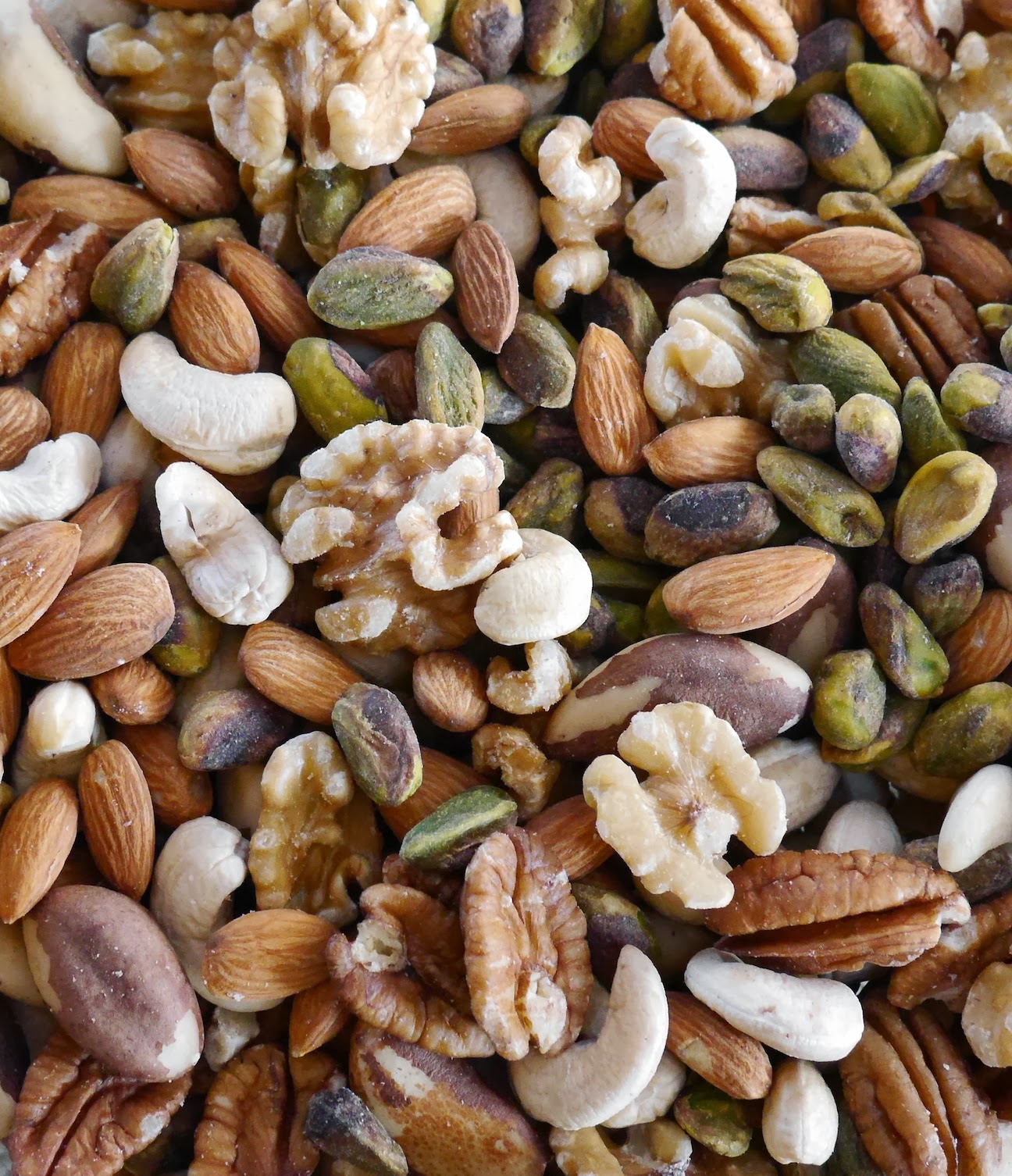
Nut Medley Recipe

Eating nuts can lengthen your life!

Follow Foods For Long Life on Facebook and Pinterest.

Longevity Foods
Occasionally you'll hear someone promote a food that could improve your health and possibly extend your life but often it's not something you would want to eat everyday. Cholorella and spirulina come to mind. Or, it's not something you have easy access to like goji berries, for example. But a 30-year Harvard study recently revealed that plain old, easy-to-find nuts can help you live longer.

Amazing Study Results
In this study 119,000 men and women were tracked, making this the largest study of its kind. The results were astounding. Here's what they found:

Over the 30 year study period, people who ate just a handful of nuts (about 1/4 cup or an ounce) each day:


 * were 20% less likely to die from any cause,
 * had a 29% reduction in deaths from heart disease, and
 * had an 11% reduction in deaths from cancer.

There was also a linear relationship between how often people ate nuts and the amount of benefit they received. The more times a week they ate nuts, the longer they lived. 

 * Those who ate nuts less that once a week had a 7% reduction in mortality.
 * Those who ate nuts once a week had an 11% reduction,
 * two to four times per week, a 13% reduction,
 * five to six times per week, a 15% reduction, and
 * seven or more times a week, a 20% reduction.

But Aren't Nuts Fattening?
Nuts are high in calories because of their fat content and I'm sure if you ate a pound of nuts each day you would gain weight. But the study found that regular nut-eaters were found to be more slender than those who didn't eat nuts. So eating a handful of nuts a day not only improves your chances of living longer but it can also keep your slimmer. 

What To Do (In my opinion)
So how can you take advantage of this good news? 
To take advantage of the many benefits of nuts, eat a variety of them, of course avoiding those you may be allergic to. Walnuts provide more omega-3 fatty acids, Brazil nuts are rich in selenium, almonds are high in vitamin E, pistachios provide vitamin B6, macadamia nuts and pecans are rich in manganese as are most other nuts. So mix it up!

I prefer to eat raw nuts because the roasting process can create carcinogenic chemicals. Some of the nuts that are sold as "raw" are actually blanched (like almonds) or exposed to high heats during the shelling process (like cashews). But at least they are not roasted in oil. 

Raw nuts, however, are high in phytic acid which can lower your absorption of minerals like, zinc, calcium, iron and others because it has a tendency to bind with them. If you are a raw foodist and nuts are a key part of your diet, this could be an issue. To prevent this, nuts could first be soaked, rinsed, and dehydrated. However, if you are only consuming an ounce or two of nuts a day, (which is all you really should be consuming to get health benefits) it's not a problem. 

I also prefer to eat unsalted nuts. I find that I can eat a handful of unsalted nuts but if they are salted, I want to eat a lot more. I cannot walk away from a bowl of salted pistachios!

Because of their high fat content, nuts can go rancid so always keep them in the refrigerator.

Store nuts in a large glass jar
and keep refrigerated.

Make a mixture of your favorite raw, unsalted nuts. 
 * Store in a glass jar and refrigerate.
 * Serve to your guests as an appetizer.
 * Put an ounce in everyone's lunchbox.
 * Put out a bowl for family "grazing".
 * Sprinkle nuts on top of green salads and fruit salads.

          *                                *                                *

Nut Medley
Vegan, Gluten Free
[makes 24 (1/4-cup) servings]

1 cup raw, shelled, unsalted English walnuts
1 cup raw, shelled, unsalted pistachios
1 cup raw, shelled, unsalted pecan halves
1 cup raw, shelled, unsalted cashews
1 cup raw, shelled, unsalted almonds
1 cup raw, shelled, unsalted Brazil nuts

Mix all ingredients and store in a glass jar. Refrigerate until needed. 
Enjoy a serving a day!

Per serving: 188 calories, 17 g total fat, 2 g saturated fat, 505 mg omega-3 and 5,692 mg omega-6 fatty acids, 0 mg cholesterol, 5 g protein, 6 g carbohydrates, 3 g dietary fiber, and 1 mg sodium. 


Serve this nut medley to your holiday guests and put
1/4 cup servings in your family's lunchbox every day.


Friday, March 23, 2012

How To Make The Most Nutritious Regular And Chocolate Nut Milk - It's Raw, Vegan And Gluten Free!

A mixture of nuts provides a highly nutritious milk!

Follow Foods For Long Life on FACEBOOK.


Making your own Milk
We love to make our own milk. Whether it's using our SoyaPower Plus to make soy milk or using our Vitamix blender to whip up raw nut milk, it's always very gratifying to know exactly what I'm serving my family.


The Right Blend
Most people make milk from a single nut but I've developed a mixture of nuts that provide a great selection of nutrients. Most nuts provide manganese, copper, magnesium, phosphorus, thiamin and omega-6 as well as antioxidant phytochemicals. But in addition to that, I've selected particular nuts that deliver other important nutrients - almonds, English walnuts and Brazil nuts. 


Almonds provide lots of vitamin E.
Walnuts are rich in ALA omega-3 fatty acids.
Brazil nuts are packed with selenium, a natural antioxidant.


This Chocolate Milk is Good For You!
By adding raw cacao, a touch of vanilla and more stevia to this milk, you get all of the heart healthy advantages of the rich flavanols in chocolate without the sugar and the calories. So go ahead and enjoy that chocolate milk! See recipe below.


Nut Milk
Raw Vegan, Gluten Free
[makes ~ 4 cups]


1/4 cup raw almonds 
1/4 cup raw English walnuts 
4 Brazil nuts 
Filtered water for soaking nuts
4 cups filtered water
1 (1 gram) packet stevia, or to taste
pinch salt (optional)


Soak all nuts together in filtered water for 6 or more hours. Rinse well after soaking.


Place nuts, 4 cups filtered water, stevia and salt in a Vitamix or other high-speed blender. Blend until smooth.


I'm always amazed at how white nuts become when blended!


Strain nut milk through a fine mesh strainer or nut bag.


Pour milk into nut bag. You can find nut bags on the internet or in your local health food store. 


Squeeze well.
Nut residue can be used in baking or in raw cookies.
I'll think up a recipe!


Refrigerate until needed and stir before serving. Milk will keep for several days.


Per serving: Because different blenders and straining techniques yield different amount of pulp vs. milk, the exact yield and nutritional analysis is not possible to accurately calculate.


Chocolate Milk
Raw Vegan, Gluten Free
[makes 2 cups - for 1 quart, double recipe]


2 cups nut milk from above recipe
2 tablespoons raw cacao
1 teaspoon vanilla extract
2 to 3 (1 gram) packets stevia


Return strained nut milk to blender and add cacao, vanilla and stevia. Blend until smooth.


Yumm, chocolate milk that's good for you!

Tuesday, July 19, 2011

The Mother Of All Smoothies! Healthy And Delicious, High In Fiber And Omega 3. Also, How To Freeze Seasonal Fruit!

Fruits, veggies plus healthy additions make this the Mother of All Smoothies.
Contains almost half the daily requirement of dietary fiber and over 3 grams of ALA omega 3 fatty acid!

Follow Foods For Long Life on FACEBOOK !


Chemistry in the Kitchen
My morning smoothies are like a chemistry experiment. Every day, for the last week, I've been drinking and perfecting this recipe. It has a number of the healthful ingredients I've used in previously posted smoothie recipes.
I always start with some dark green veggies like kale, spinach or chard. Lately I've been adding other vegetables like cucumbers or celery. 
To make the smoothes sweet and delicious, I add a small banana and some big juicy figs that I still have in the freezer from my neighbor's last years crop. ( I also drop in a packet of stevia for added sweetness). To get lots of vitamin C and some "detoxing" pectin, I throw in an orange from my tree, skin and all! Sometimes, instead, I use an apple or pear, depending on availability.
And, of course, I always keep a huge bag of frozen blueberries in the freezer so I add a cup of them for their high antioxidant properties. Sometimes I throw in the tops of strawberries that I keep in the freezer too.
To make this the "Mother of all Smoothies", I add some healthy additions:
* Brazil nuts for their enormous selenium content. Selenium is a mineral with high antioxidant properties.
* Unfiltered Flaxseed oil for its ALA omega 3 fatty acid content.
* Vitamineral Green - my absolute favorite green "superfood"  by Healthforce Nutritionals.
* Matcha powdered green tea, known for its many health benefits.


This brand of UNFILTERED FLAX OIL provides 6.2 g ALA omega 3, plus 10 - 14 mg SDG lignans.
Lignans contain phytoestrogen substances which are associated with lowered breast cancer risk, heart health,  improved immune function and many other health benefits.
I noticed this product is manufactured in the same plant as wheat products so I don't think it is guaranteed gluten free.

VITAMINERAL GREEN contains a large collection of green foods like wheat grass, broccoli and kale juice, nettle leaf and many others.
From the waters are spirulina and chlorella.
 From the oceans are sea vegetables like kelp, dulse, laver, bladderwrack and more.
Each heaping tablespoon contains necessary digestive enzymes and probiotics.
If you experience beneficial cleansing reactions, start out with a lesser amount.
Latest formulation is vegan and gluten free.

Green tea is my favorite beverage. I enjoy hot Sencha tea and I use a powdered "Matcha" in smoothies.
MATCHA POWDERED GREEN TEA contains the potent cancer fighting catechin antioxidant, EGCg.
It has an ORAC rating of 1300 units/g (higher than blueberries and chocolate).
Its high chlorophyll content removes metals and chemical toxins from the body.
It contains L-theanine, a mood enhancing amino acid.


STEVIA is a plant native to South America.
This natural sweetener has been used by the Indigo people for hundreds of years.
It's been used as a sweetener in Japan and Brazil for 3 decades.
It was only approved by the FDA as a food additive in 2008.
It's a good, natural sweetener for diabetics and others wanting to avoid sugar.


Freezing and Preserving Seasonal Fruits
In the summer, you may end up with lots of beautiful fresh fruit. You may have fruit trees or a generous neighbor with fruit trees. Or, you may find wonderful deals at your local farmers market. In any event, you will have to figure out what to do with it all! 
You may want to use some to make Low sugar jam but if you want to enjoy raw smoothies throughout the year, your best bet is to freeze it.
Just throwing fruit in a freezer bag doesn't work very well. In a matter of weeks you'll have freezer burn and the fruit may turn a different, unappealing color. To successfully freeze fruit you'll need a heavy plastic bag and a vacuum sealing machine. 
There are a number of products available. Since we bought ours a while back, I don't really know which is currently the best on the market. I can only say it was one of the best purchases we ever made. 
The trick to successfully freezing fruit is this:
1. Clean fruit and dry it.
2. Halve or quarter figs or slice peaches or apricots but make the slices big enough so that they can stand up on a cookie sheet.
3. Place fruit skin side down on a small cookie sheet that fits in your freezer.
4. Freeze the fruit until it is hard.
5. Place frozen fruit in the plastic bag that comes with the vacuum sealing machine keeping the fruit pieces in a single layer.
6. Seal the bag with the machine making sure the fruit remains in a single layer. 
7. Place in freezer.


A FoodSaver vacuum sealing machine that we bought years ago.
You can buy individual freezer bags or a continuous roll that allows you to adjust the size.
We froze these figs 9 months ago and they were still fresh and delicious in this morning's smoothie!
Notice how we kept figs in a single layer. That makes it easier to break off the frozen pieces as needed.


The Mother of all Smoothies
Vegan or Raw Vegan options
[makes 4 cups or 2 breakfast servings]
1 1/2 cups cold organic vanilla soy milk*
2 Brazil nuts
1 cup organic kale, stems removed, chopped
1 cup organic celery, chopped (or organic cucumber with skin)
1 small banana
2 medium figs, cut in half
1 small organic orange, seeds removed, with skin
1 cup frozen blueberries
1 tablespoon unfiltered, organic, high lignan flaxseed oil
1 heaping tablespoon Vitamineral Green **
1 teaspoon Japanese powdered Matcha green tea
1 packet stevia natural sweetener


* For a completely raw smoothie, replace soymilk with 1 1/2 cups cold water, 12 soaked, raw almonds and 1/2 teaspoon vanilla extract.
** Cut down the amount to start with to avoid a possible cleansing reaction.


Add all ingredients to a Vitamix or high speed blender.
Process until smooth and serve immediately.


Per serving (with soy milk): 384 calories, 12.4 g fat, 2.3 g saturated fat, 3.2 g ALA omega 3 and 2.2 g omega 6 fatty acid, 0 mg cholesterol, 11.2 g protein, 59.5 g carbohydrates and 10.9 g dietary fiber.


Per serving (with raw almonds, water and vanilla): 345 calories, 12.9 g fat, 1.8 g saturated fat, 3.2 g ALA omega 3 and 3.9 g omega 6 fatty acid, 0 mg cholesterol, 8.2 g protein, 54.3 g carbohydrates and 11.6 g dietary fiber.

Tuesday, March 16, 2010

Make Your Own Raw, Fortified Almond Milk - Can You Get Enough Calcium From A Raw Food Diet?


Soaked almonds being blended in a VitaMix.

Strain through a fine, mesh strainer.

Almond pulp after straining.


Nutritious Almond Milk - No Need to Run Out to the Store!
How convenient not to have to run out to the store to buy milk! All you need is a few almonds and a VitaMix or other high speed blender and you have fresh nut milk. If you want truly "raw" almond milk, you will have to buy the almonds at a farmer's market or directly from the grower as most almonds you get at the supermarket are blanched. For those of you who consume cow's milk, give nut milk a try. It's less mucous forming which is especially important during allergy or cold and flu season. It's also a good alternative for those who are lactose intolerant.

Calcium and the Raw Food Vegan Diet
In my doctoral research I concluded that adequate calcium is difficult, but not impossible, to get from a strict raw food diet. If you have a fairly alkaline diet and avoid foods that bind calcium, you may not need as much calcium as others who don't.
There is a lot of misinformation about calcium, thanks to the dairy industry and their large marketing budget. The two things they want you to believe are: one, you need lots of it and two, the best way to get it is with dairy products.
How Much do we Need?
Calcium is the most abundant mineral in the body. It is important for bone and tooth development as well as muscle contractions and nerve transmissions. In 1989, the National Academy of Science recommended 800 mg of calcium for adults over 25. In 1994, the NIH raised this amount to 1,000 mg for premenopausal women 25-50 and 1,500 mg for postmenopausal women not taking estrogen drugs. That's a lot of calcium. Do we all really need that much? Well, that depends. Like many nutritional guidelines, I do not believe that "one size fits all". I do believe that the amount of calcium you need depends on your overall diet. Some foods cause the body to deplete calcium and others bind usable calcium reducing its bio-availability. If you eat a diet rich in these foods, you may need to take as much as the NIH recommends.
Calcium Detractors
Oxalic acid foods such as spinach, chard, beet greens, cocoa, turnip and mustard greens can bind with calcium. But before you stop eating these healthful, nutrient rich foods, consider the opinion of Dr. Norman Walker. According to Dr. Walker, famous for his raw juice therapies, oxalic acid, when found in raw foods and in its "organic" state, is beneficial and essential to good health. It is only when these foods are cooked that oxalic acid combines with calcium and destroys its nutritional benefit and forms painful "inorganic" crystals in the kidneys. Although I could not verify his theory, Dr. Walker lived until 99 so I feel he's a pretty credible source. According to him, oxalic acid from raw food may not reduce your amount of calcium.
Phytates, found in nuts, beans and grains, are another detractor and can bind calcium, zinc, iron and other minerals. According to Paul Pitchford, the author of "Healing with Whole Foods", soaking and sprouting these foods will reduce phytic acid and make calcium and other minerals more bio-available. Raw foodists and others who do not soak and sprout nuts, beans and grains will have reduced bio-availability of the calcium they consume and will therefore require higher amounts. Many raw food recipes, however, call for the soaking and rinsing of these high phytate foods so if you are diligent about this, it should not be a problem.
Acid forming foods such as red meat, poultry, fish, eggs, pasteurized dairy, sugar, coffee, alcohol, pasta and some beans, nuts and seeds cause the body to draw calcium from the bones to neutralize the acid. Raw foodists avoid meat and dairy but consume quite a few grains, nuts and seeds, some of which are acidic. Dr. Gabriel Cousens, in his book, "Conscious Eating", states that sprouting of all nuts, seeds, beans and grains cause them to become more alkaline. This would certainly reduce the amount of calcium the body needs to use to neutralize acidic foods. Given the difficulty of getting adequate calcium with a raw food diet, it is very important for raw foodists to soak and sprout acidic nuts, seeds, beans and grains. Here's one website listing alkaline and acidic foods .
Milk, Does It "Do a Body Good?"
Because of their acidic nature, I believe that dairy foods may not be the best source of calcium despite the popular slogan, "milk, it does a body good!". In 1986, Hedsted's study (as sited in Campbell and Campbell's book, "The China Study"), reported that the rate of hip fractures is higher in countries where the consumption of cow's milk is high where those countries with the lowest consumption of cow's milk have the lowest incidence of hip fractures. He sited that the U.S. drinks the most cow milk and has the most hip fractures! On the other hand, there have been several studies that have shown a positive link between the consumption of fruit and vegetables and bone health which may be attributed to their alkalizing nature.
To Summarize
Raw food vegans who soak and sprout all acidic nuts, seeds, beans and grains and eat lots of alkaline fruits and vegetables may not require as high an amount of calcium as those who eat foods with the above mentioned detractors. With that said, it is still difficult to get even half the recommended requirement of calcium on a raw food diet. Two tablespoons of raw tahini provides 126 mg of calcium and a cup of kale only provides 90.5 mg, and these are two of the most calcium dense raw vegan foods. Although I don't personally aim for the standard RDA of calcium, I do supplement with a few hundred mg of calcium per day (see below).

Fortify Nut Milk with Calcium, Vitamin D and other Minerals
If you feel you are not getting adequate calcium, you may want to take calcium supplements. I always take magnesium with my calcium to make it more absorbable (either 50% to 100% as much magnesium as calcium depending on your needs). So when I make raw nut milk, or smoothies, I often throw in a complex of 250 mg of calcium citrate and 125 mg of magnesium citrate with some vitamin D per cup of liquid. If your calcium complex comes in a capsule, break open the capsule and empty the contents in the blender. If it is a hard pill, drop it in the blender with the water and let it sit for a few minutes to dissolve. Voila, you have your very own "fortified" milk.

Add a Few Brazil Nuts to get Selenium
A single brazil nut provides 137% of your daily requirement of selenium, a powerful antioxidant that fights free radicals. I always keep brazil nuts on hand a drop one or two into my nut milks or smoothies.

Pour over Cereal, Use in a Smoothie or in a Chia Pudding Recipe
Serve nut milk with raw or baked granola or other cereals or as the base in any smoothie . You can also use it as a replacement for hemp milk in Chia Seed Pudding . Just add some vanilla to the almond milk and follow the rest of the recipe.

***

Fortified Raw Almond Milk [makes 2 cups]
1/2 cup raw almonds soaked overnight
2 raw brazil nuts soaked overnight
2 cups filtered water
6 drops stevia (or more to taste)
Two 250 mg calcium citrate complex with 125 mg magnesium citrate (optional)

Rinse almonds and brazil nuts and put in a VitaMix or other high speed blender with filtered water, stevia and calcium supplement. If calcium is in a capsule, break open and put contents in the blender. If it is in pill form, drop it in the water and let it sit for a few minutes until it starts to dissolve. Blend for 1 to 2 minutes until the nuts are fully processed and the mixture is white, like milk. Strain nut milk once or twice in a fine, mesh strainer. For a purer milk, put a few layers of cheesecloth over the strainer. Save the residue to make raw crackers or cookies.

Since the amount of residue is dependent on your blender, I cannot provide exact nutritional information on the resulting milk. But 1/4 cup of almonds provide nearly half the RDA of vitamin E and 21% of the RDA of vitamin B2 (riboflavin). Adequate amounts of both of these vitamins are difficult to achieve on a raw food diet so drink raw almond milk, it really does a body good!

Saturday, October 31, 2009

Natural Ways to Fight H1N1 or Seasonal Flu - Also, Vegetarian and Non-Vegetarian Recipes to Boost your Immune System

A daily nasal rinse may help prevent proliferation of H1N1 virus.

Fresh ginger root can be used to make tea. Drink lots of fluids.

Herbs that can help boost your immune system.
"Oven fried" oysters contain high quantities of zinc without the fat.


Your Body is Designed to Heal Itself
The CDC has already told you to wash your hands, cough in your sleeve, not to touch your nose, eyes or mouth and to get vaccinated. In addition to these, there are many other things you can do to strengthen your body’s natural defenses. Your body is designed to heal itself but it can only do so with your help. Below I will discuss stress, rest, salt water rinsing, the importance of taking in adequate liquids, vitamins, minerals, herbs and probiotics. I'll share a simple recipe for chicken soup, lemon ginger tea with honey and echinacea and a recipe that boosts your zinc levels.
Stress
Have you ever come down with a cold a few days after a big fight with your spouse or right before a final exam or a make-or-break meeting with a key customer? Stress can lead to a weakened immune system and make you more susceptible to catching a cold or the flu. It may also intensify your cold and flu symptoms. It’s pretty difficult to avoid the stresses in life but how you react to them is under your control and can make all the difference in the world. A lot of stress is self induced so cut yourself some slack this flu season. Try meditating, exercising, thinking positive thoughts, stretching or visualizing yourself on a beach in Hawaii (that’s my favorite).
Rest
Getting enough rest is key to both preventing and fighting the flu. A study published in the Journal of the American Medical Association in 2002 showed that healthy young adults who had only 4 to 6 hours sleep per night got less than half the benefit of a flu vaccine than those who were well rested. This is very important in our current situation where H1N1 is targeting healthy young adults who may think they are protected once they are vaccinated. Bottom line is, get more sleep. If you already have the flu, stay in bed and get as much rest as possible. Going to work or shopping only worsens your symptoms, delays recovery and exposes others to the flu.
Rinse Away the Germs
One of the simplest and most effective things you can do is gargle and rinse your sinuses with warm salt water. This can effectively prevent the proliferation of the flu virus. Gargling a few times a day is simple enough but many of you may be put off by sinus irrigation. Neti pots have been used for centuries and originated in Ayurvedic medical traditions. They look like little tea pots and I must admit I’ve never been excited about using these to pour warm salt water in my nose. But last year I found a very simple device, a well designed plastic bottle that does the same thing. It even comes with pre-measured salt packets. It’s called the NeilMed Sinus Rinse kit, invented by Dr. Mehta. It’s easy to use and it's great for allergies too.
Drink Lots of Fluids
It's important to stay hydrated when you have the flu, especially if you are vomiting or have diarrhea. Juice, herbal tea and broth are best. I avoid caffeinated beverages since they are dehydrating and will stimulate you when you should be at rest. One exception is green tea which contains the immune boosting chemical EGCG. Avoid drinking milk or giving it to your child since dairy is very mucus forming. Avoid alcohol as it is dehydrating and can weaken the immune system.
My favorite tea, especially when I’m congested or have an upset stomach, is fresh ginger tea.

***

Fresh Lemon Ginger Tea with Honey and Echinacea* [makes 4 cups]
2 to 3 inches of fresh ginger, unpeeled, cut in slices
1 heaping tablespoon of dried Echinacea (optional)
4 cups filtered water
2 to 4 tablespoons raw honey
Juice of one lemon

Steep ginger and Echinacea in boiling water for 15 minutes. Add raw honey and the lemon juice. Strain and serve. For an easier version of this, prepare a cup of organic ginger tea (My favorite is from Traditional Medicinals). Add a tablespoon of honey, a wedge of fresh lemon and Echinacea tincture (according to manufacturers directions).
* Ginger is a “warming” herb, controls nausea, and reduces phlegm in the upper respiratory tract. Echinacea is an herb used to build the immune system and reduce the duration of colds and flus. Honey is known to have antibacterial, antiviral and antifungal properties and can help relieve a sore throat. (Children under 1 year of age should avoid honey as it may contain bacterial spores that can cause infant botulism). Lemon juice provides vitamin C, an important antioxidant.

Chicken Soup May Have Medicinal Benefits
Chicken soup, also known as Jewish penicillin, has long been known to treat the common cold. This may be more than folklore. A study conducted at the University of Nebraska Medical Center showed that Chicken soup actually mitigates upper respiratory tract infections by stopping the migration of white cells into the bronchial tubes. See “Chicken Soup Research” . Here’s a very easy chicken soup recipe.
If you eat chicken, please make sure it is truly free range from a local farmer. Industrial farming has led to unthinkable mistreatment of chickens.

***

Easy Chicken Soup [makes 6 servings]
4 free range chicken thighs with bone in, skinned
10 cups filtered water or broth
2 inches fresh un-peeled ginger, sliced (or 2 ginger tea bags)
2 large onions, chopped
4 large celery stalks with tops, chopped
1 teaspoon fresh thyme or 1/2 teaspoon dried
1 bay leaf
3 cloves garlic, minced (1 heaping tablespoon)
6 large carrots, sliced
8 oz pre-washed, organic baby spinach
1 cup fresh parsley, chopped
salt and pepper to taste
1 package home made noodles

Place chicken in water and bring to a boil. Chop garlic and set aside for at least 15 minutes before using to get maximum benefits. Add ginger, onion, celery, thyme and bay leaf. Simmer 45 minutes partially covered. Add the garlic and carrots and simmer an additional 45 minutes, partially covered. Remove bay leaf, pieces of ginger or ginger tea bags. Remove the chicken, take the chicken off the bone, cut in small pieces and return to pot. Add fresh spinach and cook several minutes until it wilts. Turn off the heat and add fresh parsley, and salt and pepper to taste. Serve as is or over cooked noodles. If you can find home made noodles, they can cook right in the same pot with the soup in only a few minutes making this a one-pot meal. Throw them in at the same time as the spinach. If you are going to freeze the soup, do not add the pasta as it will get soggy. If you use dry noodles, cook them separately according to manufacturers directions.

Herbs, Mushrooms and Garlic **
My favorite herbs for building up my immune system before or during the flu are Echinacea and Astragalus. You will often see them together in one capsule. I also use Elderberry syrup to boost my immune system, help with coughs and to fight the flu and colds.
Mushrooms are also known to have many therapeutic effects (See the therapeutic effect mushroom chart). Cortyceps, Reishi, Maitake and Shiitake boost the immune system and have anti-bacterial and anti-viral properties. Cortyceps, Reishi and Maitake also provide lung and respiratory support. Some of my recipes that feature this longevity food are: Barley and Mushrooms and Raw Marinated Mushrooms.
Garlic is also a power food, rich in allicin, a sulfur-containing compound that gives garlic much of its anti-inflammatory, antibacterial and antiviral properties. Allicin is not produced until the garlic is crushed or chopped so wait 15 minutes before eating or cooking to get maximum benefits. Get some raw garlic in your diet by grating it in your salad dressing (see Home Made Balsamic Vinaigrette and Bread Dipping Sauce) or in one of my Pesto Recipes.
**Please note, any herbs noted here to boost the immune system are not recommended if your are taking immunosuppressants used to treat cancer or suppress the immune system following an organ transplant).

Important Vitamins/Minerals for Fighting the Flu – Vitamin A, C, D, E, Selenium and Zinc
Vitamin A
Vitamin A, also known as beta-carotene or retinol, is important for a proper functioning immune system. It helps protect tissues during infections and accelerates recovery time. You can get your daily requirement from one full teaspoon of cod liver oil, about ¼ cup of raw carrots, cooked sweet potatoes or butternut squash or ½ cup of chopped raw kale. Other good sources are liver, pumpkin, turnip and mustard greens, sweet red pepper, dried apricots and cantaloupe. Here are a few recipes that are high in vitamin A: Healthy Mac and Cheese, Carrot, Celery, Apple, Beet, Ginger Cocktail, Spicy Butternut Squash and Red Lentil Soup, and Vegan Pumpkin Soup with Curried Gravenstein Apples.
Vitamin C
An important antioxidant, vitamin C supports a healthy immune system. It’s lost in cooking so it’s important to obtain this vitamin from raw food. You can get your daily requirement from one half a cup of raw red pepper slices, ¾ cup of chopped raw kale, one half of a guava fruit, one medium kiwi, one small papaya, six large strawberries or 1/2 cup of fresh orange juice. So enjoy raw fruit and fruit juices or make a Raw Kale, Corn and Red Bell Pepper Salad.
Vitamin D
Known for its importance in calcium metabolism and bone health, vitamin D deficiency has been linked to a host of other conditions. Recent studies are suggesting that vitamin D is important to the immune system and a deficiency of this vitamin may lead to being more susceptible to colds and flu. The current RDA of 400 to 600 IU but many health care professionals are now recommending 1,000 IU per day or more.
Other than mushrooms, there are no plant sources of this vitamin. (Exciting news on that front shows that mushrooms exposed to ultraviolet B light for 5 minutes may have as much as 3,500 IU of vitamin D! Keep an eye out for mushroom products with high vitamin D content).
You can get 1,000 IU of vitamin D from 2 heaping teaspoons of cod liver oil, a cup of pickled herring, 6 ounces of canned pink salmon, 2 dozen raw Eastern wild oysters. It is also found in fortified orange juice and dairy and non-dairy milk products.
Although vitamin D is manufactured by the body when exposed to direct sunlight, nearly three quarters of U.S. teens and adults are deficient according to findings in the Archives of Internal Medicine. Deficiency is much higher among people of color. This is one of those vitamins where eating food may not be enough and supplements should be considered. When shopping for supplements, remember that D2 is the vegan form of vitamin D and D3 is derived from sheep’s wool.
Vitamin E
Vitamin E is a powerful antioxidant known to protect cell membranes. Studies have suggested it can help fight the flu by boosting the immune system. You can get your daily requirement with 1 cup of Kellogg’s All-Bran Complete wheat flakes or other fortified cereals, 3 tablespoons of vitamin and mineral fortified peanut butter, 5 tablespoons almond butter, 3 tablespoons of sunflower oil, 1 1/3 cups dried sunflower seeds or 1 tablespoon of wheat germ oil. A recipe high in vitamin E is Faux Tuna Fish Salad Stuffed Heirloom Tomato (a raw vegan recipe made with vitamin E rich sunflower seeds and almonds).
Selenium
A major antioxidant, this vitamin protects cell membranes and its bioavailability is enhanced by vitamin E. One study showed that viruses in bodies deficient in selenium could mutate into more damaging forms. But look no further than the Brazil nut to get what you need. One single kernel provides more than 100% of your daily requirements! Get both vitamin E and selenium (and more) in this Blueberry Smoothie recipe. Substitute 1 cup of strawberries for any of the fruits to provide additional vitamin C.
Zinc
This important vitamin supports growth, immunity, detoxification, wound healing and other key body functions. Zinc has long been associated with colds and flus as it helps the body fight viruses and bacteria. It is commonly found in throat lozenges and cold medications. The best source of this vitamin is oysters. A half dozen medium cooked oysters provides 76 mg of zinc or 5 times your daily requirement. If oyster shooters aren’t the first thing you crave when you are sick with the flu, adequate zinc is readily found in a serving of fortified cereals like Kellogg’s All-bran complete wheat flakes or General Mills Multi-grain Cheerios. Or, get some zinc throat lozenges. Here’s a simple oyster recipe just in case you want to get your zinc fix the natural way.

***

Oven Fried Oyster [serves 1 or 2]
1 jar fresh oysters (cut in half if they are too big)
1 egg, lightly beaten
1/3 cup seasoned bread crumbs (more or less)
salt, pepper and garlic powder to taste

Preheat oven to 400 degrees. Clean oysters well. Dip in egg and then in seasoned bread crumbs. Place on a cookie sheet lightly greased with olive oil. Sprinkle with salt, black pepper and garlic powder, to taste, and spray with olive oil Pam. Cook for 20 minutes or until golden brown. Serve with a wedge of lemon or a cocktail sauce made of organic ketchup and horseradish.

Probiotics
Probiotics are the friendly bacteria found in your body’s digestive system. Studies have shown that a healthy gut can help you fight colds, recover quicker and require less antibiotic use. Probiotics are found in yogurt, kiefer, raw saukraut, kombucha (a fermented tea), Rejuvelac (a fermented beverage popular in the raw food community), and in supplements. Try Cantaloupe soup with Goat Kefir for a chilled soup rich in probiotics, vitamin A and vitamin C.
One Last Thing
This may be the hardest thing for some of you to do, but if you have a cold or flu, avoid smoking as this may delay recovery and cause additional respiratory issues. In fact, this might be a good opportunity to quit permanently. CONGRATULATIONS to my cousins Lorraine and Paula who decided to kick the habit this month!